A Window into the Regency: Sir Thomas Lawrence’s Masterpiece
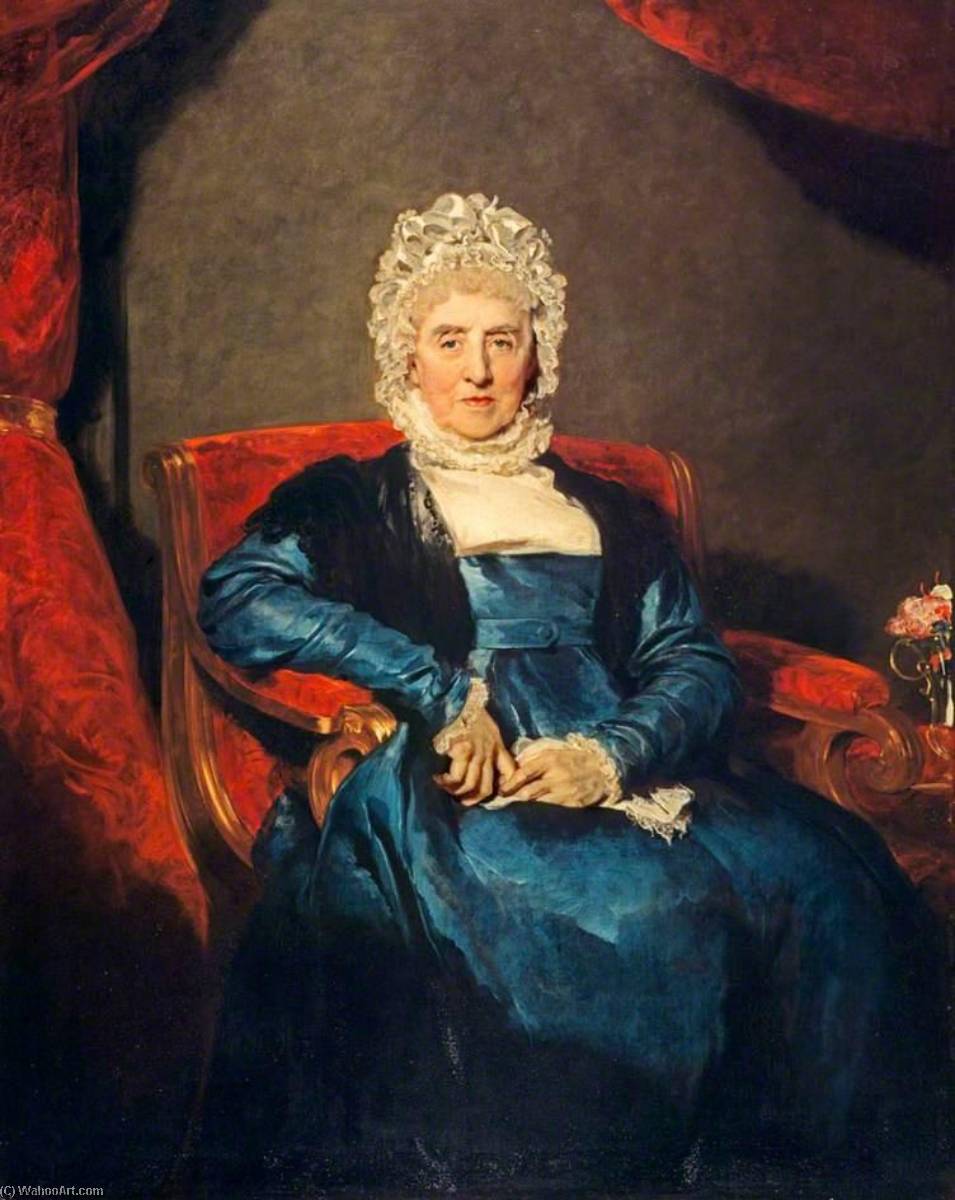
Sir Thomas Lawrence's “Mary Digges, Lady Robert Manners” is more than just a portrait; it’s a meticulously crafted window into the opulent and complex social landscape of early 19th-century England. Painted in 1826, this remarkable work captures not merely a likeness but an essence – the poised dignity, subtle melancholy, and quiet strength of a woman navigating her position within a rigidly structured society. The painting immediately draws the eye with its rich palette: the deep crimson velvet of the chair, a symbol of wealth and status, contrasts dramatically with the cool blues and delicate whites of Lady Manners’ gown. This deliberate use of color isn't merely decorative; it establishes a visual hierarchy, emphasizing both her social standing and the contemplative mood she embodies.
Lawrence was one of the most sought-after portrait painters of his era, renowned for his ability to capture not just physical appearance but also the inner life of his subjects. His style, heavily influenced by Italian Renaissance masters like Raphael and Titian, is characterized by a remarkable naturalism – figures appear remarkably lifelike, imbued with a sense of immediacy. He employed a technique known as ‘alla prima,’ working directly onto the canvas without extensive underpainting, resulting in a luminous quality to the paint and a subtle blending of tones that contributes significantly to the portrait’s atmospheric depth.
The Lady and Her World: Contextualizing the Portrait
Mary Digges, Lady Robert Manners, was a woman of considerable influence within her social circle. Born into a prominent family with connections to both England and Ireland, she married Robert Manners, later Earl of Rutland, in 1768. The portrait itself reflects this elevated status; the luxurious setting – the crimson chair, the lace cap, the delicate feather – speaks volumes about her wealth and position. However, beneath the surface of outward elegance lies a story of personal complexity. Historical research reveals that Lady Manners endured a difficult marriage marked by infidelity on both sides, ultimately leading to her separation from her husband in 1798. This biographical detail subtly informs our interpretation of the portrait; the woman’s serious expression and direct gaze suggest an awareness of past sorrows and perhaps a quiet resilience.
The painting was created during the height of the Regency period, a time of significant social and political change in Britain. The aristocracy held immense power, and portraits served as crucial tools for establishing and maintaining social standing. Lawrence’s work, therefore, is not simply a personal likeness but also a carefully constructed representation of aristocratic identity – an assertion of wealth, lineage, and refined taste. It's a visual testament to the era’s fascination with beauty, decorum, and the art of presentation.
Symbolism and Artistic Detail
Beyond its immediate aesthetic appeal, “Mary Digges, Lady Robert Manners” is rich in symbolic detail. The lace cap, a fashionable accessory of the period, represents both elegance and restraint. The white feather, a striking element of her attire, adds to the sense of refinement and sophistication. Even the arrangement of objects within the composition – the small table beside the chair, holding a book or writing instrument – contributes to the overall narrative, suggesting a life of intellectual pursuits alongside social obligations. The lighting, carefully orchestrated by Lawrence, casts a soft glow on Lady Manners’ face, highlighting her features and creating an intimate connection with the viewer.
The artist's masterful handling of fabric is particularly noteworthy. He captures the texture of the velvet, the sheen of the silk, and the delicate intricacies of the lace with remarkable precision. This attention to detail elevates the portrait beyond a simple likeness, transforming it into a tangible representation of luxury and refinement. The dark background serves to further emphasize the subject, drawing the viewer’s attention to her presence within the composition.
A Timeless Portrait: Reproduction and Legacy
Reproductions of “Mary Digges, Lady Robert Manners” offer an exceptional opportunity to experience the artistry and historical significance of this remarkable portrait. Whether displayed in a grand salon or a private study, this painting continues to captivate viewers with its beauty, elegance, and subtle emotional depth. The meticulous detail and evocative atmosphere are faithfully reproduced in high-quality prints, allowing art lovers to appreciate Lawrence’s genius for generations to come. Consider framing your reproduction within a classic style that complements the portrait's historical context – perhaps a simple black frame or a more ornate gilded design – to further enhance its visual impact.