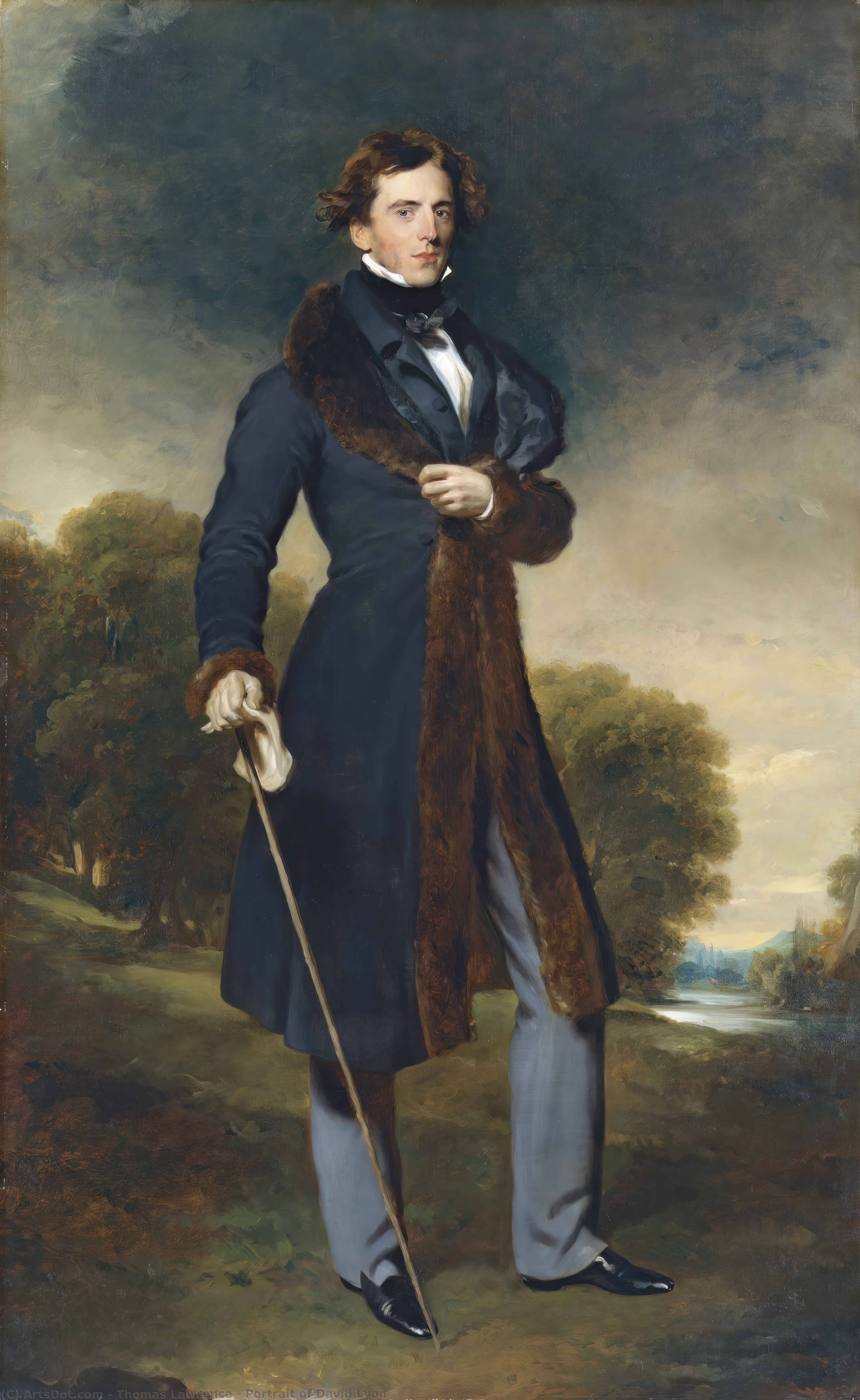
A Window into Regency Elegance: Examining Sir Thomas Lawrence’s Portrait of David Lyon
Sir Thomas Lawrence's “Portrait of David Lyon,” completed in 1825, stands as a quintessential emblem of the English Romantic era’s preoccupation with aristocratic grandeur and psychological nuance. Currently residing within the Museo Thyssen-Bornemisza’s collection in Madrid, Spain, this canvas transcends mere likeness; it embodies Lawrence's masterful ability to distill character into visual form—a skill honed through meticulous observation and a profound understanding of artistic convention.
- The Artist’s Vision: Lawrence, born Bristol in 1769, was already establishing himself as a prodigious talent by his early twenties. His itinerant upbringing fostered an independence that fueled his artistic pursuits, propelling him to achieve renown despite limited formal training. He skillfully blended Reynoldsian grandeur with intimate portraiture, cementing his position as one of the era’s most celebrated artists.
- Composition and Setting: The painting depicts Lyon amidst a tranquil landscape—a stylistic choice characteristic of English Romanticism—underscoring the importance of natural beauty within artistic expression. Lawrence's deliberate framing emphasizes Lyon’s dignified posture and melancholic gaze, reflecting the prevailing mood of introspection prevalent during this period.
- Technical Brilliance: Executed in oil on canvas, “Portrait of David Lyon” showcases Lawrence’s unparalleled technical prowess. The artist employed a realistic style, meticulously rendering textures—particularly the rich fur collar—and capturing subtle variations in light to illuminate Lyon's face and imbue the scene with atmospheric depth.
- Symbolism & Emotion: Beyond its aesthetic qualities, the portrait speaks volumes about Victorian sensibilities. Lyon’s cane and walking stick symbolize authority and experience, while his contemplative expression conveys a profound awareness of life’s complexities—a sentiment deeply rooted in Romantic ideals.
Provenance and Artistic Legacy
The painting's journey through history began with Miss Carnegy-Arbuthnott’s collection before achieving prominence at Christie’s auction in 1980. Subsequently, it found its home within the Thyssen-Bornemisza Collection, where it continues to captivate audiences and inspire art historians alike. Lawrence’s work profoundly influenced subsequent generations of portrait painters, establishing a standard for elegance, psychological insight, and artistic virtuosity.
Connections to Other Artists
Lawrence's stylistic approach aligns closely with that of Thomas Sully, another influential American artist who championed Romantic ideals in his own portraits. Both artists prioritized capturing the sitter’s inner life alongside their external appearance—a testament to Lawrence’s enduring contribution to the artistic canon.
A Reproduction Worth Admiring
A high-quality reproduction of “Portrait of David Lyon” allows viewers to appreciate Lawrence's artistry from afar, preserving the painting’s luminous palette and nuanced details. It serves as a tangible reminder of Regency England’s fascination with beauty, intellect, and dignified contemplation—a timeless masterpiece destined to endure for centuries to come.