A Vision of Fallen Grandeur
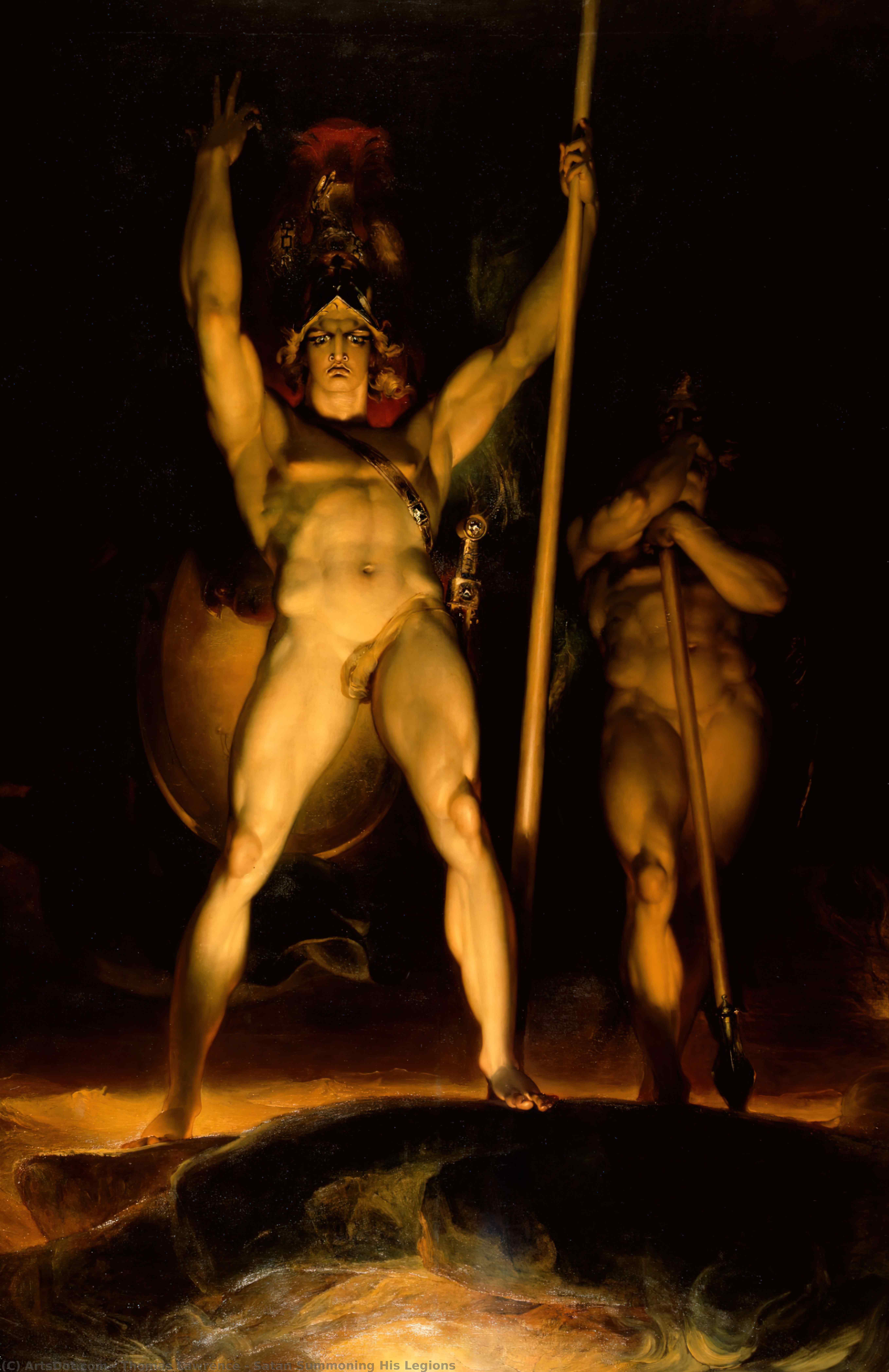
In the vast, dramatic expanse of Sir Thomas Lawrence’s 1797 masterpiece, Satan Summoning His Legions, viewers are transported into the heart of a cosmic rebellion. This monumental oil on canvas, measuring an imposing 432 x 274 cm, serves as a breathtaking window into the depths of Miltonic epic. The painting captures the precise moment of transition described in John Milton’s Paradise Lost—the chilling command to "Awake, arise, or be for ever fallen." At the center of this swirling chaos stands Satan, not merely as a villain, but as a figure of tragic, muscular majesty. His commanding presence, characterized by an intense gaze and a powerful physique, anchors the composition, while his gestures direct the eye toward the gathering shadows of his infernal host.
The atmosphere is thick with the tension of the Romantic era, a period defined by its fascination with the sublime, the terrifying, and the emotionally overwhelming. Lawrence utilizes a masterful interplay of light and shadow, often referred to as chiaroscuro, to sculpt the figures out of the surrounding gloom. The background, a dark and nebulous void, serves to push the central figures forward, creating a sense of immediate, visceral confrontation. As light flickers across the muscular anatomy of the fallen leader and catches the glint of his sword and helmet, the viewer feels the heat of the nearby lake of fire and the palpable energy of a legion rising from the depths of despair.
Symbolism and the Art of Rebellion
Beyond its sheer scale, the painting is a complex tapestry of symbolic meaning. Every element, from the strategically placed drapery to the various mythical creatures emerging from the darkness, contributes to the narrative of defiance. The figures surrounding Satan represent the diverse facets of rebellion—some embodying pure, chaotic malice, while others reflect a more human-like state of conflict and anticipation. This duality invites deep contemplation on the nature of willpower, pride, and the consequences of insurrection. For the discerning collector or interior designer, this work offers more than just visual splendor; it provides a profound intellectual anchor for any space, acting as a conversation piece that explores the eternal struggle between light and darkness.
The technique employed by Lawrence demonstrates his burgeoning genius, long before he became the celebrated portraitist to the British Regency. His ability to handle large-scale history painting with such anatomical precision and emotional depth is nothing short of extraordinary. The fluid brushwork captures the movement of the gathering legions, lending a cinematic quality to the scene that remains captivating centuries later. To possess a high-quality reproduction of this work is to bring a piece of theatrical history into one's home, offering an infusion of drama, classical elegance, and the untamed spirit of the Romantic movement.