A Brushstroke of Regency Splendor: The Life and Art of Sir Thomas Lawrence
Sir Thomas Lawrence (1769 – 1830), born amidst the vibrant energy of Bristol, wasn’t merely a painter; he was an embodiment of the Regency era's fascination with portraiture and its celebration of familial bonds. His extraordinary artistic journey began before formal training, nurtured by a restless spirit and an uncanny ability to capture likenesses – a skill that would define his entire oeuvre.
Lawrence’s formative years were spent traversing England, following his father’s itinerant trade as an innkeeper. These travels instilled in him a profound appreciation for observation and detail, qualities he instinctively translated into his art. It was within the welcoming embrace of Bath’s inns that young Lawrence first established himself as a portrait artist, sketching remarkably accurate likenesses – a testament to his innate talent and unwavering dedication.
Beyond mere technical proficiency, Lawrence possessed an artistic vision deeply rooted in the prevailing aesthetic sensibilities of his time. He championed a style characterized by luminous tonal gradations and subtle modeling effects—a technique that prioritized capturing not just physical appearance but also conveying emotion and psychological nuance. This approach distinguished him from many of his contemporaries who favored more stylized representations.
- Style: Luminosity and Impressionism – Lawrence’s canvases shimmer with a remarkable subtlety, reflecting the influence of emerging Impressionist principles without fully embracing their radical departure from academic conventions.
- Technique: Oil Paint on Canvas – He meticulously applied oil paint onto canvas using delicate brushstrokes, achieving unparalleled tonal depth and capturing fleeting expressions of character.
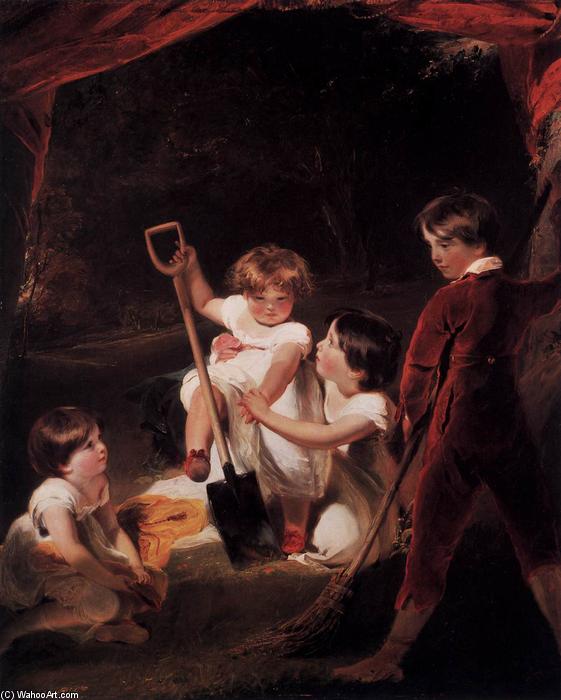
“The Angerstein Children,” completed in 1807, exemplifies Lawrence’s mastery of technique and his profound understanding of human psychology. The painting depicts three young boys engaged in playful activity amidst a simple tent setting—a scene imbued with an understated elegance that speaks volumes about the values of the era.
More than just a depiction of children at play, “The Angerstein Children” carries symbolic weight. The tent itself represents domestic tranquility and familial unity – ideals cherished during the Regency period. Lawrence’s careful positioning of the boys—one holding a shovel, another gazing intently ahead—suggests an exploration of innocence, curiosity, and burgeoning potential. The muted palette contributes to the painting's contemplative mood, inviting viewers to contemplate themes of childhood joy and familial affection.
Lawrence’s legacy extends far beyond his artistic achievements. He became one of Britain’s most celebrated portrait painters, securing commissions from royalty and aristocracy alike—a testament to his reputation for capturing not only physical likenesses but also the essence of his subjects' personalities. “The Angerstein Children” remains a poignant reminder of Lawrence’s ability to distill complex emotions into exquisitely rendered images, cementing its place as an enduring masterpiece of Regency art.
- Historical Context: The painting reflects the social and cultural values of Britain during the Regency (1811-1820), emphasizing family life and moral virtue.
- Emotional Impact: Lawrence’s masterful use of light and color evokes feelings of warmth, nostalgia, and admiration for youthful innocence.
A reproduction of “The Angerstein Children” would undoubtedly bring a touch of Regency elegance into any interior space—capturing the spirit of an era defined by refined sensibilities and a deep appreciation for beauty.