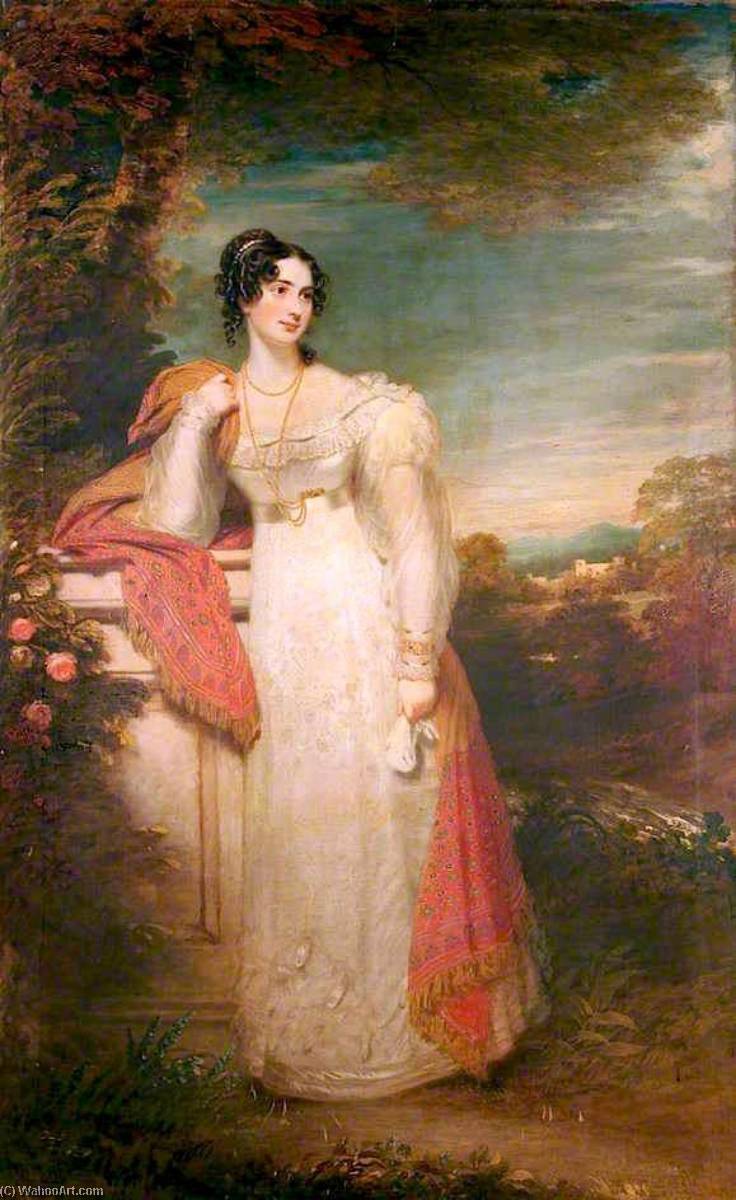
A portrait of neoclassical elegance featuring Elizabeth, Lady Buxton, captured through Sir William Beechey's masterful 1825 brushwork and serene composition, inviting you to bring this piece of British history into your home.
Elizabeth, Lady Buxton, née Cholmeley: A Portrait of Elegance Amidst Victorian Sentiment
Sir William Beechey’s portrait of Elizabeth, Lady Buxton (née Cholmeley), completed in 1825, stands as a quintessential example of neoclassical elegance within the broader context of Victorian artistic sensibilities. More than just a likeness, it embodies a carefully constructed representation of aristocratic femininity—a subject favored by Beechey during his prolific career documenting the British elite.
- Subject Matter: The painting depicts Elizabeth Cholmeley Buxton, wife of Sir George Buxton, a prominent barrister and Conservative politician. Her serene gaze and refined posture convey an aura of composure and grace, reflecting the societal expectations placed upon women of noble birth during this period.
- Style & Technique: Beechey’s masterful brushwork characterizes his style—characterized by smooth tonal gradations and subtle modeling that capture the delicate contours of Elizabeth's face and drapery. The artist skillfully employs chiaroscuro, utilizing dramatic contrasts between light and shadow to heighten the sense of depth and create an atmosphere of contemplative beauty.
- Composition: The portrait’s composition is balanced and symmetrical, placing Elizabeth centrally within a landscape setting—a deliberate choice that underscores her status as mistress of the household and symbolizes domestic tranquility. A solitary tree on the left side serves as a visual anchor, subtly reinforcing the theme of solitude and introspection.
- Historical Context: Painted during the reign of George IV, Beechey’s portrait reflects the prevailing artistic trends of the era—a return to classical ideals after the Romantic movement's emphasis on emotion and imagination. The painting exemplifies Victorian fascination with idealized beauty and aristocratic refinement, mirroring the values championed by the upper classes.
Symbolism: Beyond its aesthetic qualities, the portrait carries symbolic significance. Elizabeth’s attire—a white gown adorned with subtle crimson accents—represents purity and virtue, while the necklace she wears symbolizes wealth and social standing. The tree itself can be interpreted as a symbol of resilience and longevity—reflecting Elizabeth's enduring spirit amidst the complexities of Victorian society.
Emotional Impact: Beechey’s portrait succeeds in conveying an impression of quiet dignity and inner serenity. It invites contemplation on themes of femininity, status, and domestic harmony—capturing a moment frozen in time that speaks to the timeless allure of classical beauty and aristocratic grace. The painting continues to resonate with viewers today as a testament to Beechey's artistic skill and his ability to capture the essence of Victorian ideals.
- Further Research: Elizabeth, Lady Buxton, née Cholmeley (d.1884) - Art UK offers valuable insights into the subject’s life and legacy, alongside detailed information about the artwork itself—dimensions, medium, and provenance.
- Reproductions Available: Explore high-quality reproductions of Beechey's masterpiece at HandmadePiece for a stunning addition to your home or collection.