A Miniature Revelation: The Ethereal Vision of The Ghost of a Flea
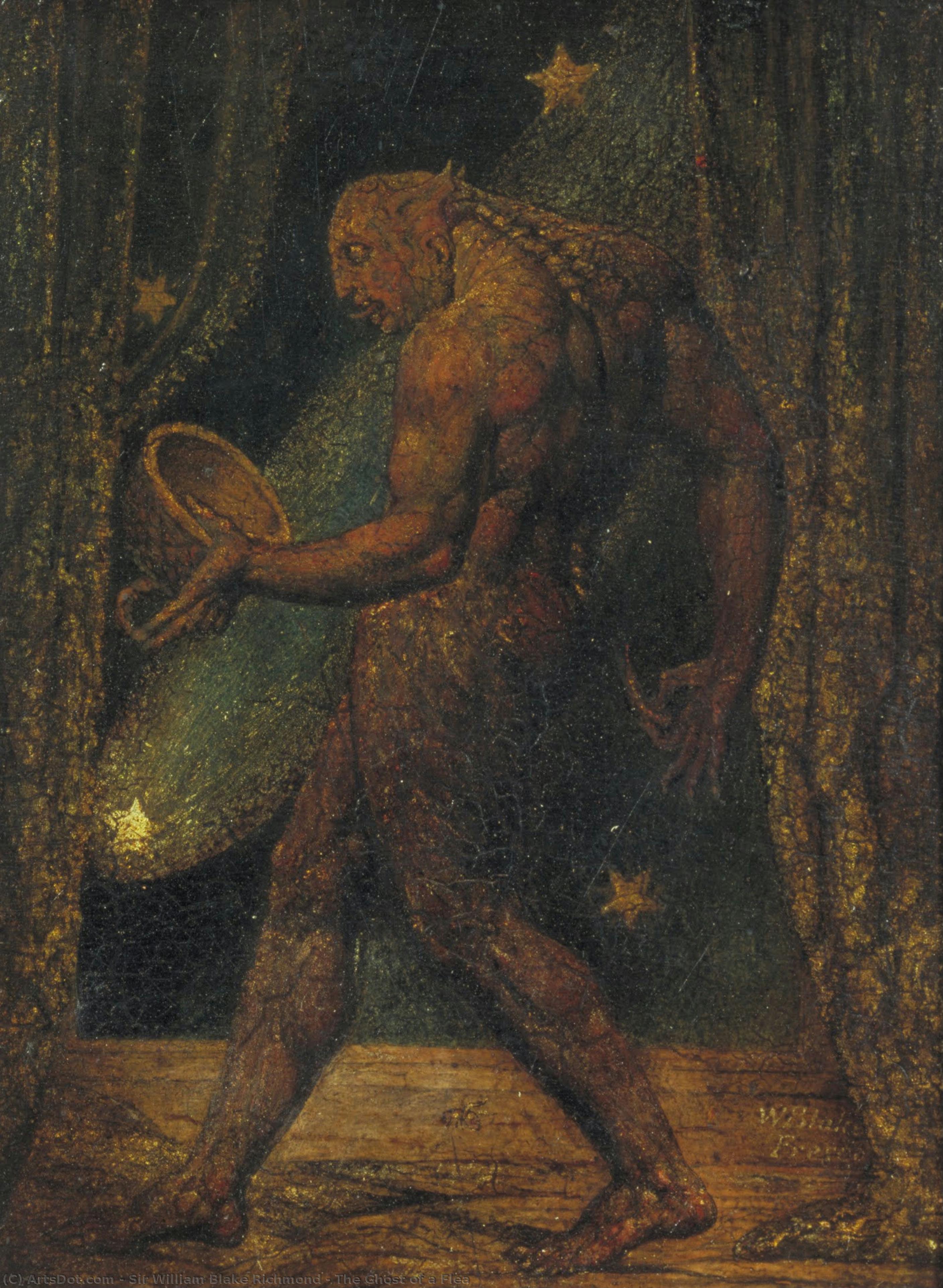
In the quiet intimacy of a mahogany panel, a miniature universe unfolds, challenging the boundaries between the seen and the unseen. The Ghost of a Flea, completed in 1819, is far more than a mere portrait; it is a concentrated distillation of Romantic idealism and profound psychological exploration. At first glance, the viewer is met with a figure that defies conventional anatomy—a man’s head rendered with meticulous, almost haunting detail, set against a dark, infinite void punctuated by shimmering, celestial stars. This striking juxtaposition of the terrestrial and the cosmic creates an immediate sense of wonder, drawing the eye into a realm where the physical world dissolves into spiritual mystery.
The technique employed in this masterpiece is as much a part of its magic as the subject itself. Utilizing tempera and gold leaf on a tropical hardwood panel, the artist achieved a level of luminosity that seems to radiate from within the painting. The careful layering of paint provides a depth and texture that captures the very essence of the Romantic ambition: to map the inner landscapes of human experience. As light hits the gold leaf, the artwork transforms, shifting from a somber, introspective study into an ethereal vision, making it a captivating centerpiece for any collection that values technical mastery and luminous beauty.
Symbolism and the Shadows of the Soul
To look upon this work is to engage with the profound anxieties and fascinations of the early 19th century. The painting emerged during an era gripped by the allure of occultism, mesmerism, and a burgeoning interest in the unseen forces of nature. The presence of the curtain—a recurring motif that suggests both concealment and the unveiling of truth—serves as a threshold between our reality and the supernatural. Within this composition, every element is laden with symbolic weight; the stars represent the infinite possibilities of the cosmos, while the dark background evokes the primal mysteries of death and decay.
The very title of the piece invites a descent into the subconscious. The "Flea" serves as a metaphor for those hidden, often unsettling forces that shape human consciousness—the primal instincts that dwell just beneath the surface of civilization. For collectors and enthusiasts of symbolic art, this work offers an endless loop of interpretation, where the boundaries between science and spiritualism blur. It is a piece that does not merely sit on a wall but actively converses with the viewer, prompting reflections on mortality, identity, and the enduring power of the imagination.
An Essential Addition to the Discerning Collector
For the interior designer or the dedicated art lover, The Ghost of a Flea offers an unparalleled opportunity to introduce a sense of narrative depth and historical gravity into a space. Whether placed in a study filled with leather-bound books or as a focal point in a modern, minimalist gallery, its dark, moody palette and shimmering highlights provide a sophisticated contrast to contemporary surroundings. It is a work that commands attention through its subtlety rather than through sheer scale.
Owning a high-quality reproduction of this masterpiece allows one to preserve the delicate interplay of light and shadow that defines the Romantic era. It serves as a constant reminder of the beauty found in the miniature and the profound truths hidden within the small. As an investment in atmosphere and intellectual stimulation, this painting brings with it the legacy of a time when art was a bridge to the divine, making it an exquisite choice for those seeking to curate a home filled with inspiration, mystery, and timeless elegance.