Discover Sir William Nicholson (1872-1949), a British painter celebrated for striking portraits, elegant still lifes & innovative woodcuts. Explore his Beggarstaff partnership and lasting influence on early 20th-century art.
Leeds Art Gallery is a Grade II listed building housing a remarkable collection of British art from the 18th century to today. Featuring significant works by artists like Clara Birnberg and Henry Moore, it hosts regular exhibitions and offers educational programs for visitors of all ages.
A Monumental Vision of Oxford’s Scholastic Heritage
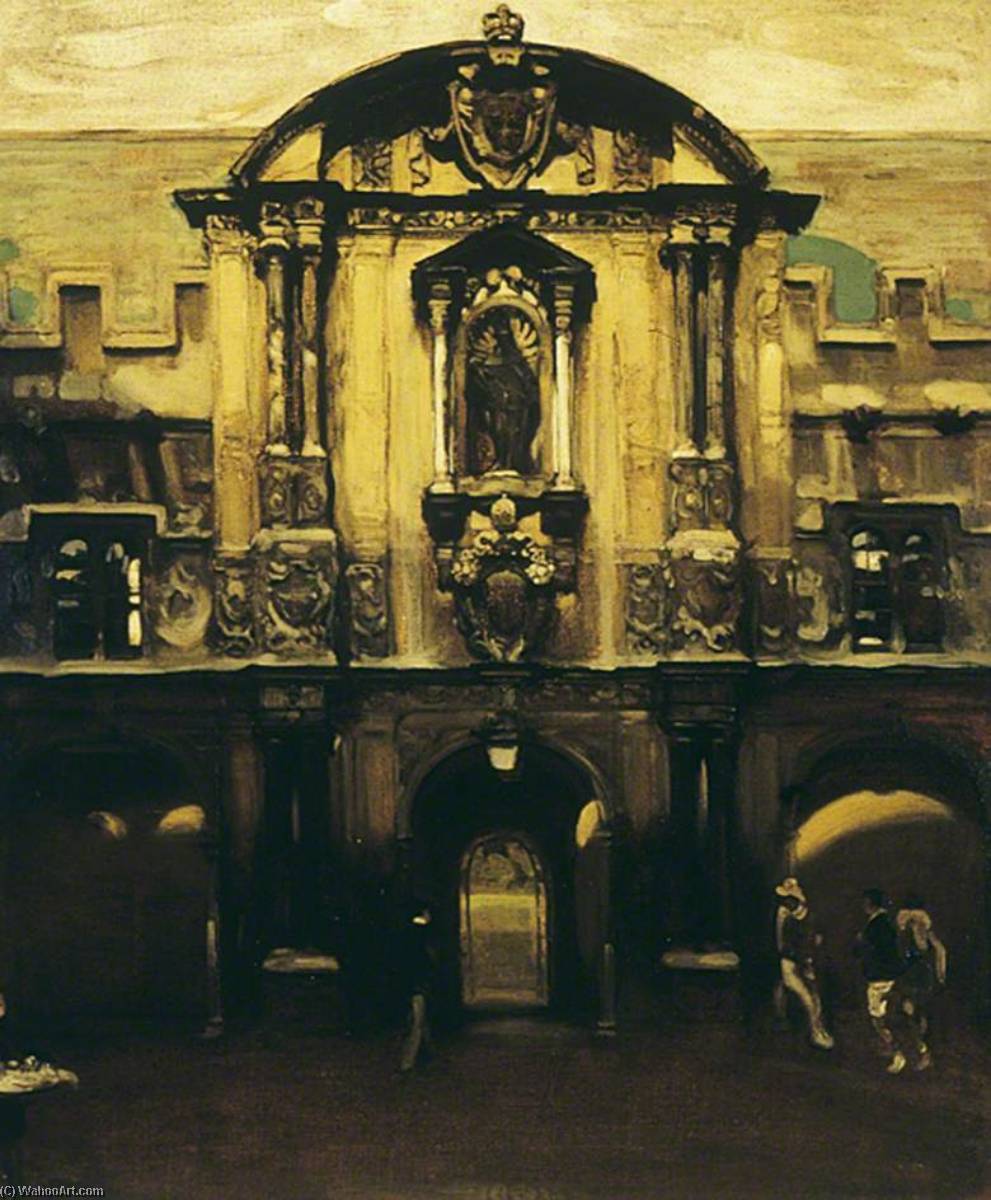
Sir William Nicholson's "St John's College, Oxford" stands as a testament to the enduring power of architectural grandeur and symbolic representation within British art history. Painted in 1905, this monochrome masterpiece captures not merely the physical edifice of St John’s College but delves into its intellectual spirit—a reflection of Oxford University’s commitment to learning and tradition during the Edwardian era. Nicholson's meticulous attention to detail elevates the scene beyond a simple depiction; it aspires to convey an atmosphere of solemn contemplation and reverence for knowledge.
- Subject Matter: The painting portrays St John’s College Chapel, Oxford, focusing on its imposing arched doorway and central statue—a figure embodying wisdom and piety.
- Style: Nicholson's style leans towards Neo-Romanticism, characterized by a deliberate simplification of form and an emphasis on tonal gradation to achieve dramatic effect. He eschews vibrant color palettes in favor of grayscale hues, prioritizing mood and texture over visual spectacle.
- Technique: Employing oil paint on canvas with a distinctive impasto technique—thickly applied pigment—Nicholson builds up layers of textured surface that capture the interplay of light and shadow within the chapel’s interior. This tactile approach lends physicality to the image, inviting viewers to experience the space as Nicholson intended.
The historical context surrounding “St John's College, Oxford” is crucial to understanding its significance. Constructed in the 14th century, St John’s College embodies centuries of scholarly pursuit and religious devotion—values deeply ingrained within Victorian society. Nicholson skillfully captures this legacy through his compositional choices and tonal palette, reflecting a broader artistic preoccupation with portraying idealized landscapes and monumental buildings as emblems of cultural prestige. The statue atop the archway serves as a potent symbol of enlightenment and moral virtue, reinforcing the college’s reputation for fostering intellectual excellence.
- Symbolism: The arched doorway symbolizes access to knowledge and spiritual understanding, while the statue represents divine guidance and ethical contemplation.
- Emotional Impact: Nicholson's masterful use of tonal shading evokes a feeling of solemn grandeur and contemplative stillness—encouraging viewers to appreciate the beauty and importance of Oxford’s historic campus.
Furthermore, Nicholson’s collaboration with fellow artist Mabel Pryde exemplifies the spirit of artistic partnership prevalent during his time. Together they explored innovative approaches to painting, pushing boundaries within the Neo-Romantic movement. “St John's College, Oxford” stands as a remarkable achievement—a beautifully rendered depiction that transcends mere representation and communicates profound ideas about faith, learning, and the enduring legacy of British architectural heritage. It remains an inspiring example of how art can capture not just what is seen but also what is felt.