A Divine Gathering: The Warmth of Sisto Badalocchio’s Holy Family
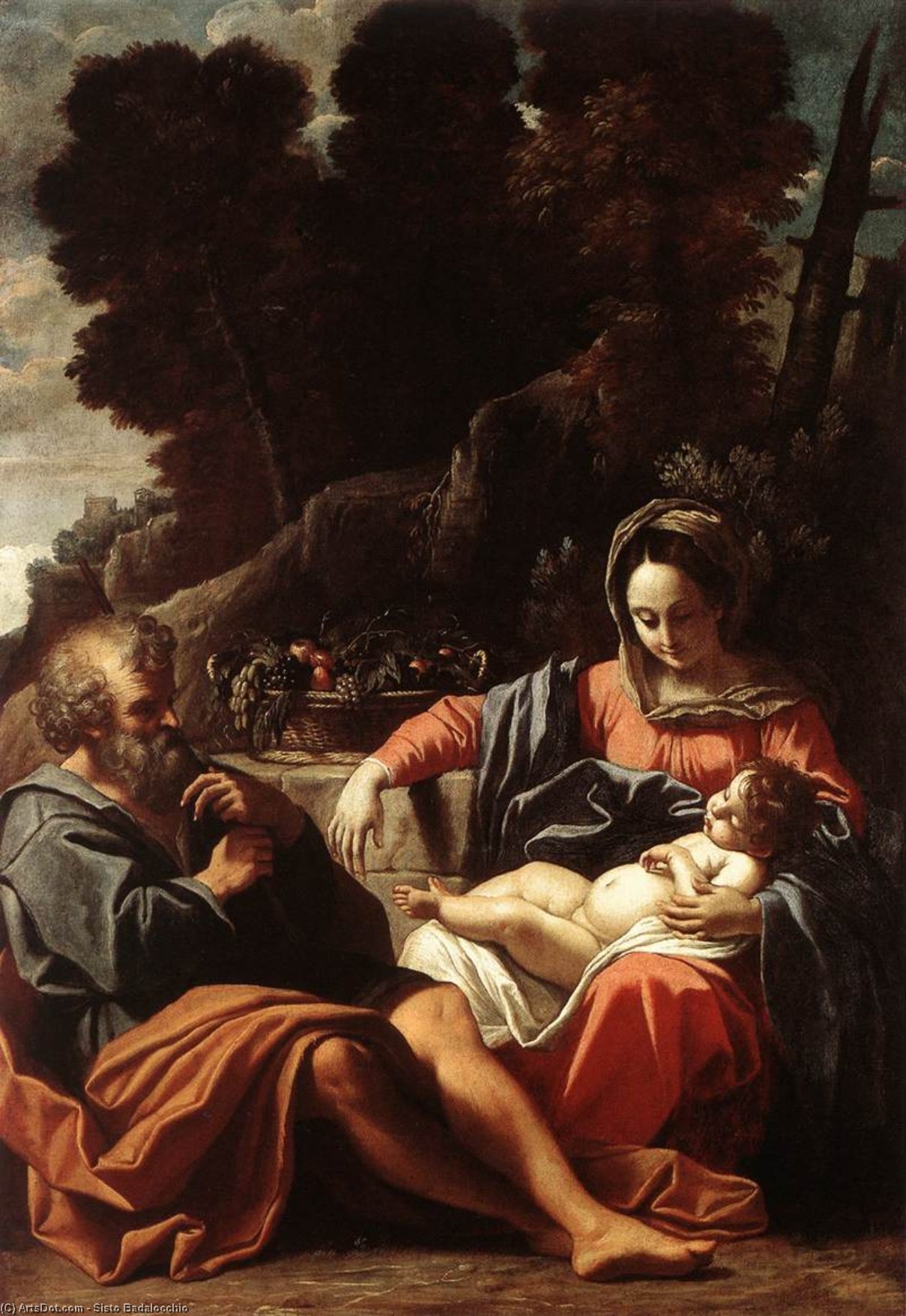
In the quiet intimacy of Sisto Badalocchio’s The Holy Family, dated to 1610, we are invited into a moment of profound tenderness and communal grace. This masterpiece serves as a window into the heart of the Italian Baroque, capturing not just a religious icon, but a deeply human connection. The scene unfolds around a central table, where the Virgin Mary cradles the infant Jesus with a maternal devotion that transcends time. Nearby, Joseph sits in contemplative presence, anchoring the domestic sanctity of the group. As the eye wanders through the composition, it discovers a gathering of figures—some standing, some seated—suggesting an extended circle of family and friends united in celebration. The soft interplay of light and shadow, characteristic of the Bolognese School, breathes life into each face, turning a sacred event into a palpable, breathing reality.
The setting is masterfully balanced by a lush, verdant backdrop of trees that frames the assembly, grounding the divine figures within the natural world. This integration of the celestial and the terrestrial creates an atmosphere of peace and eternal continuity. For the discerning collector or interior designer, this painting offers more than mere decoration; it provides a focal point of serenity. The way the light filters through the foliage to illuminate the central figures evokes a sense of divine presence, making it an ideal centerpiece for spaces designed for reflection, such as a formal dining room, a library, or a quiet study where one seeks inspiration from the classics.
The Legacy of the Carracci Tradition
To understand the technical brilliance of this work, one must look to the lineage of its creator. Sisto Badalocchio was a vital bridge between the classical ideals of the Carracci workshop and the burgeoning energy of the Roman Baroque. Having studied under the luminaries Agostino and Annibale Carracci, Badalocchio inherited a sophisticated command of anatomy, composition, and emotional depth. In The Holy Family, we see this training manifest in the fluid brushwork and the harmonious arrangement of figures that guide the viewer’s gaze in a rhythmic dance across the canvas. His ability to blend the structured elegance of his Bolognese roots with the dramatic chiaroscuro of the Roman style allows the painting to possess both a monumental dignity and an approachable warmth.
The technique employed here is a testament to the era's mastery of oil on canvas, where subtle gradations of tone create a sense of three-dimensional volume. The textures of fabric, the softness of skin, and the organic complexity of the background foliage are rendered with a precision that invites close inspection. For those seeking a high-quality reproduction, these nuances are essential; a faithful recreation must capture the delicate balance of light that Badalocchio used to evoke such profound emotional resonance. Owning a piece that echoes this historical grandeur allows one to bring the sophisticated aesthetic of 17th-century Italy into a modern architectural context, bridging the gap between the storied past and the contemporary home.