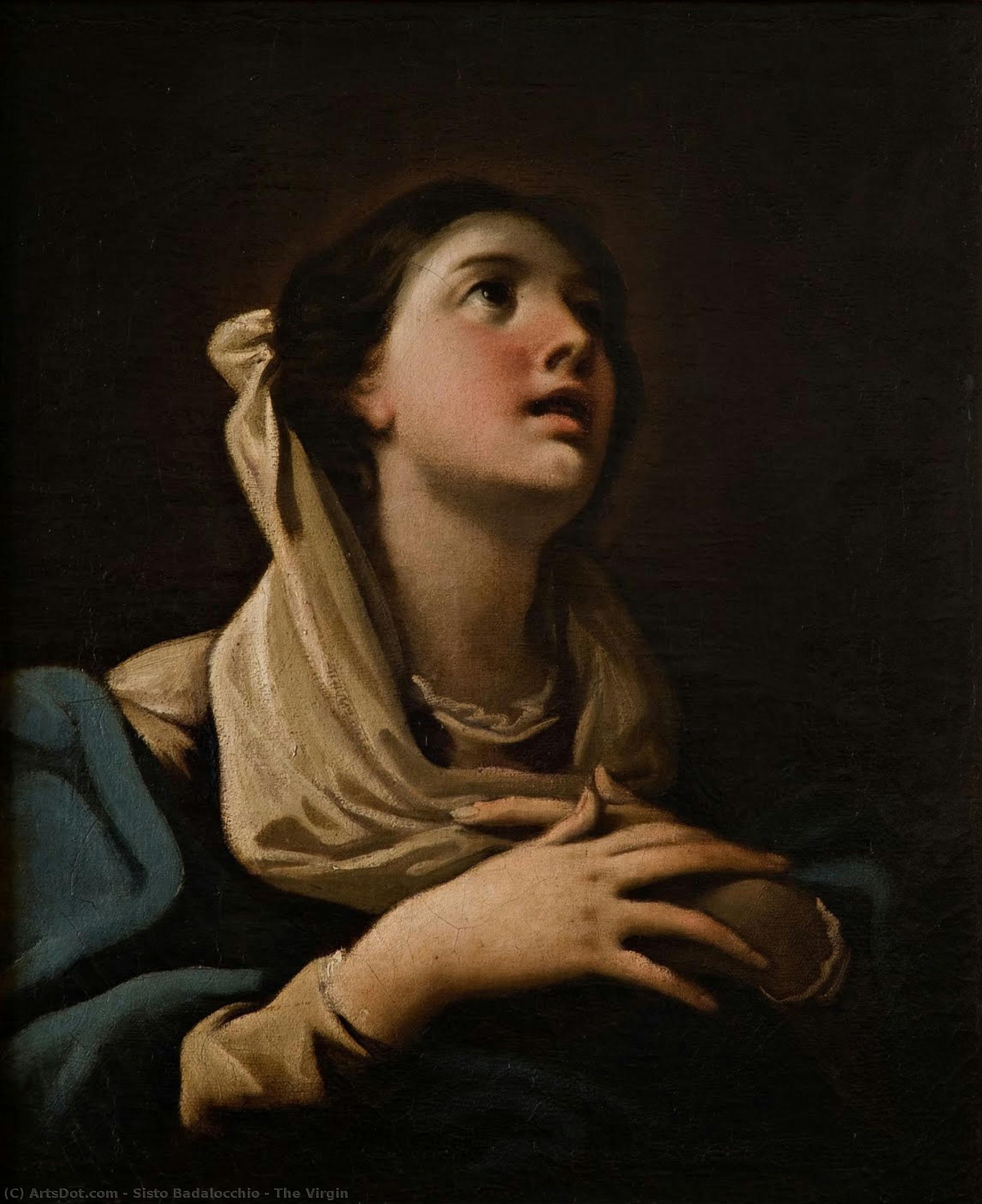
A Vision of Devotion: The Soul of Sisto Badalocchio
In the quietude of a darkened space, The Virgin emerges from the shadows, not merely as a figure of paint and canvas, but as a profound testament to the human spirit's yearning for the divine. This masterful work by Sisto Badalocchio captures a moment of suspended animation, where time seems to dissolve into the soft glow of candlelight. The composition centers on a young woman caught in a private, sacred interval of prayer. Her gaze, directed upward and slightly away from the viewer, invites us to witness her internal dialogue with the heavens. Through the masterful application of chiaroscroll, Badalocchio directs our eyes through a landscape of light and shadow, ensuring that every flicker of illumination serves to deepen the emotional resonance of her contemplative state.
The technical brilliance of this piece lies in its ability to marry the rugged intensity of the Baroque era with a delicate, almost ethereal grace. As a protégé of the legendary Carracci family, Badalocchio infused his work with the structural discipline of the Bolognese School while embracing the dramatic, high-contrast lighting that would define the Roman Baroque movement. The texture of the painting is a sensory journey; one can almost feel the smoothness of the subject's skin and the weight of the heavy, intricately folded drapery. The artist utilizes organic, flowing lines to trace the contours of her face and hands, creating a sense of softness that contrasts beautifully with the deep, impenetrable darkness of the background. This deliberate use of a shallow perspective forces an intimate encounter between the observer and the subject, making the viewer a silent participant in her spiritual journey.
Beyond its aesthetic splendor, The Virgin serves as a powerful symbolic vessel. The upward tilt of her head and the gentle positioning of her hands are universal symbols of faith, hope, and the profound connection between the earthly and the eternal. For the discerning collector or interior designer, this artwork offers more than mere decoration; it provides an anchor of tranquility and intellectual depth. Whether placed in a grand library or a quiet study, the painting’s moody palette and dramatic lighting create a sophisticated atmosphere of introspection. It is a piece that does not demand attention through noise, but rather commands it through a whispered, eternal elegance, making it an incomparable centerpiece for any collection dedicated to the timeless beauty of the Italian Baroque.