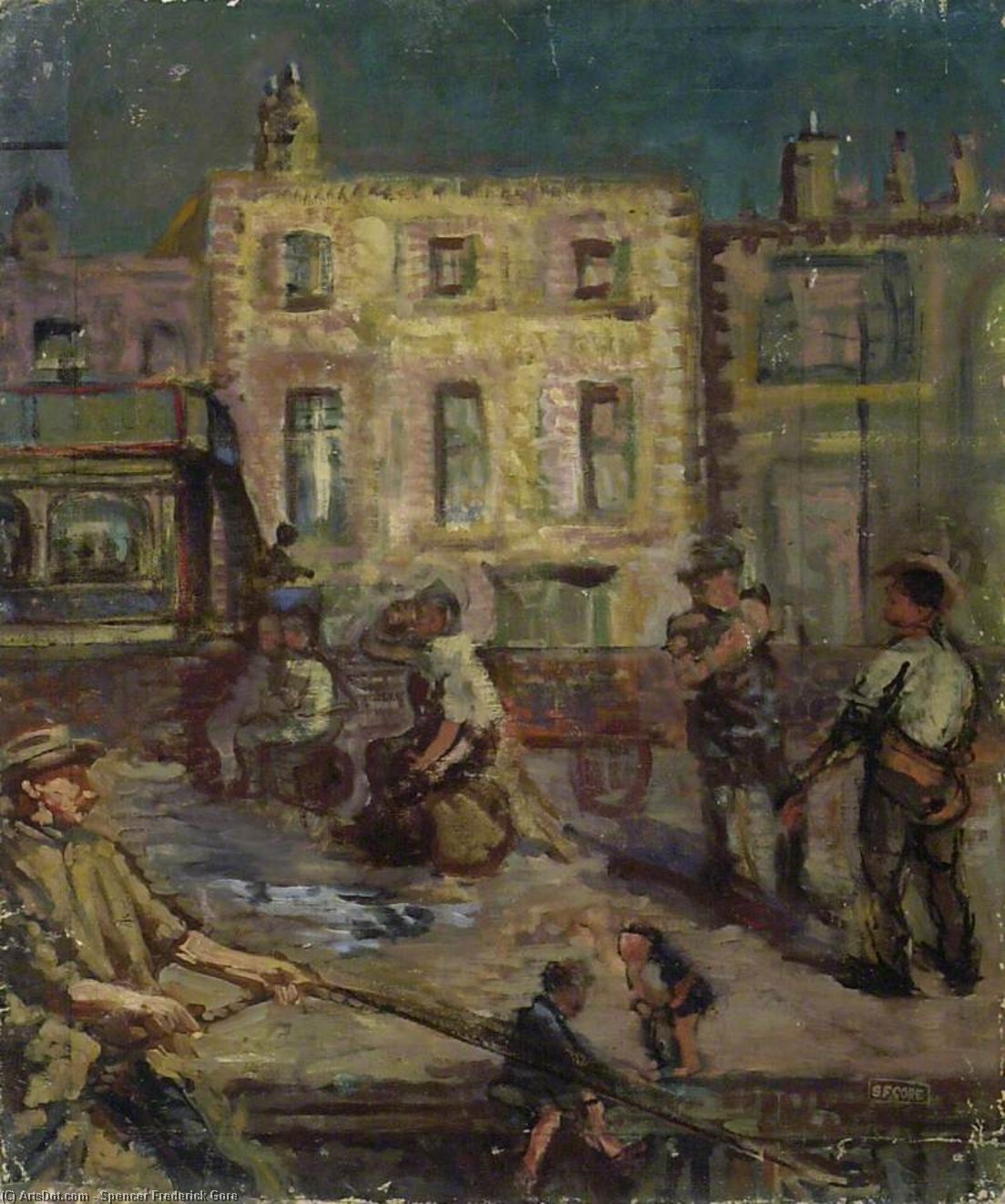
A bustling 1906 harbour scene by Spencer Gore, a pioneer of Camden Town, captures urban life with figures and horses amidst the vibrant colours of early 20th-century British art. Discover this evocative painting and bring its timeless charm into your space.
Spencer Gore’s ‘Harbour Scene’: A Snapshot of Camden Town
“Harbour Scene,” painted in 1906 by Spencer Frederick Gore, offers a remarkably intimate glimpse into the burgeoning urban landscape of Camden Town – a pivotal moment in British art history. This evocative work captures a bustling street scene, brimming with life and activity, reflecting Gore’s dedication to portraying the realities of modern London. The painting's subject matter—a busy thoroughfare populated by pedestrians, horses, and even a dog—immediately draws the viewer into its dynamic composition. Gore wasn’t simply depicting a location; he was documenting an experience, a slice of daily life unfolding within this rapidly changing environment.
Impressionist Techniques and Post-Impressionist Influences
Gore's artistic approach is firmly rooted in the Impressionist movement, yet infused with the bolder sensibilities of Post-Impressionism. Like Monet and Van Gogh before him, Gore was deeply interested in capturing fleeting moments of light and color. Notice how he utilizes broken brushstrokes to render the surfaces of the buildings and the figures, creating a shimmering effect that suggests movement and atmosphere. The use of complementary colors – particularly the blues and oranges – intensifies the visual impact and adds to the painting’s vibrancy. Gore's meticulous observation of light and shadow, combined with his expressive handling of paint, elevates this work beyond mere representation, imbuing it with a palpable sense of energy.
The Camden Town Group and Urban Realism
“Harbour Scene” is inextricably linked to the story of the Camden Town Group, a collective of artists who sought to break away from the academic traditions of the Royal Academy. Founded in 1887, this group championed a more direct and honest portrayal of modern life, often focusing on urban subjects like factories, streets, and working-class communities. Gore was a key figure within this movement, alongside artists such as Harold Gilman and Walter Richard Sickert. Their shared commitment to realism and their willingness to depict the gritty realities of London’s industrial heartland challenged prevailing artistic conventions and paved the way for future generations of British modernists. This painting exemplifies their dedication to capturing the essence of Camden Town – a district undergoing rapid transformation, marked by industry, commerce, and a growing population.
Symbolism and Emotional Resonance
Beyond its technical merits, “Harbour Scene” possesses a subtle emotional resonance. The figures, seemingly absorbed in their individual pursuits, represent the anonymity and complexity of urban life. The presence of horses – a familiar sight in London at the time – adds to the painting’s sense of nostalgia and connection to the past. Gore's skillful composition invites the viewer to contemplate the relationships between people and place, prompting questions about identity, community, and the human experience within an increasingly industrialized world. The painting’s enduring appeal lies not only in its aesthetic qualities but also in its ability to evoke a sense of time and place – a poignant reminder of Camden Town's vibrant history.