A Kaleidoscope of Form and Color
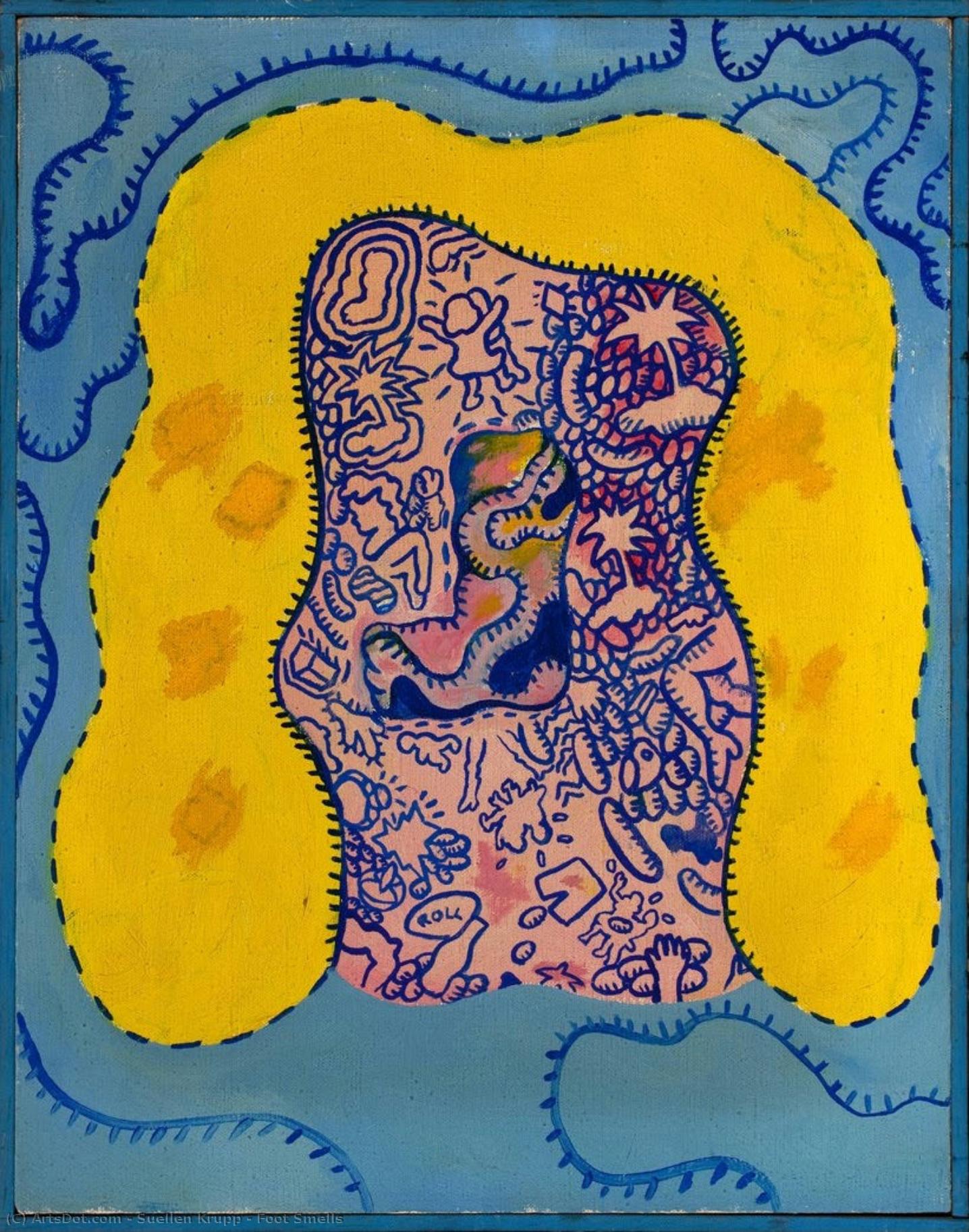
In the vibrant tapestry of mid-century modernism, few works capture the eye with such immediate, rhythmic energy as Foot Smells. Created in 1966 by the evocative Suellen Krupp, this masterpiece serves as a profound exploration of organic geometry and chromatic intensity. At first glance, the viewer is swept into a sun-drenched world, dominated by a radiant yellow background that pulses with warmth. Yet, beneath this luminous surface lies a complex, intricate design that suggests the silhouette of a human form, reimagined through a lens of abstraction. The painting does not merely depict a subject; it orchestrates a visual symphony where blue accents dance against golden hues, creating a sense of movement that feels both spontaneous and meticulously structured.
The technique employed in this piece reflects a masterful command over pattern and layering. Krupp utilizes a dense arrangement of colors and motifs to build a central figure that appears almost sculptural in its complexity. This larger, central design is populated by smaller, enigmatic figures that drift across the canvas like celestial bodies or microscopic organisms. These secondary elements create a layered depth, inviting the eye to wander through a labyrinth of shapes. The interplay between the bold, primary-adjacent colors and the delicate, intricate linework creates a tension that is quintessential to the era's experimental spirit, making every viewing a new discovery for the discerning observer.
Symbolism and the Human Connection
Beyond its striking aesthetic, Foot Smells invites deep contemplation regarding identity and the interconnectedness of life. The way the central body-like form is composed of fragmented patterns suggests that the individual is not a singular entity, but a mosaic of experiences, environments, and histories. By scattering smaller figures throughout the composition, Krupp subtly touches upon themes of community and the collective human condition. There is a sense of an ecosystem at work—a biological or social web where every small part contributes to the vitality of the whole. This symbolic depth transforms the painting from a mere decorative object into a profound meditation on existence.
For the collector or interior designer, this artwork offers a unique opportunity to introduce a focal point of immense character and intellectual weight. The emotional impact of the piece is one of uplift and curiosity; it possesses the rare ability to energize a room while simultaneously providing a quiet space for introspection. Whether placed in a contemporary gallery setting or as a bold statement piece in a sophisticated residential lounge, Foot Smells commands attention through its unapologetic joy and structural complexity. It remains a timeless testament to the power of abstraction to communicate the most intimate aspects of our shared reality.