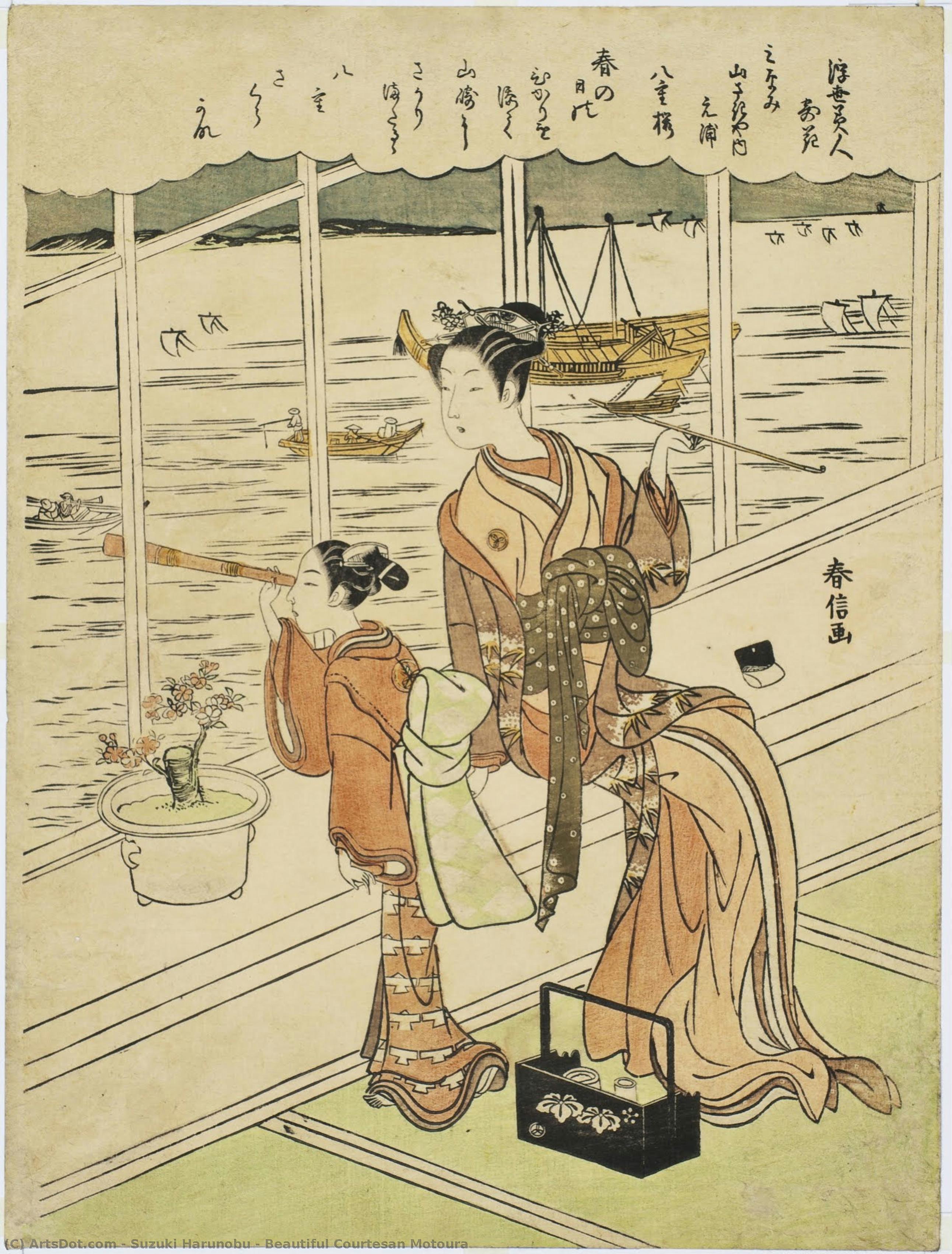
Admire Suzuki Harunobu's 'Beautiful Courtesan Motoura,' a stunning Shinagawa print showcasing elegance and artistry. Explore Japanese ukiyo-e history & discover its influence!
Discover Suzuki Harunobu (1725-1770), a pioneer of Japanese ukiyo-e! Explore his innovative nishiki-e prints, lyrical scenes & influence on Japonisme. View artworks & learn more!
Explore Tokyo's unique Tobacco and Salt Museum! Discover Japan Tobacco’s history, Edo-era art (ukiyo-e), global collections & Mayan artifacts. A fascinating cultural journey through science & art. 🏛️🇯🇵
Suzuki Harunobu’s “Beautiful Courtesan Motoura”: A Window Into Edo Period Sensibility
The print "Beautiful Courtesan Motoura" by Suzuki Harunobu, created around 1764, stands as a testament to the burgeoning aesthetic sensibilities of Edo period Japan—a time marked by refined urban culture and an obsession with capturing fleeting beauty. Produced in Shinagawa pleasure district, this nishiki-e (brocade print) transcends mere depiction; it embodies a carefully orchestrated harmony between observation and artistic interpretation. Unlike the grand spectacles of Yoshiwara, which catered to aristocratic patronage, Shinagawa offered a more accessible glimpse into the lives of merchants and samurai seeking respite from official duties—a subject matter that resonated deeply with Harunobu’s contemporaries.
Subject Matter & Composition: Capturing Transient Elegance
At its core, “Beautiful Courtesan Motoura” presents a serene tableau featuring a courtesan accompanied by her apprentice. The scene unfolds against the backdrop of Shinagawa’s waterfront docks, bathed in soft daylight—a deliberate choice that underscores Harunobu's masterful command of tonal gradation and atmospheric perspective. The composition is meticulously balanced, guiding the viewer’s eye across the canvas with subtle diagonals created by the boats and shoreline. This careful arrangement isn’t merely decorative; it serves to heighten the sense of tranquility and invite contemplation on the ephemeral nature of beauty itself.
Technique & Innovation: Pioneering Nishiki-e Craftsmanship
Harunobu revolutionized ukiyo-e printing through his pioneering use of nishiki-e techniques—a breakthrough that elevated printmaking beyond mere reproduction to a form of artistic expression. He skillfully employed multiple blocks of wood, each meticulously carved with intricate detail and inked in vibrant hues using a process known as “mica ink.” This technique allowed for unprecedented color fidelity and luminosity, surpassing the limitations of earlier methods reliant on single-block printing. The subtle blending of colors—particularly the delicate peach tones used to depict Motoura’s kimono—demonstrates Harunobu's dedication to achieving an unparalleled level of realism and capturing the nuances of light and shadow.
Historical Context & Symbolism: Reflections of Edo Society
“Beautiful Courtesan Motoura” reflects the broader cultural landscape of Edo Japan, where pleasure gardens and entertainment districts flourished alongside a growing emphasis on artistic refinement. The courtesan herself represents idealized femininity—a symbol of grace, beauty, and sophistication—values prized within aristocratic circles but also subtly acknowledged in the burgeoning merchant class. Furthermore, the inclusion of the apprentice signifies the transmission of knowledge and tradition—a crucial element of Edo society’s worldview. The potted plant nestled amongst the docks serves as a visual reminder of nature's restorative power, reinforcing the print’s overarching theme of serenity and contemplation.
Emotional Impact & Legacy: An Enduring Appeal
More than just a visually stunning artwork, “Beautiful Courtesan Motoura” evokes a profound emotional response—one rooted in admiration for beauty and an appreciation for the quiet dignity of everyday life. Harunobu's masterful execution captures not only the physical appearance of Shinagawa but also its intangible atmosphere—a feeling of peaceful seclusion and refined pleasure. This print remains remarkably influential, establishing Harunobu as one of the foremost practitioners of nishiki-e and profoundly impacting Japonisme—the European fascination with Japanese art that blossomed in the late 18th and early 19th centuries. Its enduring appeal testifies to the timeless power of artistic vision and its ability to transport viewers across cultures and eras.