Triptych (Exterior) by Taddeo Gaddi – A Window into Fourteenth-Century Florence
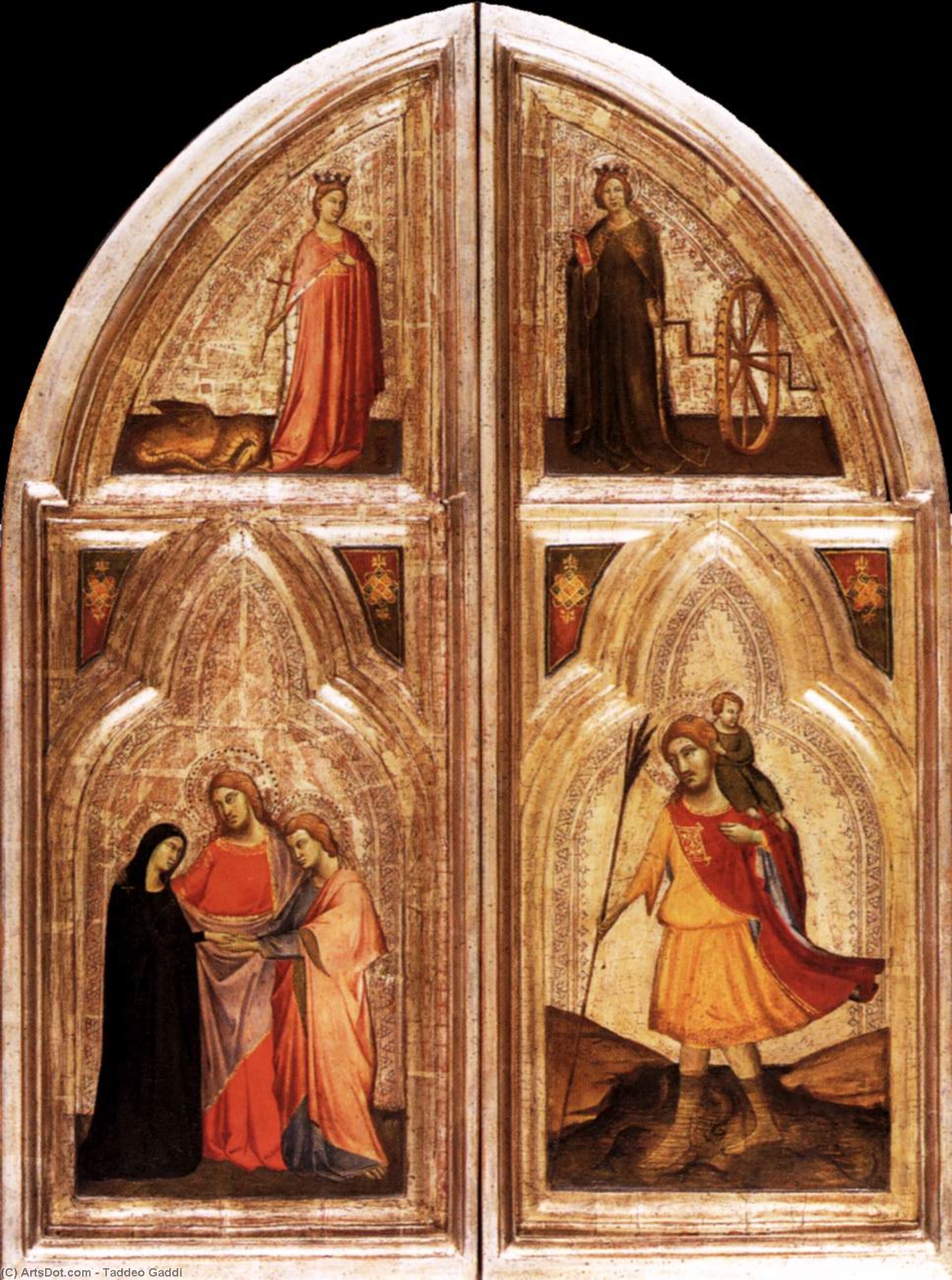
The Triptych (exterior) by Taddeo Gaddi, painted in 1333, isn’t merely a religious depiction; it's a vibrant snapshot of Florentine life and faith during a pivotal moment in the city’s artistic evolution. Commissioned likely for a prominent church or civic building, this remarkable work offers a rare glimpse into the world of Taddeo Gaddi, Giotto’s most gifted pupil, and his innovative approach to portraying both sacred narratives and the realities of human experience. The piece, now housed at the Staatliche Museen zu Berlin, immediately captivates with its rich palette, dynamic composition, and subtle yet profound symbolism – a testament to Gaddi's mastery and Giotto’s enduring influence.
- The Scene: At first glance, the triptych presents a familiar religious tableau: Christ Entrusting Mary to John, an event central to Christian theology. However, Gaddi elevates this scene beyond simple iconography. The figures aren't static; they’re imbued with a palpable sense of movement and emotion. Christ’s gesture is one of benevolent guidance, while Mary appears serene and receptive, her gaze fixed on the future. John, youthful and attentive, embodies loyalty and devotion.
- The Angels: Above the central scene, two angels are depicted – St. Catherine of Alexandria and St. Christopher – flanking a celestial vision of Christ. These figures aren’t rendered with the idealized beauty often associated with religious art; instead, they possess a grounded quality, reflecting Gaddi's commitment to portraying human likeness with remarkable accuracy.
- The Exterior Shutters: The intricate details of the exterior shutters are equally compelling. Here, Gaddi employs a full-color technique, a departure from the traditional grisaille used for these panels. This vibrant approach adds depth and drama to the scene, depicting a wayfarer being confronted by temptations and ultimately led towards damnation.
Gaddi’s Innovative Technique and Giotto's Legacy
Taddeo Gaddi’s style is deeply rooted in Giotto’s groundbreaking innovations – a move away from the stylized Byzantine tradition toward a more naturalistic and emotionally resonant representation of figures and space. Unlike many of his contemporaries, Gaddi didn’t shy away from depicting human imperfections; he embraced them, imbuing his subjects with a sense of humanity rarely seen in earlier Florentine art. The use of poplar wood, a common material for panel paintings at the time, contributes to the piece's slightly textured surface and adds to its overall rustic charm. The composition itself is carefully balanced, drawing the eye through the triptych’s layers of narrative and symbolism.
Gaddi’s influence extends beyond his immediate teacher; he was a key figure in shaping the nascent Renaissance style in Florence. His work demonstrates a sophisticated understanding of perspective and spatial relationships – elements that would become increasingly important during the High Renaissance. The subtle gradations of light and shadow, combined with the dynamic poses of the figures, create a sense of depth and realism that distinguishes Gaddi’s art from earlier medieval styles.
Symbolism and Context: A Reflection of Florentine Society
The Triptych (exterior) is more than just a religious depiction; it's a reflection of Florentine society in 1333. The scene of the wayfarer, beset by temptations and ultimately destined for damnation, speaks to the anxieties and moral concerns prevalent during this period. The inclusion of figures like St. Margaret and St. Christopher highlights the importance of saints as protectors and guides within the community. Furthermore, the presence of a wagon filled with fools – a common motif in medieval art – underscores the pervasive corruption and moral decay that plagued Florentine society at the time.
It’s believed that Gaddi's work was commissioned during a period of political instability and social unrest in Florence, reflecting the city’s turbulent history. The triptych serves as a poignant reminder of the challenges faced by Florentines striving to maintain their faith and values amidst uncertainty and adversity.
A Timeless Masterpiece: Reproduction and Appreciation
Today, the Triptych (exterior) by Taddeo Gaddi stands as a testament to the enduring power of art to illuminate history, evoke emotion, and inspire contemplation. Reproductions offer an accessible way to experience this remarkable work of art, bringing its beauty and symbolism into homes and spaces around the world.
When selecting a reproduction, consider the quality of materials and printing techniques – ensuring that the colors and details faithfully capture the essence of Gaddi’s original masterpiece. Whether displayed in a grand hall or a cozy corner, this triptych continues to captivate viewers with its timeless appeal and profound insights into the heart of Renaissance Florence.