The Vitality of Motion: A Renaissance Encounter
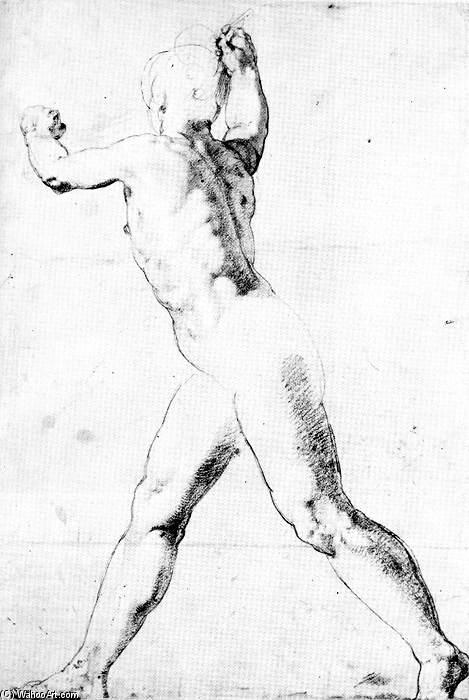
In the quiet intimacy of this charcoal study, we find ourselves transported to the heart of the Italian Renaissance, witnessing a moment of raw, unadulterated movement captured by the hand of Taddeo Zuccaro. This Study of a Male Nude is far more than a mere anatomical exercise; it is a profound exploration of the human spirit in motion. The figure, caught in a dynamic, diagonal sweep across the paper, suggests a dancer or an athlete mid-leap, embodying a sense of grace and kinetic energy that defies the stillness of the medium. Through the masterful use of light and shadow, Zuccaro breathes life into the monochrome, creating a three-dimensional presence that feels as though it might break free from the confines of the page.
The artistry lies in the delicate balance between spontaneous gesture and meticulous observation. Utilizing the tactile qualities of charcoal or pencil, the artist employs sophisticated hatching and cross-hatching techniques to sculpt the musculature of the male form. These rhythmic lines do not merely define edges; they create a sense of volume and weight, tracing the contours of the body with an anatomical precision characteristic of the Mannerist tradition. The texture of the work remains beautifully visceral, where the visible strokes of the artist’s hand serve as a window into the creative process itself, offering a glimpse of the preparatory intensity required to conceive such monumental compositions.
A Masterclass in Monochromatic Depth
While the palette is strictly limited to the grayscale spectrum, the emotional and visual depth achieved is nothing short of extraordinary. Without the distraction of color, the viewer’s eye is drawn to the interplay of light and dark—the chiaroscroll effect that defines the figure's anatomy. The darker, concentrated shadows suggest the weight of limbs in motion, while the lighter, untouched areas of the paper act as highlights, simulating the glow of skin under an unseen light source. This monochromatic approach strips the subject down to its essential elements: form, line, and tension.
For the discerning collector or interior designer, this piece offers a timeless elegance that transcends fleeting trends. Its classical subject matter and sophisticated tonal range make it an ideal centerpiece for spaces that demand a sense of intellectual depth and historical prestige. Whether placed in a contemporary gallery setting or a traditional study, the artwork provides a focal point of quiet strength. It invites contemplation on the beauty of the human form and the enduring legacy of the Renaissance masters, making it a profound addition to any curated collection of fine art reproductions.