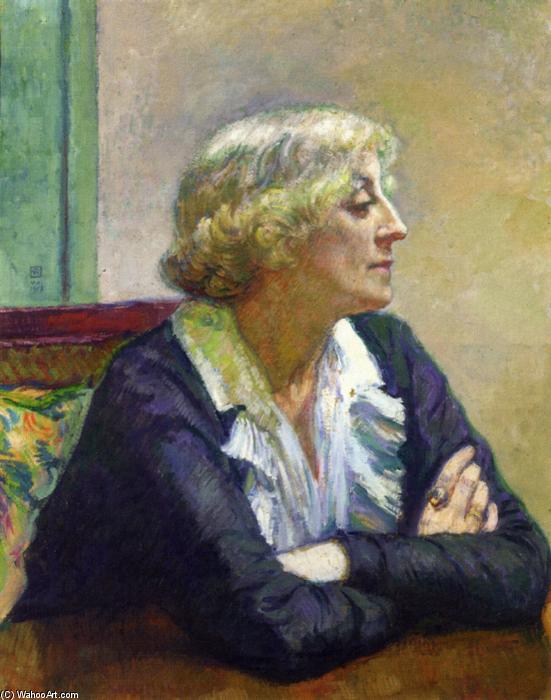
The painting
Maria Van Rysselberghe with Crossed Arms is a stunning example of
Pointillism, a technique that involves applying small dots of color to form an image. Created by the renowned artist
Theo Van Rysselberghe in 1913, this piece measures 64 x 50 cm and is painted on panel using oil. The subject of the painting is
Maria Van Rysselberghe, the artist's wife, who is depicted sitting in a chair with her arms crossed, lost in thought.
Light and Composition
The use of light in this painting is noteworthy, as it plays a significant role in creating a sense of depth and atmosphere. The
light in painting is a fundamental element that can make or break the overall effect of a piece. In
Maria Van Rysselberghe with Crossed Arms, the light is soft and gentle, illuminating the subject's face and creating a sense of intimacy. The background of the painting features two chairs and a couch, which adds to the sense of depth and dimension.
Artistic Style and Influences
Theo Van Rysselberghe was a prominent figure in the
Pointillist movement, and his work was influenced by artists such as Georges Seurat. The
Museum BOZAR (Belgium) has an impressive collection of art from this period, including works by
Theo Van Rysselberghe. Some of his notable works include
Portrait of Madame Monnon and
Portrait of Andre Gide.
Pointillism is a unique and fascinating style that requires great skill and patience to execute.
Theo Van Rysselberghe's work is a testament to the beauty and expressiveness of this technique.
The painting
Maria Van Rysselberghe with Crossed Arms is a must-see for anyone interested in
Pointillism and the art of
Theo Van Rysselberghe.