A Moment Frozen in Time: The Soul of the Camp
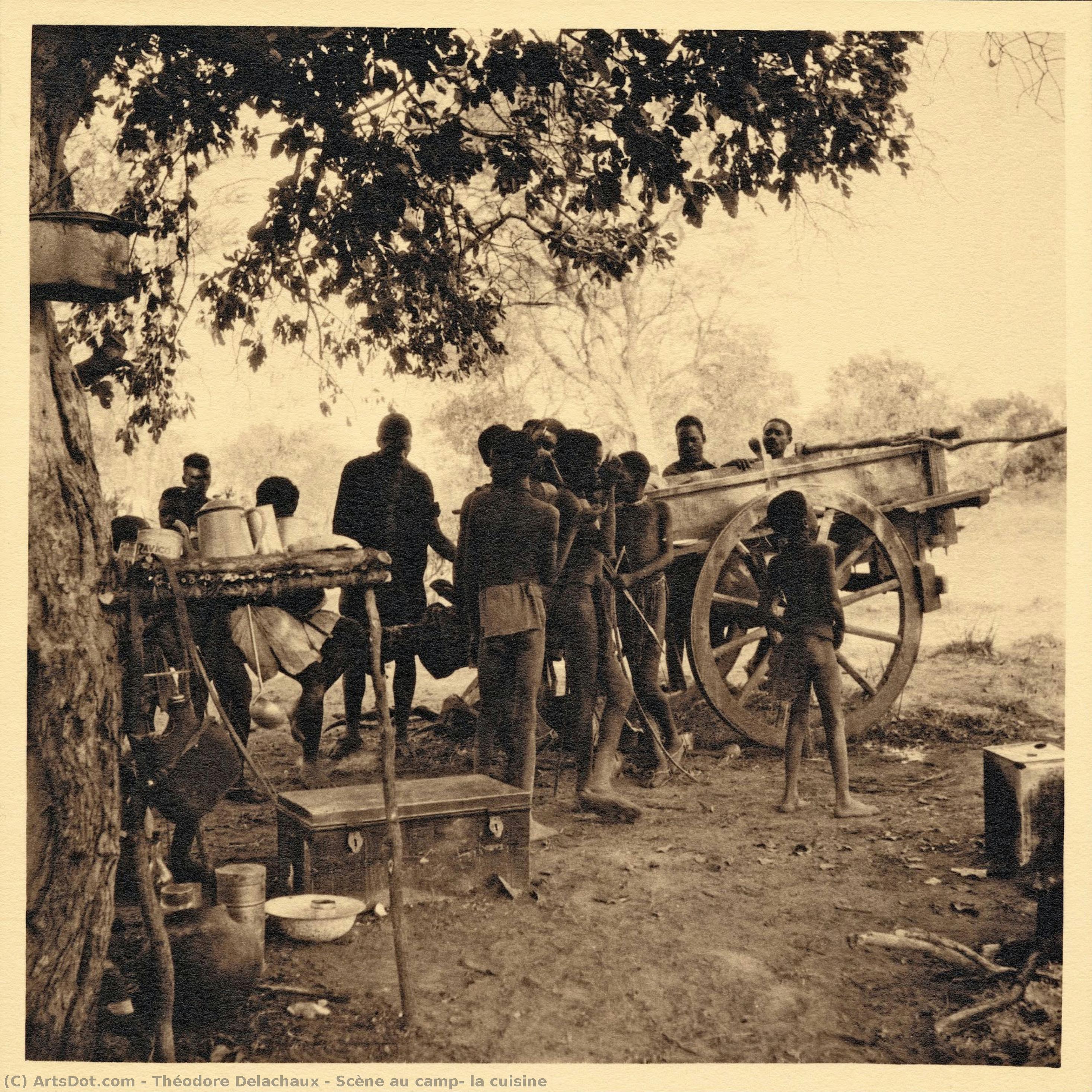
In the quiet, monochromatic depths of "Scène au camp: la cuisine," we are transported back to 1933, a year etched in the silver tones of a bygone era. This evocative photograph by the Swiss master Théodore Delachaux captures more than just a gathering; it captures the very heartbeat of communal existence. At the center of this composition sits an old-fashioned wooden wagon, acting as the gravitational anchor for a group of at least thirteen souls. There is a profound sense of shared purpose in the way the figures cluster around this vessel, their silhouettes blending into a tapestry of human connection. The scene is not merely a documentation of a meal being prepared; it is a poetic study of togetherness, where the boundaries between individual identity and collective survival seem to blur under the soft, natural light of an open field.
The composition utilizes a masterful sense of depth, drawing the viewer’s eye from the immediate foreground—where humble objects like a solitary bowl and scattered bottles hint at the raw, unadorned reality of camp life—into the heart of the social circle. Delachaux, trained in the prestigious École des Beaux-Arts in Paris, brings a sophisticated eye to this seemingly candid moment. While the subject matter feels spontaneous, the arrangement of elements suggests a deliberate rhythmic balance. The stark contrast of the black and white medium strips away the distractions of color, forcing us to confront the textures of weathered wood, the heavy fabrics of clothing, and the rugged landscape that surrounds this temporary sanctuary.
The Intersection of Ethnography and Artistry
To understand this work, one must look through the lens of Delachaux’s unique biography. As a scholar and teacher who ventured far beyond the borders of Switzerland to conduct ethnographic studies, his gaze was uniquely positioned between that of an observer and a participant. In "la cuisine," we see the influence of his deep interest in human traditions. The objects scattered across the earth—the cup, the bottles, the bench—are not mere props; they are symbols of the domesticity carved out of the wild. They represent the small, essential rituals that sustain humanity even in the most transient of settings.
For the discerning collector or interior designer, this piece offers a sophisticated layer of narrative depth. It possesses a timeless quality that transcends its 1933 origins, making it an ideal centerpiece for spaces that value historical resonance and understated elegance. The monochromatic palette allows it to integrate seamlessly into modern minimalist decors, while its profound emotional weight provides a conversational focal point in more classical settings. Owning a reproduction of this work is not simply about displaying an image; it is about inviting the quiet, enduring strength of human community into one's personal environment.