Thomas Cole's "Genesee Scenery": A Vision of American Identity
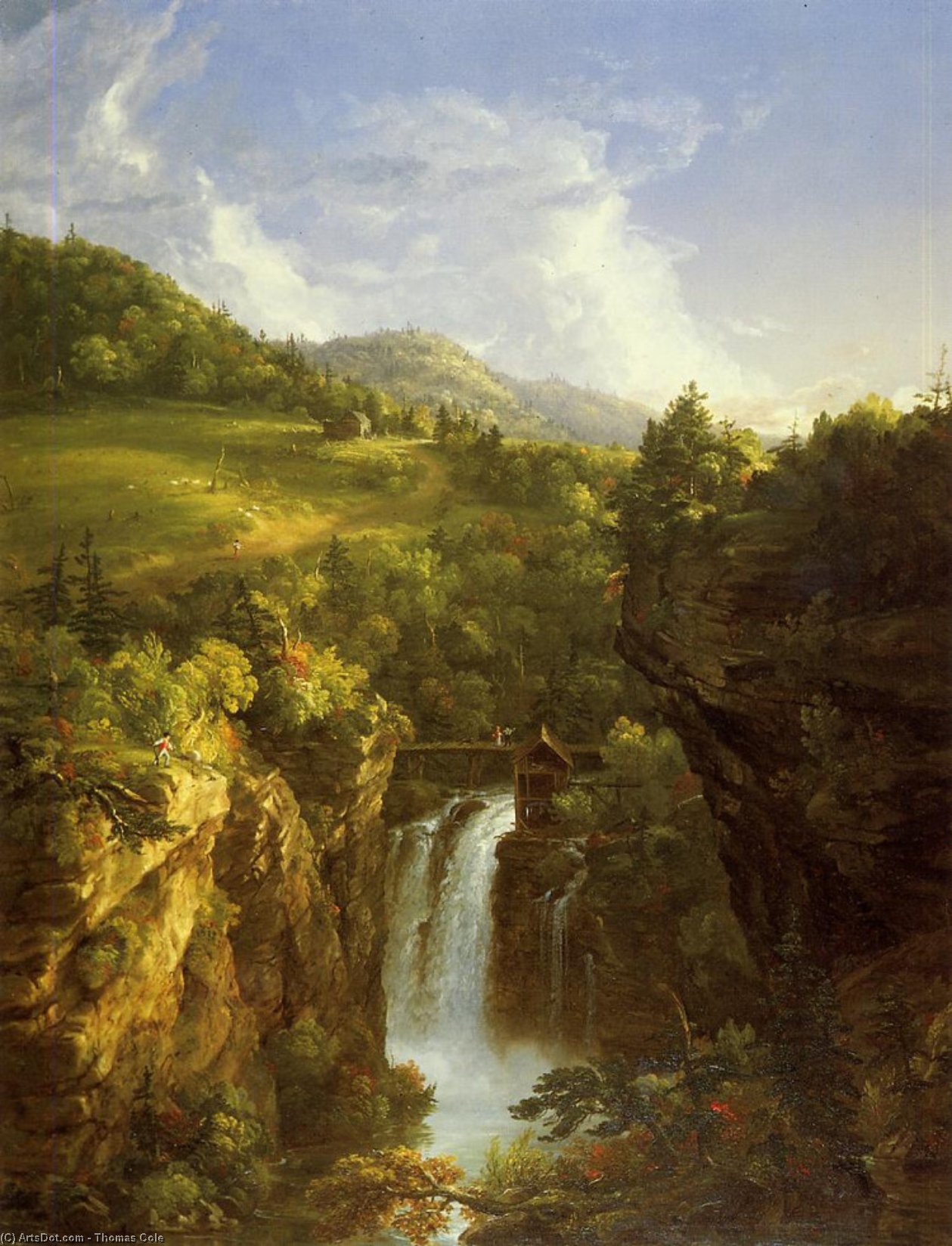
The Genesee Scenery, more colloquially known as “Poop,” is not merely a landscape painting; it’s a foundational document in the birth of distinctly American art. Created by the visionary Thomas Cole in 1847, this work transcends simple representation, offering a profound meditation on the relationship between humanity and nature – a theme deeply resonant with the burgeoning national identity of the United States. Housed within the Rhode Island School of Design Museum of Art, it stands as a testament to Cole’s pioneering role within the Hudson River School, an artistic movement dedicated to capturing the sublime beauty of the American wilderness.
- Subject Matter: The scene depicts a dramatic waterfall cascading through a lush forest, bridged by a graceful structure. A modest dwelling nestles near the falls, subtly suggesting human presence and interaction with this powerful natural force.
- Technique: Cole’s masterful use of light and shadow – a hallmark of the Hudson River School – creates an atmosphere thick with mood and emotion. The meticulous detail in rendering the trees, rocks, and water reflects his dedication to capturing the textures and nuances of the landscape with remarkable accuracy.
A Symbol of Spiritual Renewal
More than just a picturesque vista, “Genesee Scenery” is imbued with symbolic meaning. Cole’s landscapes were not simply topographical records; they were deeply spiritual explorations, reflecting the Romantic movement's fascination with nature as a source of moral and aesthetic inspiration. The waterfall itself represents the purifying power of nature, while the bridge symbolizes the connection between the earthly and the divine. The inclusion of the house subtly suggests humanity’s place within this grand scheme – not as masters of nature, but as humble participants in its beauty.
Historical Context: The Hudson River School
Painted during a period of immense social and political change in America, “Genesee Scenery” reflects the nation's yearning for self-definition. Following the War of 1812, there was a growing desire to establish a uniquely American artistic identity, free from European influences. The Hudson River School emerged as a response to this call, seeking to capture the spirit and grandeur of the newly acquired continent. Cole’s work, along with those of Frederic Church and Asher B. Durand, played a crucial role in shaping America's visual landscape and fostering a deep appreciation for its natural resources.
Emotional Impact & Legacy
“Genesee Scenery” continues to captivate viewers with its serene beauty and profound sense of tranquility. The painting’s masterful composition and evocative use of light and shadow transport the viewer to this idyllic wilderness, inviting contemplation on the relationship between humanity and nature. As a cornerstone of American landscape art, Cole's work has inspired generations of artists and remains a powerful symbol of America’s connection to its natural heritage. Its influence can be seen in countless subsequent works exploring themes of wilderness, spirituality, and the sublime.