A Glimpse into the Soul: Thomas de Keyser’s ‘Portrait of a Man’
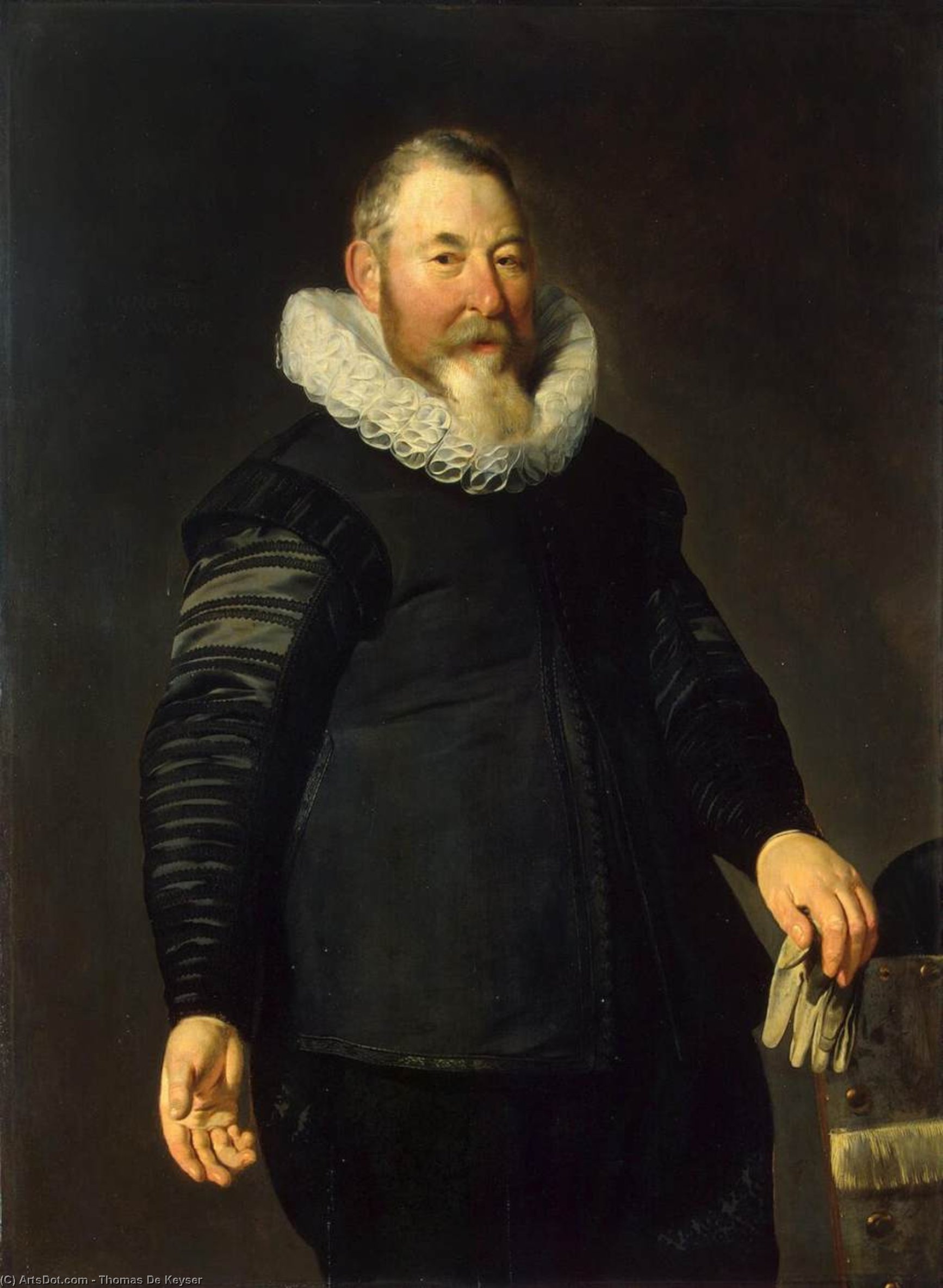
Within the hushed reverence of a museum or the intimate glow of a carefully curated home, Thomas de Keyser's “Portrait of a Man” (circa 1632) commands attention not merely as an image, but as a window into the complexities of human character. This is no simple likeness; it’s a meticulously crafted study in observation and emotion, a quintessential example of the Dutch Golden Age’s fascination with capturing the inner life of its subjects. De Keyser, often considered Rembrandt's closest peer and a master of his own distinctive style, presents us with a gentleman of considerable presence – a man who invites contemplation long after initial viewing.
The painting immediately establishes a sense of dignified composure. The subject, dressed in the rich, dark fabrics characteristic of the period’s wealthy merchants and civic leaders, possesses an air of quiet confidence. His posture is subtly turned towards the viewer, creating a direct engagement that feels remarkably intimate despite the formality of the attire. Yet, it's not simply a portrait of outward appearance; De Keyser skillfully employs chiaroscuro – the dramatic interplay of light and shadow – to draw our focus to his face, revealing a network of subtle lines etched by time and experience. These aren’t merely wrinkles; they speak volumes about a life lived, a mind engaged with the world.
The Language of Form: Technique and Detail
De Keyser's mastery lies in his painstaking attention to detail, a hallmark of Dutch portraiture during this era. The artist’s technique is built upon layers of oil paint, meticulously applied to create textures that are both remarkably realistic and subtly suggestive. Observe the smooth sheen of the fabric, contrasted with the rougher texture of the man's beard – each element rendered with an almost obsessive precision. The lace at his collar and cuffs isn’t merely decorative; it’s a complex network of delicate lines, demonstrating De Keyser’s control over form and his ability to capture intricate details with remarkable accuracy. The subtle variations in tone and color within the skin itself – the warm browns and pinks – contribute to an astonishing sense of realism.
The composition is deceptively simple yet profoundly effective. The dark background, devoid of any distracting elements, serves to isolate the subject and amplify his presence. The vertical lines of his doublet create a sense of formality and structure, while the slight turn of his body draws our eye directly to his face – the focal point of the entire painting. Even the inclusion of the gloves, held casually in one hand, adds a layer of narrative, hinting at leisure or perhaps even status within the social hierarchy of the time.
Symbolism and Context: A Window into 17th-Century Dutch Society
“Portrait of a Man” is more than just a likeness; it’s a reflection of the values and beliefs of 17th-century Holland. The direct gaze, the slight upward tilt of his head – these are not accidental gestures but deliberate attempts to convey self-assurance and perhaps even a touch of melancholy. The inclusion of the shell, often associated with wisdom and contemplation in Dutch symbolism, subtly reinforces this sense of introspection. It’s a quiet reminder that beneath the surface of outward appearances lies a complex inner world.
Painted during the height of the Dutch Golden Age, this portrait reflects the era's burgeoning interest in individual identity and psychological realism. The subject represents a merchant class – a rising force in European society – whose wealth and influence were increasingly reflected in their artistic patronage. De Keyser’s work, alongside that of Rembrandt and other contemporaries, helped to establish a new standard for portraiture, one that prioritized not just physical likeness but also the conveyance of character and emotion.
A Timeless Masterpiece: Reproduction and Beyond
Reproductions of “Portrait of a Man” offer an unparalleled opportunity to bring this remarkable work into your home or office. Whether you choose a high-quality print, a meticulously crafted canvas reproduction, or even a digital image for your screensaver, you’ll be experiencing the enduring power and beauty of De Keyser's vision. This painting is not simply a decorative element; it’s a conversation starter, an invitation to contemplate the complexities of human nature, and a testament to the artistic genius of the Dutch Golden Age.