Discover Thomas Eakins (1844-1916), the pivotal American realist painter renowned for unflinching portraits, dynamic rowing scenes & anatomical precision. Explore his legacy now!
Explore modern & contemporary art at the Hirshhorn Museum in Washington, D.C.! Discover iconic works, sculpture gardens, thought-provoking exhibitions & free admission.
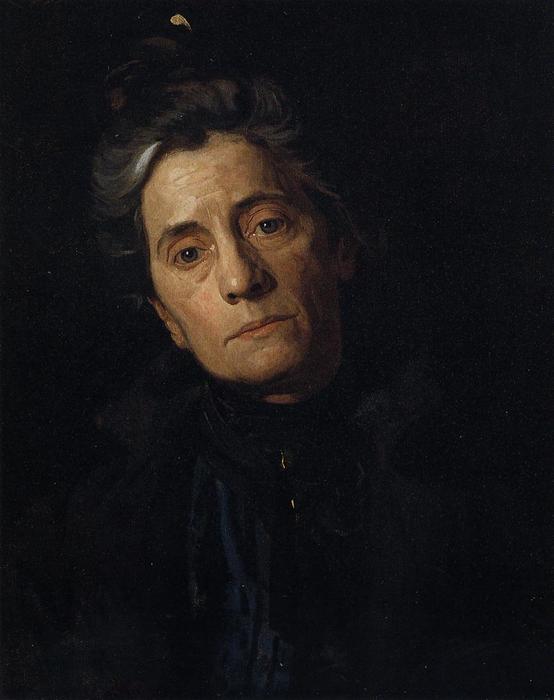
A Portrait Steeped in Observation: Thomas Eakins’s Susan MacDowell
- Subject Matter The painting depicts Susan MacDowell Eakins, a prominent Philadelphia socialite and wife of Dr. Samuel MacDowell, capturing her gaze with remarkable sensitivity. Eakins meticulously rendered MacDowell's face and posture, prioritizing anatomical accuracy alongside psychological nuance—a hallmark of his artistic approach.
- Style Eakins’s style aligns firmly within the Realist movement, rejecting idealized representations in favor of portraying subjects as they truly appear. This commitment to observable reality distinguishes him from Impressionists who focused on capturing fleeting moments of light and color; instead, Eakins sought to distill the essence of human character.
- Technique Executed in oil paint on canvas, Eakins employed a technique characterized by layered brushstrokes—a deliberate strategy designed to build up tonal depth and create an illusion of three-dimensional form. The artist’s meticulous attention to detail is evident in the subtle shading around MacDowell's eyes and mouth, conveying a profound sense of realism.
- Historical Context Created in 1899, “Portrait of Susan MacDowell Eakins” emerged during a period of significant social change in America. The rise of scientific inquiry influenced artistic endeavors, prompting artists like Eakins to adopt observational methods and challenge conventional notions of beauty. Furthermore, the painting reflects the burgeoning interest in psychological portraiture—a genre that aimed to explore the inner workings of the human mind.
- Symbolism While seemingly straightforward, the composition carries subtle symbolic weight. MacDowell’s direct gaze confronts the viewer head-on, symbolizing introspection and self-awareness—qualities valued during the Victorian era. The dark background serves as a foil to MacDowell's luminous face, emphasizing her presence and highlighting the artist’s masterful control over tonal contrast.
More than just a likeness, Eakins’s portrait is an invitation into MacDowell’s inner world—a testament to his ability to translate observation into emotive power. Its quiet contemplation resonates with viewers today, reminding us of the enduring fascination with capturing human experience in its most honest form.