A Meeting of Titans: The Soul of American Realism
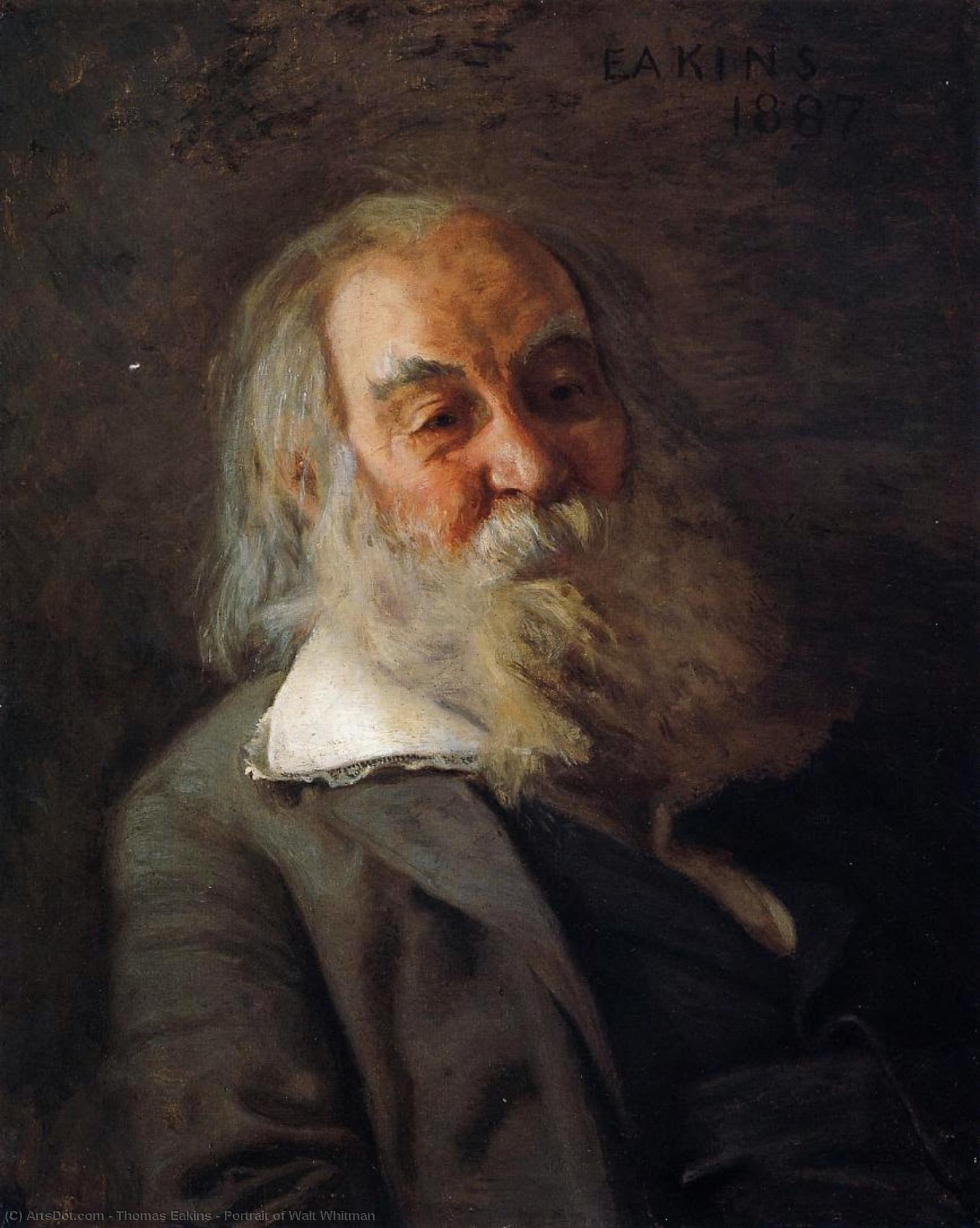
In the quiet, profound depths of Thomas Eakins’ Portrait of Walt Whitman, we encounter more than just a likeness; we witness a monumental collision of two American icons. Painted in 1887, this masterpiece serves as a bridge between the unflinching precision of the painter and the expansive, transcendental spirit of the poet. Eakins, a master of the Philadelphia realist tradition, did not merely seek to replicate the physical form of Whitman; he sought to dissect the very essence of the man’s character. The portrait captures the legendary author of Leaves of Grass in a moment of quiet contemplation, his weathered face and prominent beard acting as topographical maps of a life lived with intense passion and intellectual rigor.
The historical context of this encounter is as compelling as the canvas itself. Their friendship, which blossomed in the late 1880s, was rooted in a shared devotion to truth—Eakins through his scientific anatomical precision and Whitman through his raw, unvarnished poetry. When Eakins sat before his subject, he brought with him an almost clinical eye for detail, yet he infused the work with a reverence that transcends mere documentation. For collectors and lovers of fine art, this piece represents a pinnacle of 19th-century American identity, capturing a moment where the grit of reality meets the heights of literary genius.
Technique and the Mastery of Light
To gaze upon this work is to appreciate the meticulous discipline of Eakins’ technique. Utilizing oil on canvas, the artist employed a muted, somber palette that directs all focus toward the psychological weight of the subject. There is an incredible tactile quality to the brushwork; one can almost feel the coarse texture of Whitman's hair and the ruggedness of his skin. Eakins’ ability to manipulate light and shadow—a technique deeply rooted in his study of anatomy and light—creates a sense of three-dimensional presence that makes the subject appear to breathe within the frame.
The artist’s use of tonal variations is particularly masterful, as he navigates the subtle transitions from the bright highlights on the forehead to the deep, introspective shadows that shroud the background. This controlled use of light does not just illuminate the face; it sculpts the very concept of wisdom. For an interior designer or a curator of fine reproductions, this painting offers a profound sense of gravity and permanence. The composition is understated yet commanding, making it an ideal centerpiece for spaces that demand intellectual depth and a sophisticated, classical atmosphere.
Symbolism and Emotional Resonance
Beyond the physical attributes, every element of the portrait vibrates with symbolic meaning. Whitman’s gaze, directed slightly off-camera, suggests a mind wandering through the vast landscapes of his own poetic imagination. He is not looking at the viewer, but rather through the veil of the present moment into something eternal. This creates an intimate yet distant emotional impact, inviting the observer to participate in his silent meditation. The simplicity of the setting—the suggestion of a chair or a quiet corner—strips away the distractions of the material world, leaving only the raw human spirit.
For those seeking to bring a piece of history into their homes, this portrait offers an unparalleled emotional resonance. It is a study in dignity, age, and the enduring power of the human intellect. Owning a high-quality reproduction of this work allows one to inhabit a space defined by such profound stillness and strength. It is not merely a decoration; it is an invitation to reflect on the legacies of those who shaped the American consciousness, rendered with a level of honesty that remains as provocative and moving today as it was in 1887.