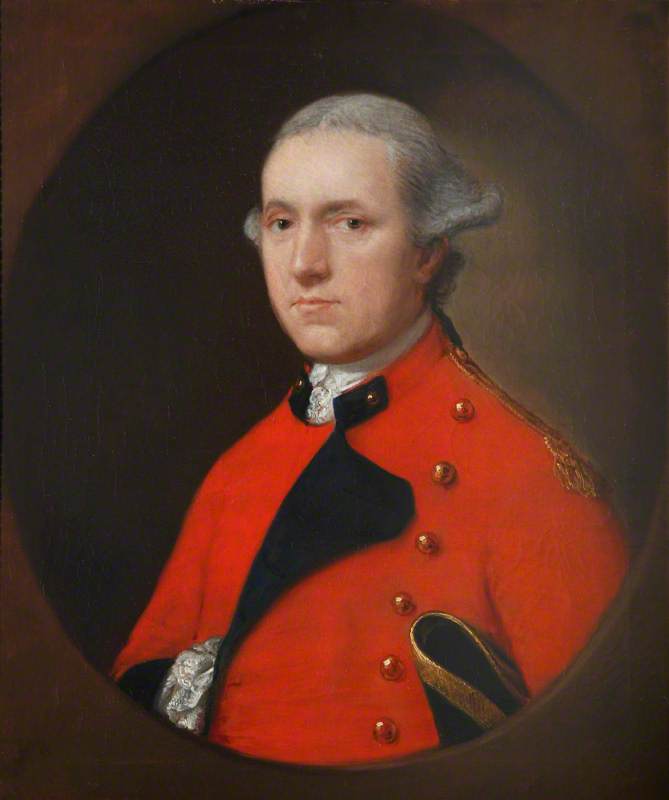
A Portrait of Authority: Colonel Alexander Champion by Thomas Gainsborough
Thomas Gainsborough’s “Colonel Alexander Champion (d.1795)” is more than a simple likeness; it's a carefully constructed tableau of 18th-century English identity, rendered with the artist’s signature blend of observation and subtle manipulation. Painted in 1767, this portrait captures not just the physical appearance of a military officer but also his social standing, his bearing, and the weight of responsibility he carries – all conveyed through a masterful interplay of light, shadow, and restrained detail.
The subject himself, Colonel Alexander Champion, was a man of considerable influence within the Suffolk militia. Gainsborough’s depiction isn't one of flamboyant grandeur; instead, it presents a figure of quiet dignity and controlled power. The red coat, meticulously trimmed with gold, speaks to his rank and wealth, while the black hat and white wig are hallmarks of the period’s formal military attire. However, it is in the details – the set of his shoulders, the direct gaze fixed upon the viewer – that Gainsborough truly reveals Champion's character. He isn’t merely posing; he exudes a sense of command and self-assuredness.
The Painter’s Technique: Light, Texture, and Atmospheric Depth
Gainsborough’s technique is instantly recognizable. He employs loose, expressive brushstrokes, creating a remarkably tactile surface – one that invites the viewer to almost feel the texture of the fabric and the weight of the officer's uniform. The artist masterfully utilizes light to sculpt the figure, highlighting the contours of his face and emphasizing the richness of the red coat. Notice how the light catches the gold trim, adding a subtle shimmer and drawing attention to this symbol of status.
The background is deliberately dark and indistinct, serving not as a distraction but rather as a carefully considered element of composition. This technique directs the viewer’s focus entirely onto the subject, creating an intimate and almost theatrical space. The muted tones contribute to the overall sense of seriousness and gravitas, reinforcing the portrait's theme of authority and duty.
Historical Context: Portraiture and Social Status in Georgian England
“Colonel Champion” is a quintessential example of Georgian-era portraiture – a genre deeply intertwined with social status and political power. During this period, commissioning portraits was a significant investment, signifying wealth, influence, and a desire to secure one’s place within the established order. Portraits were not simply representations; they were carefully crafted statements about an individual's identity and position in society.
Gainsborough himself navigated this complex social landscape with remarkable skill. He understood that his portraits were more than just likenesses; they were opportunities to shape perceptions and enhance the reputations of his clients. The Colonel’s portrait is a testament to Gainsborough's ability to capture not only physical appearance but also the essence of a man – his character, his role, and his place in the world.
Symbolism and Emotional Resonance
Beyond its formal elements, the portrait holds subtle layers of symbolism. The Colonel’s direct gaze invites engagement, suggesting a willingness to communicate and share his perspective. His posture conveys confidence and self-assurance, while the dark background hints at the burdens of responsibility he carries. The restrained palette – dominated by reds, blacks, and muted browns – evokes a sense of seriousness and dignity, reflecting the solemnity of military life.
Ultimately, “Colonel Alexander Champion” is a powerful portrait that transcends mere representation. It’s a window into Georgian England, offering insights into social customs, political dynamics, and the enduring appeal of capturing human character through art. It remains a captivating work, inviting viewers to contemplate the complexities of identity, authority, and the lasting legacy of Thomas Gainsborough's artistic vision.