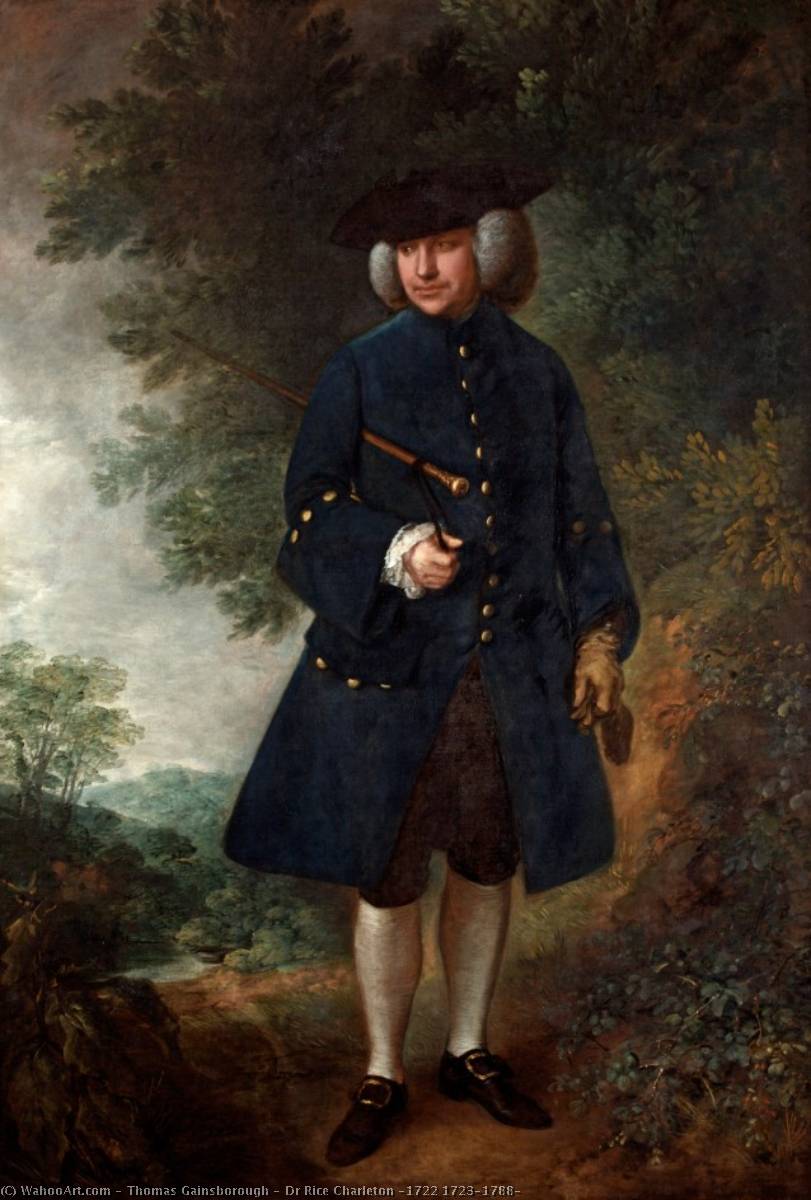
Dr Rice Charleton (1722/1723–1788): A Portrait of Quiet Dignity
Thomas Gainsborough’s “Dr Rice Charleton” stands as a testament to the artist's mastery of capturing subtle emotion and understated elegance—a hallmark of his distinctive style. Painted circa 1764, this portrait offers more than just a likeness; it embodies the spirit of Georgian England, reflecting its burgeoning intellectual curiosity alongside its aristocratic sensibilities.
- Subject Matter: The painting depicts Dr Rice Charleton, a physician and landowner from Suffolk, seated in a richly furnished room. His gaze is direct yet contemplative, conveying an air of calm confidence despite the formality of his attire.
- Style & Technique: Gainsborough employed his signature technique—loose brushstrokes combined with soft glazing—to achieve a luminous effect that softens the contours of Charleton’s face and drapery. The artist skillfully utilized chiaroscuro, creating dramatic contrasts between light and shadow to sculpt the figure and heighten its sense of presence.
- Historical Context: Painted during the Enlightenment, “Dr Rice Charleton” reflects the growing interest in scientific observation and rational thought prevalent at the time. However, Gainsborough’s focus remains firmly on portraying human character—a deliberate departure from earlier portraiture traditions that prioritized idealized representations.
The composition itself is carefully considered. The room behind Charleton is sparsely decorated, emphasizing his importance as the focal point of the scene. Details like the draped curtain and the subtle textures of the fabrics contribute to a sense of refined taste and aristocratic comfort. Gainsborough’s meticulous attention to detail underscores his commitment to realism while simultaneously elevating the portrait beyond mere representation.
- Symbolism: The pose—seated upright with hands clasped—suggests dignity and composure, reflecting Charleton's status as a respected physician and landowner. Furthermore, the inclusion of birds perched on branches adds an element of pastoral beauty to the interior setting, hinting at connections to nature and conveying a sense of tranquility.
- Emotional Impact: “Dr Rice Charleton” succeeds in capturing a profound stillness—a quiet contemplation that invites viewers to consider the subject’s inner life. Gainsborough's masterful use of light and color evokes feelings of serenity and sophistication, cementing its place as one of his most enduring achievements.
This remarkable artwork exemplifies Gainsborough’s ability to transform ordinary subjects into symbols of intellectual refinement and human dignity—a legacy that continues to inspire admiration and appreciation today. Its understated beauty speaks volumes about the artist's profound understanding of human psychology and his unwavering dedication to capturing the essence of his time.