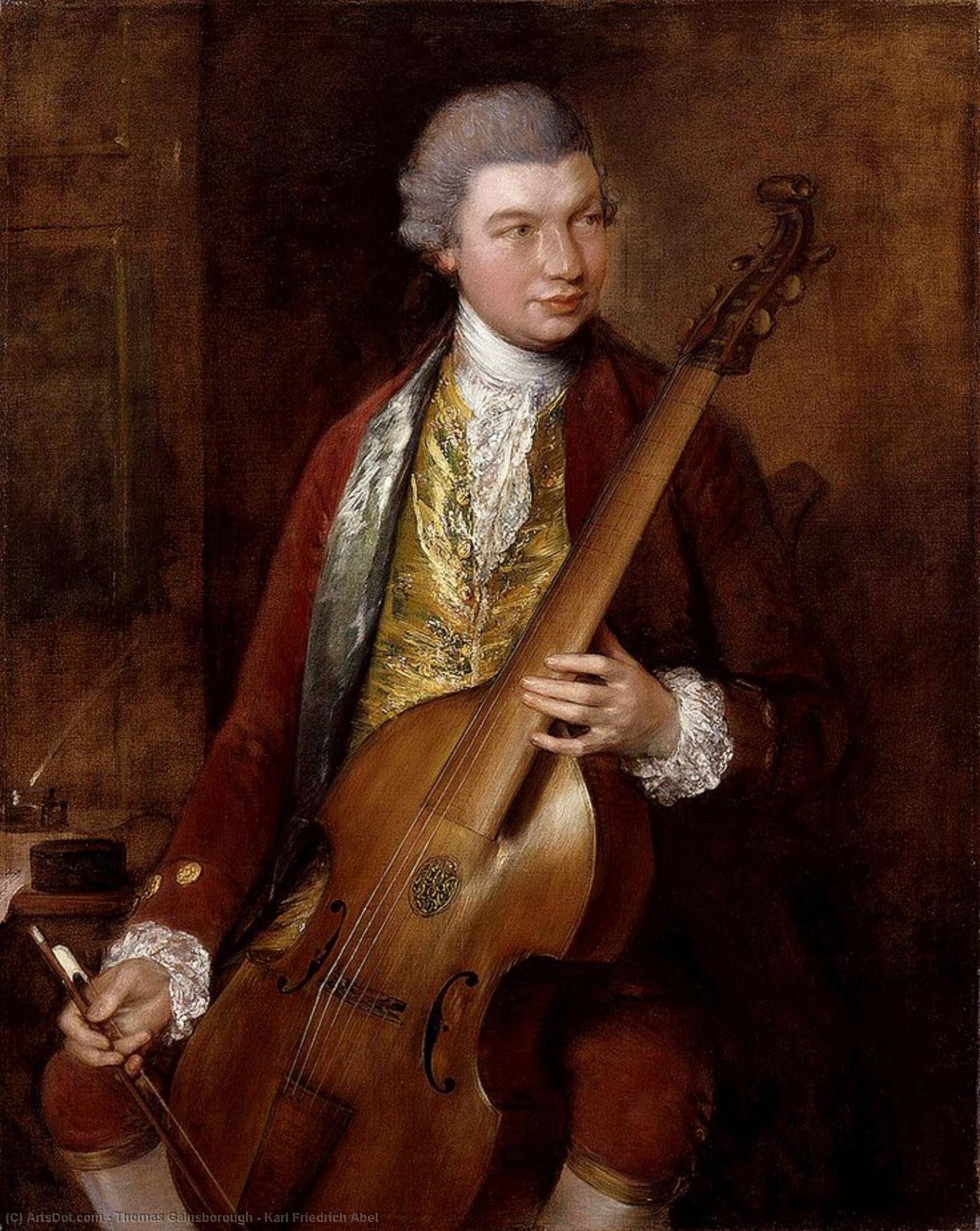
A Portrait of Musical Promise: Thomas Gainsborough's *Karl Friedrich Abel*
Thomas Gainsborough’s 1765 portrait, *Karl Friedrich Abel*, is more than just a likeness; it’s a window into the burgeoning world of British art and the rising prominence of musical patronage. The painting depicts a man – identified as Karl Friedrich Abel, a renowned German cellist – holding his instrument with an air of quiet confidence. Gainsborough masterfully captures Abel's character, not merely through physical representation but also through subtle gestures and expressions that speak volumes about his profession and personality. The composition is dominated by the cello itself, a powerful visual element that anchors the scene and immediately draws the viewer’s eye. The large scale of 127 x 101 cm further emphasizes the instrument's importance, reflecting Abel’s central role as a musician.
Gainsborough’s Technique: A Blend of Rococo and English Landscape
- Gainsborough’s style exemplifies the transition between the formal elegance of the Rococo period and the burgeoning interest in English landscapes that characterized his later work. Notice the soft, diffused lighting – a hallmark of Gainsborough's technique – which lends the scene a gentle warmth and intimacy.
- The brushwork is loose and expressive, particularly evident in the rendering of Abel’s clothing and the cello’s varnish. This approach contributes to the painting’s overall sense of movement and vitality.
- He employs a carefully constructed background, subtly incorporating elements that hint at Abel's European origins without resorting to overt exoticism – a common practice in portraiture at the time. The two figures in the background, though partially obscured, add depth and narrative complexity to the scene.
Symbolism of Music and Status
The cello itself is laden with symbolic meaning. In 18th-century England, the cello was associated with both high culture and aristocratic status. Abel’s holding of the instrument signifies his position as a skilled musician within this elite social circle. The suit he wears – a blue velvet coat adorned with a silk bow tie – further reinforces his elevated standing. Gainsborough subtly elevates Abel's image, presenting him not just as a craftsman but as an individual of taste and refinement.
Historical Context: Patronage and the Rise of Musical Talent
*Karl Friedrich Abel* was painted during a period of significant change in British musical life. The patronage system – where wealthy individuals commissioned works from artists and musicians – was flourishing, providing opportunities for talented individuals like Abel to develop their careers. Gainsborough’s portrait reflects this dynamic, capturing a moment in time when music was becoming increasingly valued as an art form and a means of social distinction. The painting offers a valuable glimpse into the lives of those who shaped the cultural landscape of 18th-century England.