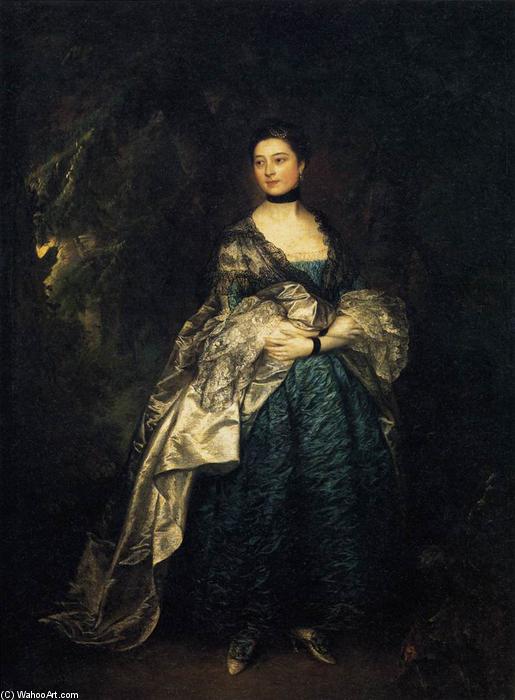
A Portrait Steeped in Rococo Elegance: Lady Alston by Thomas Gainsborough
Lady Alston stands as a quintessential emblem of Georgian portraiture—a testament to Thomas Gainsborough’s mastery and an exquisite glimpse into the refined sensibilities of his era. Completed in 1760, this monumental canvas measuring 226 x 168 cm resides within the hallowed halls of the Musée du Louvre in Paris, France, ensuring its enduring legacy as one of Britain's most treasured artistic achievements. Gainsborough’s distinctive approach—characterized by loose brushstrokes and a masterful manipulation of light—elevates Lady Alston beyond mere likeness; it captures an atmosphere of aristocratic grace and subtle psychological depth.
- Style & Technique: Gainsborough’s signature style is undeniably Rococo, evident in the delicate layering of paint and the pervasive sense of movement within the background landscape. The artist eschews rigid formality, favoring a technique that prioritizes capturing fleeting impressions rather than precise representation. Notice particularly how Gainsborough utilizes shadowing to create an illusion of three-dimensionality, pulling the viewer into the scene’s tranquil setting—a deliberate departure from the more static conventions of earlier portraiture styles.
- Subject Matter & Symbolism: The sitter herself embodies the ideals of Georgian femininity – Lady Alston is depicted in a sumptuous blue gown adorned with intricate embellishments that speak to the wealth and status of her family. Her white lace collar and cuffs further accentuate her elegance, reflecting the prevailing fashions of the time. Crucially, she holds aloft a magnificent fan—a symbol not merely of adornment but also of social etiquette and conversational grace.
Light and Atmosphere: The Dramatic Impact of Gainsborough’s Palette
Gainsborough's masterful use of light is paramount to Lady Alston’s emotive power. He employs a dramatic chiaroscuro technique, highlighting the woman’s facial features while simultaneously enveloping the canvas in a moody darkness that contrasts sharply with her luminous complexion. This deliberate juxtaposition creates an arresting visual effect—drawing attention to her expression and conveying a sense of contemplative serenity. The dark background serves as a foil to Lady Alston's brilliance, amplifying her presence and reinforcing the painting’s psychological resonance.
Historical Context & Artistic Influence
Painted during Gainsborough’s formative years, Lady Alston exemplifies the burgeoning Romantic spirit that was subtly infiltrating British art. While adhering to established conventions of portraiture—such as formal pose and meticulous detail—Gainsborough nevertheless infused his work with an intangible quality—a feeling for mood and atmosphere—that distinguishes it from its contemporaries. Gainsborough’s influence extended far beyond his own lifetime, inspiring generations of artists who sought to emulate his expressive style and capture the essence of human emotion.
Exploring Lady Alston: A Reproduction Opportunity
A stunning oil painting reproduction of Lady Alston is available at WikiOO.org, allowing art enthusiasts and collectors alike to experience the beauty and sophistication of Gainsborough’s masterpiece firsthand. Furthermore, visitors can delve deeper into Gainsborough's artistic journey and his enduring legacy at The Holburne Museum in Bath, United Kingdom.