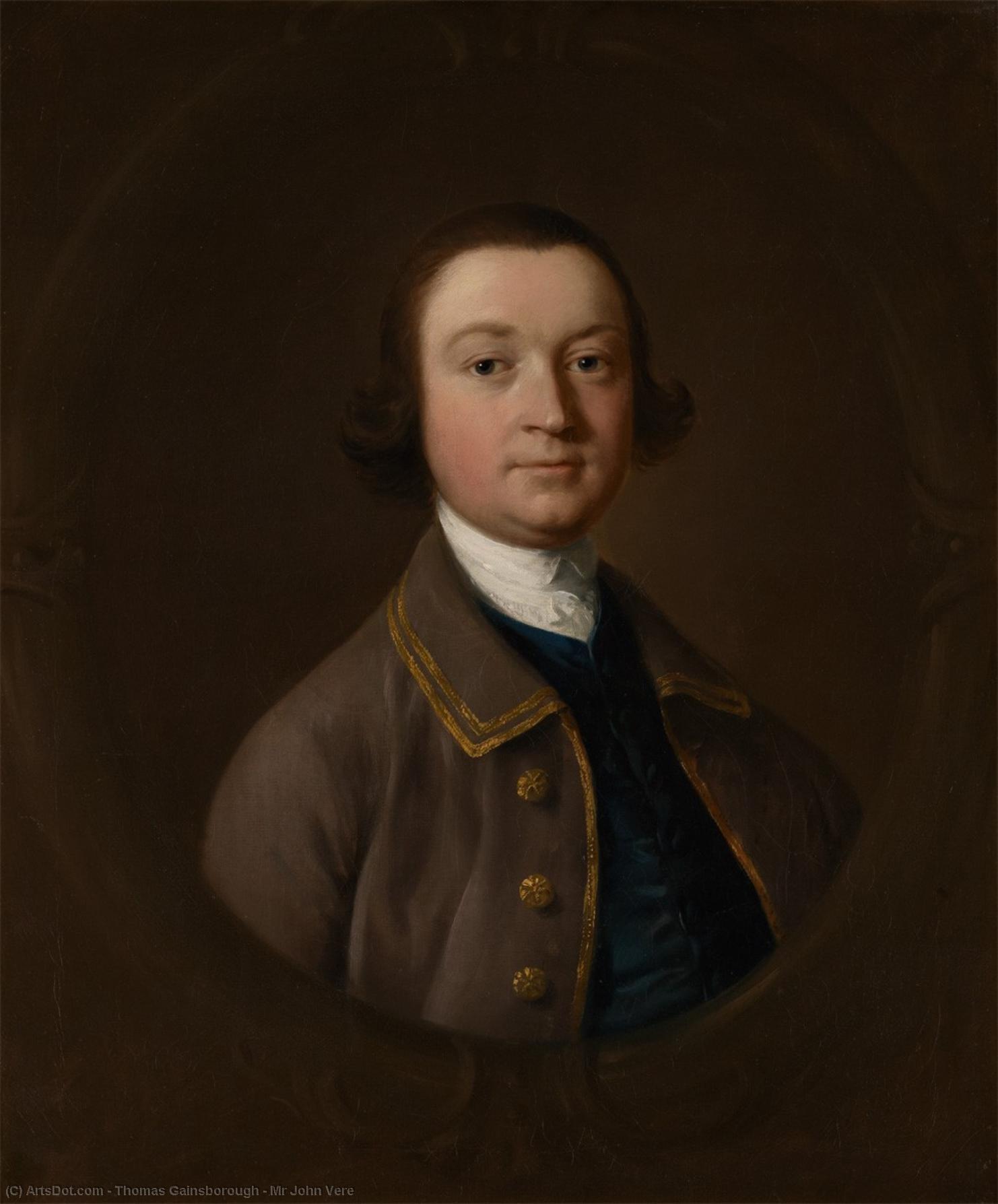
Admire Thomas Gainsborough's masterful portrait of Mr John Vere, capturing the elegance and sophistication of the British upper class during the Georgian era. Explore Gainsborough’s legacy at Gainsborough’s House in Suffolk.
Thomas Gainsborough (1727-1788): Explore the elegant portraits & landscapes of this British master, Royal Academy founder & influence on Constable.
Gainsborough's House
(Suffolk County, United States of America)
Step back into 18th-century England at Gainsborough’s House! Explore the birthplace of Thomas Gainsborough, discover his art & life, and immerse yourself in Suffolk's rich history.
A Portrait Steeped in Tradition: Exploring Thomas Gainsborough’s “Mr John Vere”
The canvas holds an image of quiet dignity – Mr John Vere, rendered with meticulous detail by Thomas Gainsborough in 1759. More than just a likeness, this portrait embodies the spirit of Georgian England, capturing not merely appearance but also social status and intellectual refinement. It resides within Gainsborough’s House in Suffolk, United States, offering visitors a glimpse into the artistic legacy of one of Britain's most revered painters.
The Painter’s Vision: Gainsborough’s Style and Technique
Thomas Gainsborough (1727-1788) emerged from humble beginnings – Sudbury, Suffolk – to become synonymous with aristocratic portraiture. Unlike his contemporaries who favored theatrical poses and opulent costumes, Gainsborough championed a naturalistic approach, prioritizing observation and capturing the subtle nuances of human expression. His technique was characterized by loose brushstrokes layered upon each other, creating an illusion of depth and texture that distinguishes him from more formal painters. He skillfully employed mezzotint etching alongside oil painting, allowing for tonal variations and enhancing the overall impact of his compositions. This dual medium approach wasn’t merely a stylistic preference; it reflected Gainsborough's belief in conveying emotion through nuanced shading and subtle gradations of color—a cornerstone of his artistic philosophy.
A Window into Georgian Society
“Mr John Vere” speaks volumes about the social landscape of 1759. Vere, a gentleman landowner, represents the burgeoning upper class eager to solidify their position within British society. The pose – seated comfortably in a chair draped with luxurious fabrics—is deliberately understated, conveying confidence and cultivated taste rather than ostentation. Gainsborough’s careful depiction of Vere's attire—a dark suit adorned with a subtle waistcoat—reflects the prevailing fashion trends of the era, emphasizing respectability and adherence to social conventions. The inclusion of a white wig is a deliberate stylistic choice, signifying erudition and aligning Vere with the intellectual pursuits valued by the aristocracy.
Symbolism Beyond Appearance
Beyond its visual elements, “Mr John Vere” resonates with symbolic significance. The muted palette—dominated by browns, creams, and blues—creates an atmosphere of tranquility and contemplation. These colors evoke associations with stability, trustworthiness, and moral virtue – qualities deemed essential for upholding social standing during the Georgian period. Furthermore, the gaze of Mr. Vere directs outwards, suggesting ambition and engagement with the wider world. It’s a gaze that speaks not only to his own self-assurance but also to the broader aspirations of his class—a desire for influence and recognition within the corridors of power.
Emotional Resonance: Capturing Inner Character
Ultimately, Gainsborough succeeds in conveying something far deeper than mere physical likeness. The portrait captures Mr John Vere’s inner character – a quiet dignity tempered by intelligence and compassion. The artist's masterful use of light and shadow sculpts the face, revealing subtle expressions that hint at thoughtfulness and introspection. This psychological depth distinguishes Gainsborough’s work from many portraits of his time, demonstrating his profound understanding of human emotion. “Mr John Vere” remains an enduring testament to Gainsborough’s artistic genius—a captivating image that continues to inspire admiration for its beauty and insight.