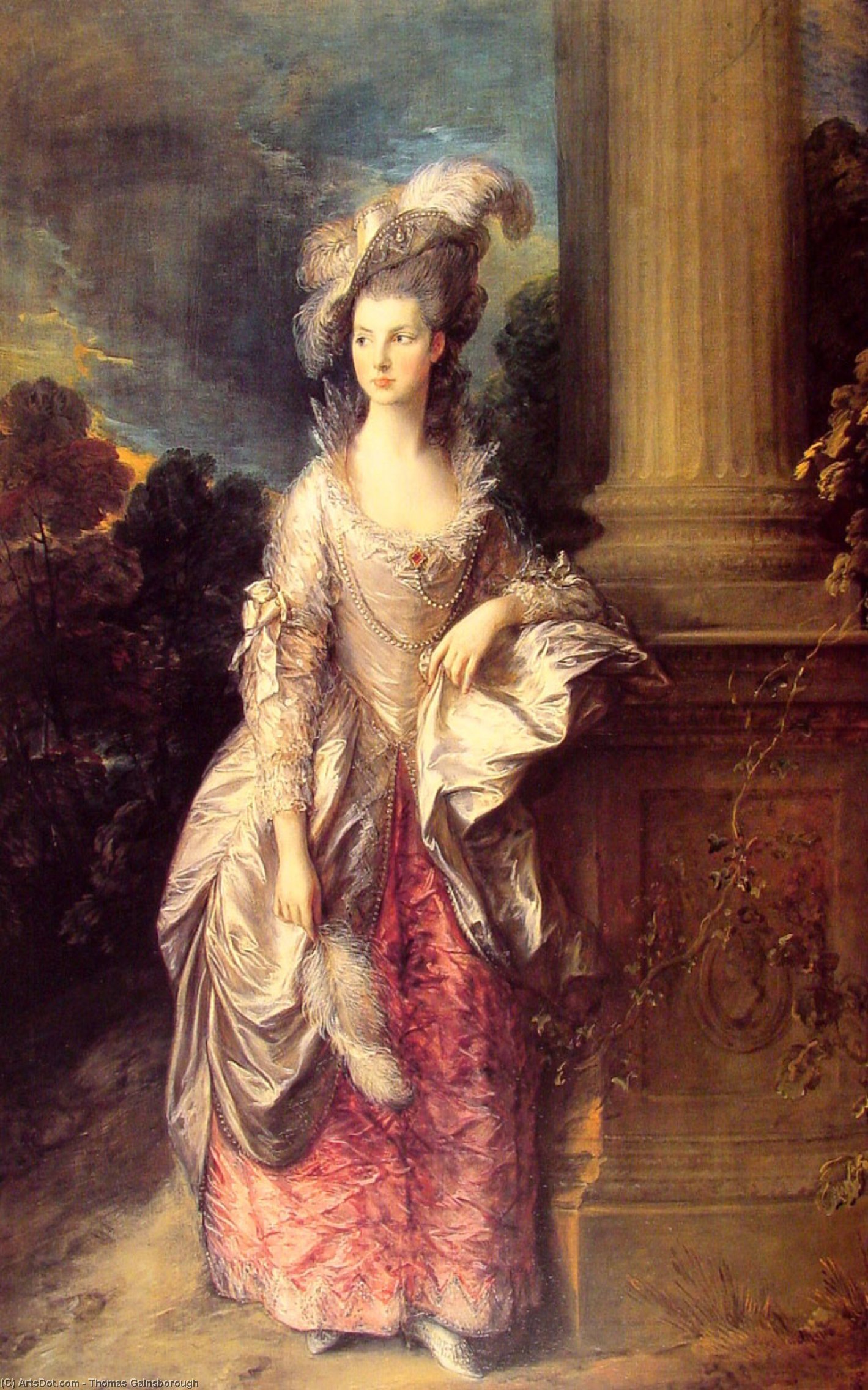
Thomas Gainsborough’s exquisite Mrs Graham captures aristocratic grace in 1777, showcasing masterful brushwork and serene landscapes—a timeless portrait reflecting the elegance of Georgian England. Explore a stunning handmade oil reproduction at ArtsDot.
Thomas Gainsborough (1727-1788): Explore the elegant portraits & landscapes of this British master, Royal Academy founder & influence on Constable.
A Portrait Steeped in Elegance: Exploring Gainsborough’s Mrs Graham
Thomas Gainsborough's "Mrs Graham" transcends mere representation; it embodies the spirit of Georgian England and stands as a testament to the artist’s unparalleled ability to capture beauty and nuance. Painted in 1777, this monumental oil on canvas – measuring an impressive 237 x 154 cm – resides within the National Galleries of Scotland, inviting viewers to immerse themselves in its serene grandeur.
The Subject: A Vision of Refined Grace
At the heart of the composition is Mrs Graham herself, a woman whose poise and composure radiate sophistication. Gainsborough skillfully portrays her against a backdrop of understated elegance—a pillar or column serving as a grounding element—emphasizing her centrality within the scene. Her attire – a blush pink gown adorned with intricate embellishments – speaks volumes about the prevailing fashions of the era, reflecting a desire for refinement and aristocratic taste. Complementing this visual richness is her white hat, perched atop her head with deliberate grace, furthering the impression of refined composure. The artist’s meticulous attention to detail extends beyond clothing; he captures subtle expressions that convey warmth and intelligence.
Technique and Artistic Mastery
Gainsborough's mastery lies not only in his subject matter but also in his technique. He employs a masterful blend of tonal gradation and delicate brushwork, creating an illusion of depth and texture that is remarkably convincing. The artist’s painstaking layering of paint—particularly evident in the folds of Mrs Graham’s dress—allows for a nuanced portrayal of light and shadow, enhancing the overall sense of realism. Furthermore, Gainsborough's use of color palettes – dominated by muted hues – contributes to the painting’s tranquil atmosphere and underscores its aesthetic beauty. The scale of the canvas itself is crucial; it permits an exhaustive examination of these techniques, demonstrating Gainsborough’s commitment to pushing the boundaries of artistic innovation.
Historical Context: Georgian England's Artistic Renaissance
“Mrs Graham” emerged during a period of significant cultural flourishing in Britain – the Georgian era (1714-1830). This era witnessed a burgeoning interest in landscape painting alongside portraiture, fueled by Enlightenment ideals and a newfound appreciation for classical art. Gainsborough’s work aligns perfectly with this artistic movement, reflecting the values of restraint, dignity, and intellectual curiosity that characterized the time. He was considered one of the foremost artists of his generation, influencing subsequent generations of painters and establishing himself as a cornerstone of British artistic heritage. Notably, Gainsborough's influence extended beyond stylistic considerations; he championed the depiction of rural life and celebrated the natural world—a trend that would resonate powerfully with artists like John Constable, who revolutionized landscape painting in Bath, United Kingdom.
Symbolism and Emotional Resonance
Beyond its formal beauty, “Mrs Graham” carries subtle symbolic weight. The tree and flowers surrounding Mrs Graham represent fertility and renewal – themes frequently explored in Georgian art. More profoundly, the portrait captures a moment of quiet contemplation, inviting viewers to consider the inner life of its subject. Gainsborough’s ability to convey emotion through facial expression is remarkable; Mrs Graham's gaze holds an air of serenity and intelligence, suggesting a woman who possesses both grace and wisdom. The painting’s enduring appeal lies in its capacity to evoke feelings of peace and admiration—a timeless testament to the power of art to transcend time and connect with the human spirit.