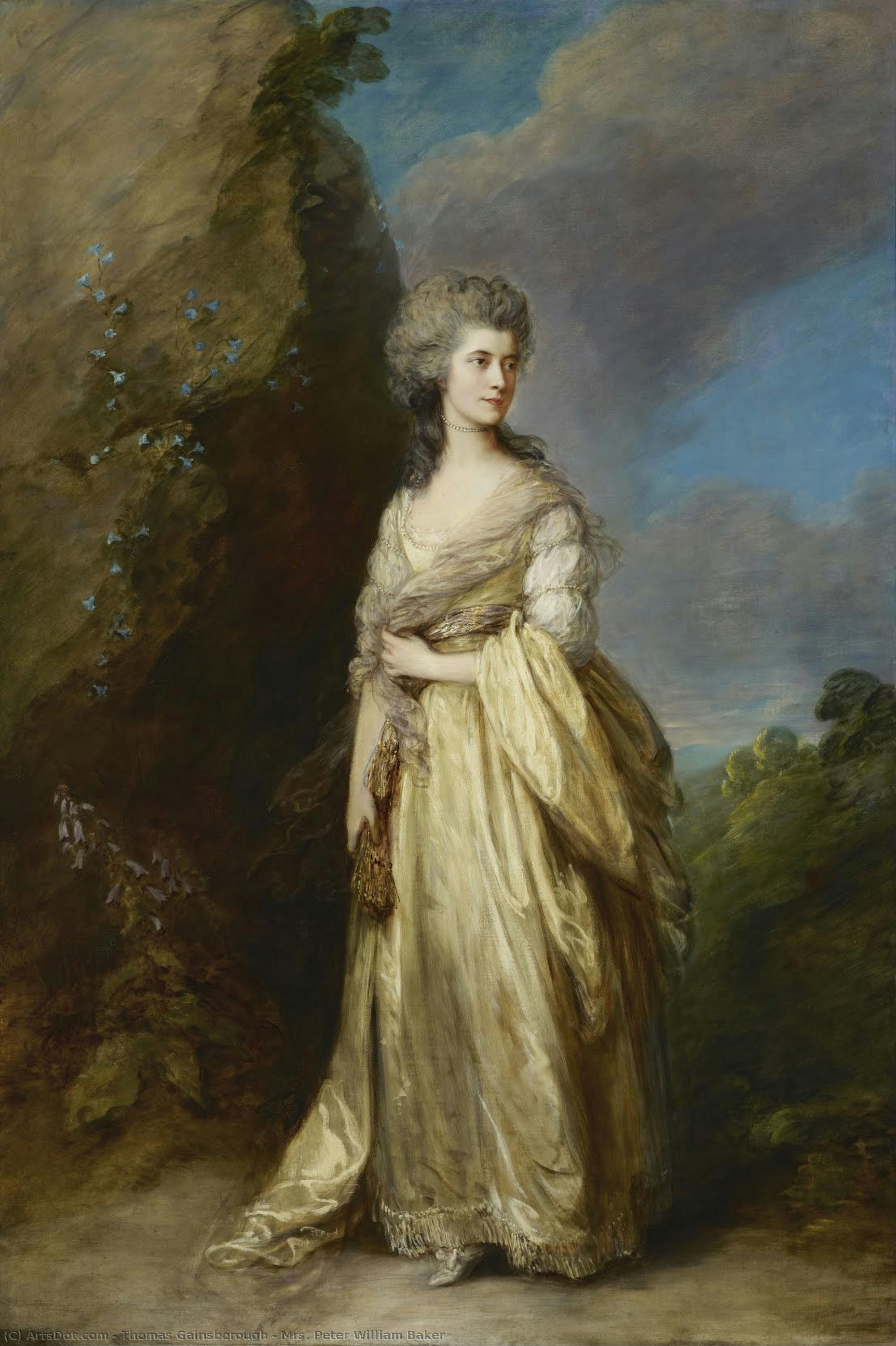
Mrs. Peter William Baker – An Elegance Defined by Light and Texture
Thomas Gainsborough’s “Mrs. Peter William Baker,” completed in 1781, stands as a quintessential example of the Royal Academy painter's mastery of portraiture during the Georgian era. More than just a likeness of a woman—Baker was the wife of a prominent Norfolk landowner—the painting embodies an understated sophistication that speaks volumes about its subject’s character and social standing.
- Subject Matter: The portrait depicts Mrs. Baker in a seated pose, dressed in a flowing yellow gown adorned with delicate lace trim. Her gaze is direct yet serene, conveying confidence without arrogance. Alongside her are two gentlemen—likely family members—who contribute to the composition’s balance and formality.
- Style: Gainsborough adhered to the promenade style prevalent at the time, positioning his subjects outdoors against a subtly rendered landscape backdrop. This technique wasn't merely decorative; it served to elevate the portrait beyond the confines of the studio, suggesting an openness to nature and reflecting the ideals of Enlightenment thought.
- Technique: Gainsborough employed oil paint on canvas with meticulous attention to detail. The artist skillfully blended light and shadow to create a palpable sense of depth and texture—particularly noticeable in the drapery of Mrs. Baker’s gown and the foliage of the trees framing the scene. His brushstrokes are loose yet controlled, conveying both spontaneity and artistic precision.
The landscape surrounding Baker is deliberately muted, dominated by greens and browns, creating a harmonious counterpoint to the vibrant yellow of her dress. This juxtaposition reinforces the painting’s symbolic significance—the woman represents cultivated grace and refinement, while the natural world symbolizes stability and moral virtue. Gainsborough's deliberate choice of palette underscores his belief in portraying subjects within their environment, capturing not only physical appearance but also psychological essence.
“Mrs. Peter William Baker” continues to resonate with viewers today due to its timeless beauty and subtle emotional depth. It exemplifies Gainsborough’s ability to transform a simple portrait into an enduring meditation on human dignity and the harmonious relationship between humanity and nature—a testament to his legacy as one of Britain's most influential artists.
Further Exploration: Daniell Brothers & The Oriental Landscape
To appreciate Gainsborough’s stylistic innovations fully, consider examining the work of William Daniell and Thomas Daniell, brothers who pioneered the “Oriental Scenery” genre. Their detailed depictions of landscapes from Persia, Egypt, and Palestine challenged conventional artistic conventions and paved the way for a more expansive vision of artistic representation.
- Comparative Analysis: Unlike Gainsborough’s restrained palette, Daniell’s canvases burst with color—capturing the vibrancy of exotic locales. However, both brothers shared a commitment to capturing atmospheric perspective and conveying the grandeur of natural vistas.
The Symbolism of Yellow & Pearl Necklace
The dominant hue of Mrs. Baker's gown – yellow – carries considerable symbolic weight. Historically associated with royalty and enlightenment, it signifies wisdom, optimism, and spiritual illumination. Complementing this visual cue is the pearl necklace—a traditional emblem of purity, innocence, and marital fidelity.
Hand-Painted Reproductions: Bringing Gainsborough’s Vision to Life
ArtsDot.com offers exceptional hand-painted reproductions of “Mrs. Peter William Baker,” allowing collectors and enthusiasts alike to experience the painting's beauty and artistry firsthand. Our skilled artisans meticulously recreate Gainsborough’s technique, capturing every nuance of light and texture—preserving the essence of this iconic masterpiece for generations to come.