The Enigmatic Subject: Unveiling the Portrait
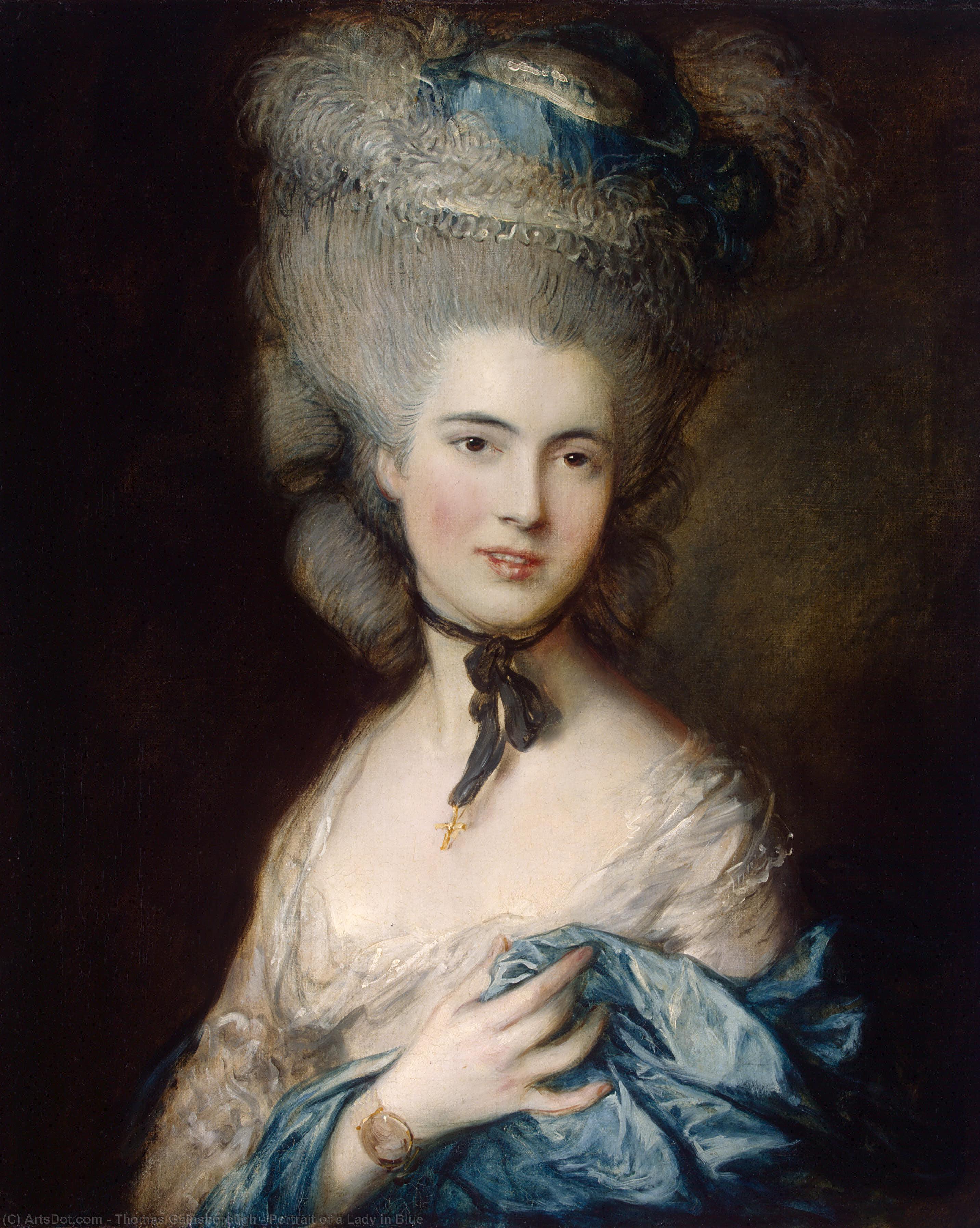
Thomas Gainsborough’s “Portrait of a Lady in Blue,” painted in 1779, is more than just a depiction of a woman; it's a carefully constructed window into the social and aesthetic sensibilities of late 18th-century England. The subject herself remains an intriguing mystery – her identity lost to history, she exists as an idealized representation of feminine beauty and status within a rigidly defined societal framework. The painting immediately draws the viewer in with its intimate composition; the lady’s face dominates the frame, creating a sense of direct engagement and inviting speculation about her thoughts and emotions. The soft lighting, diffused like a gentle caress, contributes to an atmosphere of refined serenity, while the loose brushwork hints at the artist's considered approach – a balance between meticulous detail and expressive spontaneity.

Rococo Refinement: Style, Technique, and Color Palette
Gainsborough’s style firmly places “Portrait of a Lady in Blue” within the Rococo tradition, though with a distinctly neoclassical restraint. The influence of Antoine Watteau, a master of pastel landscapes and elegant figures, is evident in the delicate handling of fabrics and the overall sense of grace. The artist skillfully employs oil paints on canvas, layering translucent washes to achieve a remarkable richness of color and texture. Notice particularly the voluminous wig – a symbol of wealth and fashionable status – rendered with meticulous detail, capturing the sheen of silk and the play of light. The muted palette—creams, blues, browns, and subtle touches of gold—reflects the Rococo preference for understated elegance rather than ostentatious display. The shallow perspective, typical of portraiture at the time, subtly recedes into the background, drawing attention to the subject’s face and enhancing the sense of intimacy.
Symbolism of Status and Social Standing
Beyond its aesthetic qualities, “Portrait of a Lady in Blue” is laden with symbolic meaning. The elaborate attire—the rich fabrics, the intricate lace, the jeweled ornaments (though not explicitly depicted)—are all indicators of wealth and social standing. The pose itself, with one hand gracefully resting on her arm, conveys poise and self-assurance. The lady’s gaze, slightly averted, adds a touch of melancholy – perhaps reflecting the constraints placed upon women in that era, or hinting at a hidden depth beneath the carefully constructed facade. The painting, therefore, is not merely a likeness; it's a visual statement about the woman’s position within her society.
A Legacy of Elegance: Gainsborough and His Contemporaries
Thomas Gainsborough was a pivotal figure in British art history, bridging the gap between Rococo elegance and the emerging neoclassical style. His work, particularly his portraits, captured the spirit of the age with remarkable sensitivity and skill. He spent much of his life outside London, drawing inspiration from the English countryside, which profoundly influenced his landscapes. The painting’s enduring appeal lies in its ability to evoke a sense of timeless beauty and refined taste. It's a testament to Gainsborough’s mastery of light, color, and composition – a captivating glimpse into a bygone era of elegance and social grace. Reproductions of “Portrait of a Lady in Blue” offer a wonderful opportunity to bring this exquisite artwork into your home, allowing you to appreciate its beauty and historical significance for generations to come.