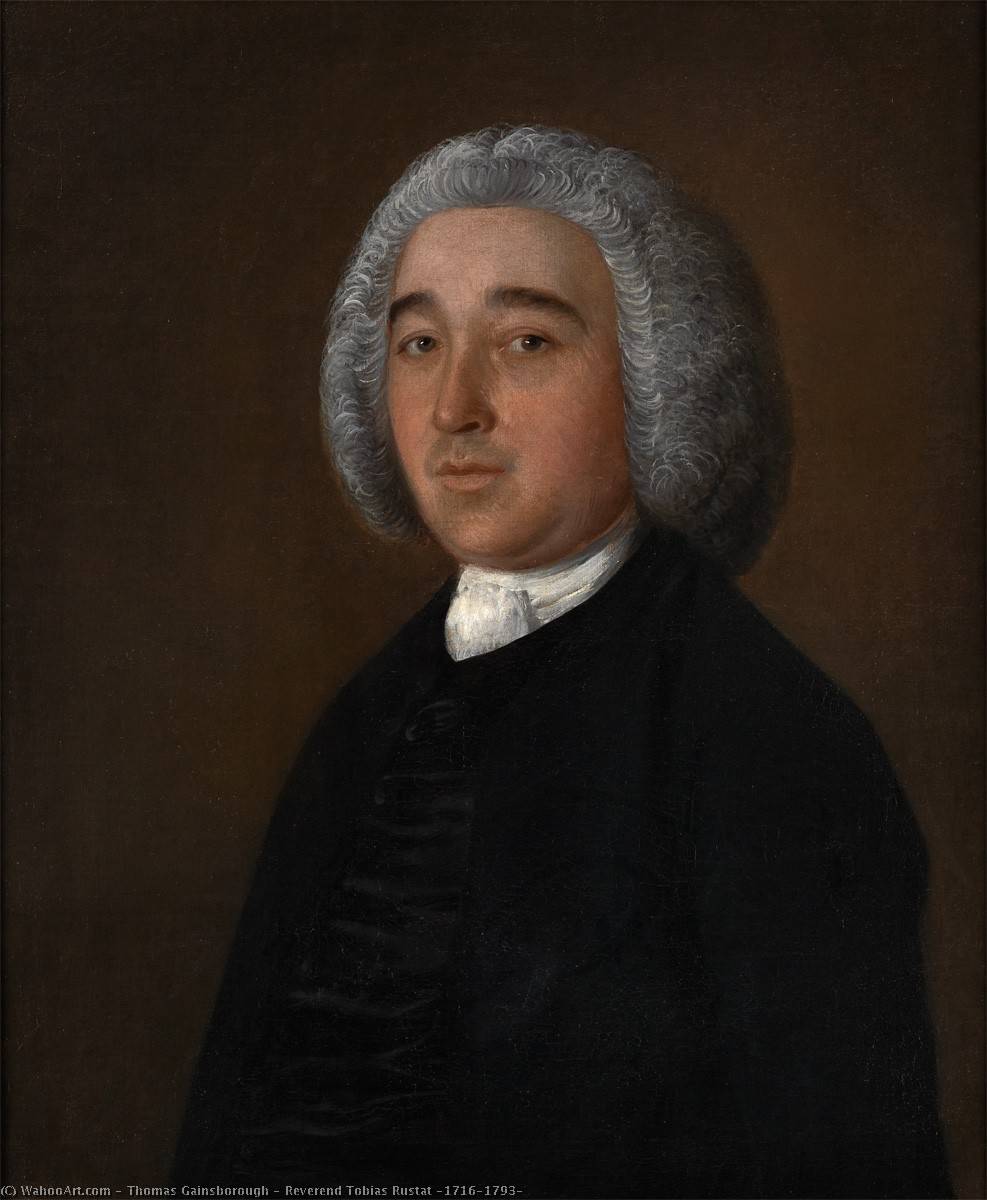
Reverend Tobias Rustat: A Portrait of Quiet Conviction
Thomas Gainsborough’s “Reverend Tobias Rustat,” painted in 1756, is more than just a likeness; it's a carefully constructed meditation on faith, status, and the burgeoning social landscape of 18th-century England. The portrait, currently residing at Gainsborough’s House in Sudbury, Canada, offers a poignant glimpse into the life of Tobias Rustat (1716–1793), a prominent figure within the Society of Friends, and invites us to contemplate the complexities of religious devotion and societal expectation.
- Subject & Context: The subject himself, Reverend Rustat, was a wealthy Quaker merchant who dedicated his life to philanthropic endeavors and religious study. Gainsborough’s decision to portray him so prominently reflects the rising importance of Quakerism within British society during this period – a time of significant social and religious reform.
- Formal Portraiture & Symbolism: The painting adheres to the conventions of formal portraiture, a genre increasingly popular among the wealthy elite. However, Gainsborough subtly subverts these expectations through Rustat’s demeanor and attire. His long hair and beard, while fashionable for the time, were also associated with religious piety, particularly within Quaker communities. The white collar, a symbol of clerical status, is juxtaposed against the relaxed posture and direct gaze, suggesting an individual comfortable in his faith but perhaps wary of rigid dogma.
The Painter's Hand: Technique & Style
Gainsborough’s masterful technique is immediately apparent in “Reverend Tobias Rustat.” Executed in oil on canvas, the painting demonstrates a remarkable sensitivity to light and texture. The artist employs a loose, almost impressionistic brushstroke – particularly noticeable in the rendering of the wig and clothing – creating a sense of movement and vitality that belies the sitter’s solemn expression. The subtle gradations of tone, achieved through careful layering of paint, contribute significantly to the portrait's depth and realism. The brown background isn't merely a neutral backdrop; it subtly enhances the richness of Rustat’s attire and draws attention to his face – the focal point of the composition.
- Composition: Gainsborough skillfully utilizes pyramidal composition, a common technique in portraiture at the time, to create a sense of stability and grandeur.
- Color Palette: The restrained color palette—dominated by browns, creams, and subtle blues—reflects the prevailing aesthetic sensibilities of the era while also emphasizing Rustat’s wealth and status.
A Window into 18th-Century England
"Reverend Tobias Rustat" offers a valuable window into the social and cultural dynamics of 18th-century Britain. It speaks to the growing influence of religious dissent, the importance of wealth and status in shaping individual identity, and the evolving role of portraiture as both a means of commemoration and a reflection of societal values. Gainsborough’s ability to capture not just Rustat's physical appearance but also his inner character elevates this work beyond a simple likeness; it is a testament to the artist's profound understanding of human psychology and his skill in translating that understanding onto canvas.
Size: 75 x 62 cm
Date: 1756
Artist: Thomas Gainsborough