A Vision of Georgian Dignity
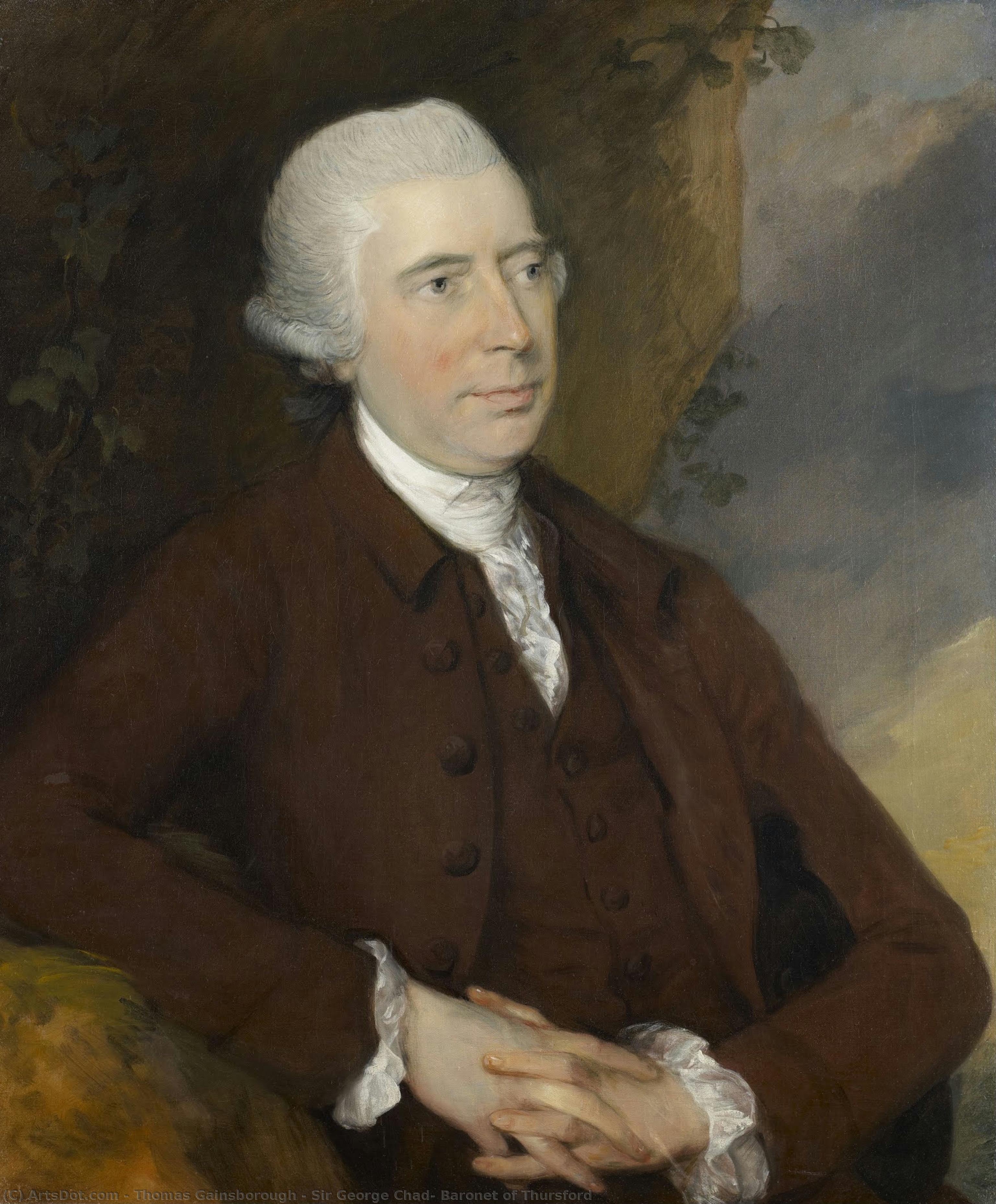
In the quiet, commanding presence of Thomas Gainsborough’s “Sir George Chad, Baronet of Thursford,” one encounters more than a mere likeness; one enters the refined atmosphere of the eighteenth-century British aristocracy. Painted around 1775, this oil on canvas serves as a masterful distillation of Georgian elegance, capturing a moment where social stature meets personal introspection. The portrait depicts Sir George Chad, a man whose life was woven into the very fabric of British history as a prominent landowner and diplomat. Gainsborough places him in a three-quarter pose, seated with an air of effortless grace within a richly upholstered armchair. This composition does not merely present a subject; it invites the viewer into a private world of quiet contemplation and self-assured confidence.
The background of the piece reveals Gainsborough’s profound connection to the natural world. Even within the confines of a formal portrait, the artist allows the soft, meticulously rendered textures of trees to peek through, creating a sense of depth that bridges the gap between man and landscape. This subtle integration is a hallmark of his style, suggesting that the subject's character is as rooted and enduring as the English countryside itself. For the discerning collector or interior designer, this painting offers a profound sense of stability and timelessness, making it an exquisite focal point for spaces that demand a touch of historical prestige.
The Mastery of Light and Brushwork
To observe the technique employed in this masterpiece is to witness the delicate dance of light and shadow. Gainsborough utilizes a method that breathes life into the canvas, employing soft, fluid brushstrokes to achieve an ethereal glow around Chad’s features. There is a luminous quality to the skin tones, achieved through a painstaking process of layering pigments that creates a textured surface capable of capturing the subtlest shifts in illumination. The artist’s ability to sculpt the face—emphasizing the prominent nose and those piercing, intelligent eyes—demonstrates a command over tonal values that transcends mere representation.
The style reflects a sophisticated blend of influences, drawing from the dramatic depth of Rembrandt and the fluid elegance of Rubens, yet filtered through a distinctly British sensibility. This Rococo Revival influence lends the work a certain rhythmic vitality; the way the light catches the folds of the brown coat and the textures of the upholstery creates a sensory experience that is both tactile and visual. For those seeking to adorn a home with high-quality reproductions, the emotional impact of this technique lies in its ability to evoke a sense of serenity and refinement, bringing the warmth and sophisticated atmosphere of a grand manor into a contemporary setting.
A Legacy Captured in Pigment
Beyond the technical brilliance, “Sir George Chad” carries a weight of historical symbolism. The portrait stands as a testament to an era defined by landed gentry and the burgeoning influence of the British Empire. Every detail, from the subject's poised hands to his dignified attire, speaks to the social conventions of the time, where clothing and posture were essential components of one's public identity. The painting captures the essence of a man who would later serve under Wellington, embodying the stoicism and intellect required of the era's most influential figures.
For art lovers and decorators alike, this work offers an unparalleled opportunity to engage with the soul of the eighteenth century. It is a piece that does not shout for attention but rather commands it through its understated majesty. Whether placed in a curated gallery or as a centerpiece in a sophisticated living space, a reproduction of this Gainsborough masterpiece serves as a window into a lost world of grace, providing an enduring source of inspiration and a profound connection to the rich tapestry of British cultural heritage.