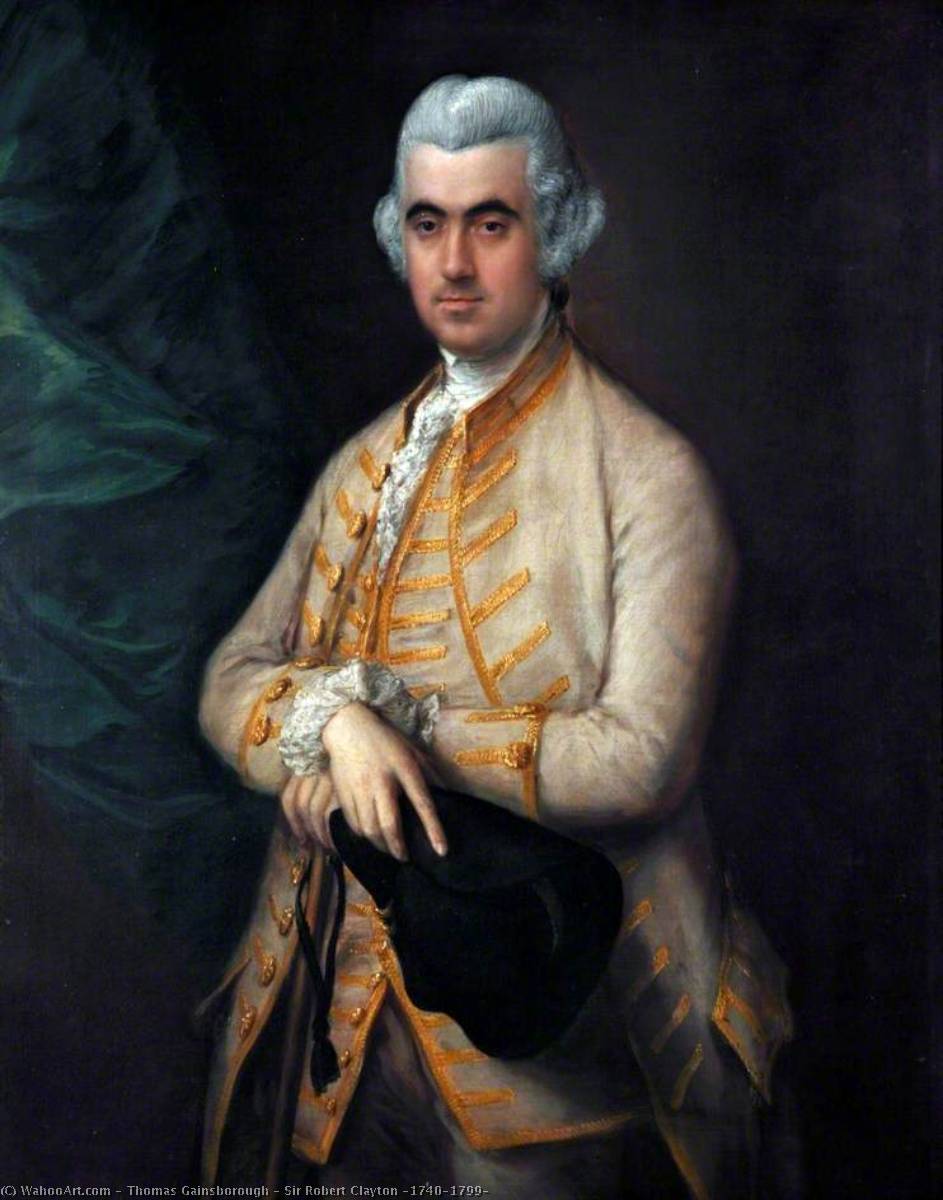
A Portrait of Refined Society: Thomas Gainsborough’s Sir Robert Clayton
Thomas Gainsborough's "Sir Robert Clayton," painted in 1769, is more than simply a likeness; it’s a meticulously crafted window into the world of late 18th-century British aristocracy. This remarkable portrait, now housed within the Walker Art Gallery in Liverpool, captures not just the physical appearance of Sir Robert Clayton, but also his status, character, and the prevailing social conventions of his time. Gainsborough, already establishing himself as a leading figure in English art, demonstrates an exceptional command of light, shadow, and detail – hallmarks that would define his enduring legacy.
The composition immediately draws the eye to Sir Robert’s face, rendered with remarkable sensitivity. His gaze is direct yet subtly reserved, conveying a sense of dignified composure. The careful modeling of his features—the slight furrow of his brow, the hint of a smile—reveals a man of intelligence and experience. He's positioned within a richly textured interior setting, suggesting a comfortable, well-appointed home – a visual shorthand for wealth and social standing. The muted palette, dominated by browns, creams, and subtle greens, reflects the restrained elegance favored in aristocratic interiors of the period.
The Language of Portraiture: Technique and Style
Gainsborough’s masterful technique is evident in every brushstroke. He employs a loose, expressive style—a departure from the more rigid formality of earlier portrait painters—that lends the work an immediacy and vitality. Note the subtle variations in tone – the delicate shading around his eyes and mouth, the way light catches on the folds of his coat. This layering technique, known as glazing, builds up depth and richness, creating a sense of tactile realism. The use of loose brushwork, particularly in the background, contributes to an atmospheric effect, suggesting distance and adding visual interest.
The painting’s style is firmly rooted in the Rococo tradition, yet Gainsborough infuses it with his own distinctive sensibility. He skillfully balances detail with a sense of spontaneity, capturing not just the subject's appearance but also something of his personality. The composition itself—the three-quarter pose, the carefully arranged accessories—follows established conventions of portraiture, while simultaneously demonstrating Gainsborough’s artistic freedom and innovation.
Historical Context: Aristocracy and Social Status
“Sir Robert Clayton” offers a fascinating glimpse into the social landscape of 18th-century Britain. Sir Robert himself was a prominent figure in Bletchingley, Surrey, holding various political positions and representing his community in Parliament. The portrait served not only as a visual record but also as a statement of status – a demonstration of wealth, influence, and adherence to societal norms. The elaborate clothing—the powdered wig, the richly embroidered coat—are symbols of aristocratic privilege, while the inclusion of objects like the cane and hat further reinforce his position within the social hierarchy.
Furthermore, the painting reflects the growing importance of portraiture as a means of self-representation during this period. As wealth and social mobility increased, individuals sought to document their achievements and solidify their reputations through commissioned portraits. Gainsborough’s work exemplifies this trend, capturing not just the likeness of Sir Robert Clayton but also his place within the complex web of British society.
Symbolism and Emotional Resonance
Beyond its purely representational function, “Sir Robert Clayton” is rich in symbolic meaning. The carefully chosen setting—a richly decorated room—suggests a life of comfort and security. The subject’s composed demeanor conveys a sense of self-assurance and authority. The subtle details – the texture of the fabric, the gleam of the cane – invite close observation and encourage viewers to contemplate the complexities of human character.
Ultimately, Gainsborough's portrait transcends mere likeness; it is an evocative portrayal of a man and his world. It speaks to the enduring fascination with portraiture as a means of capturing identity, status, and the essence of human experience – a timeless appeal that continues to resonate with audiences today.