A Symphony of Status and Sentiment
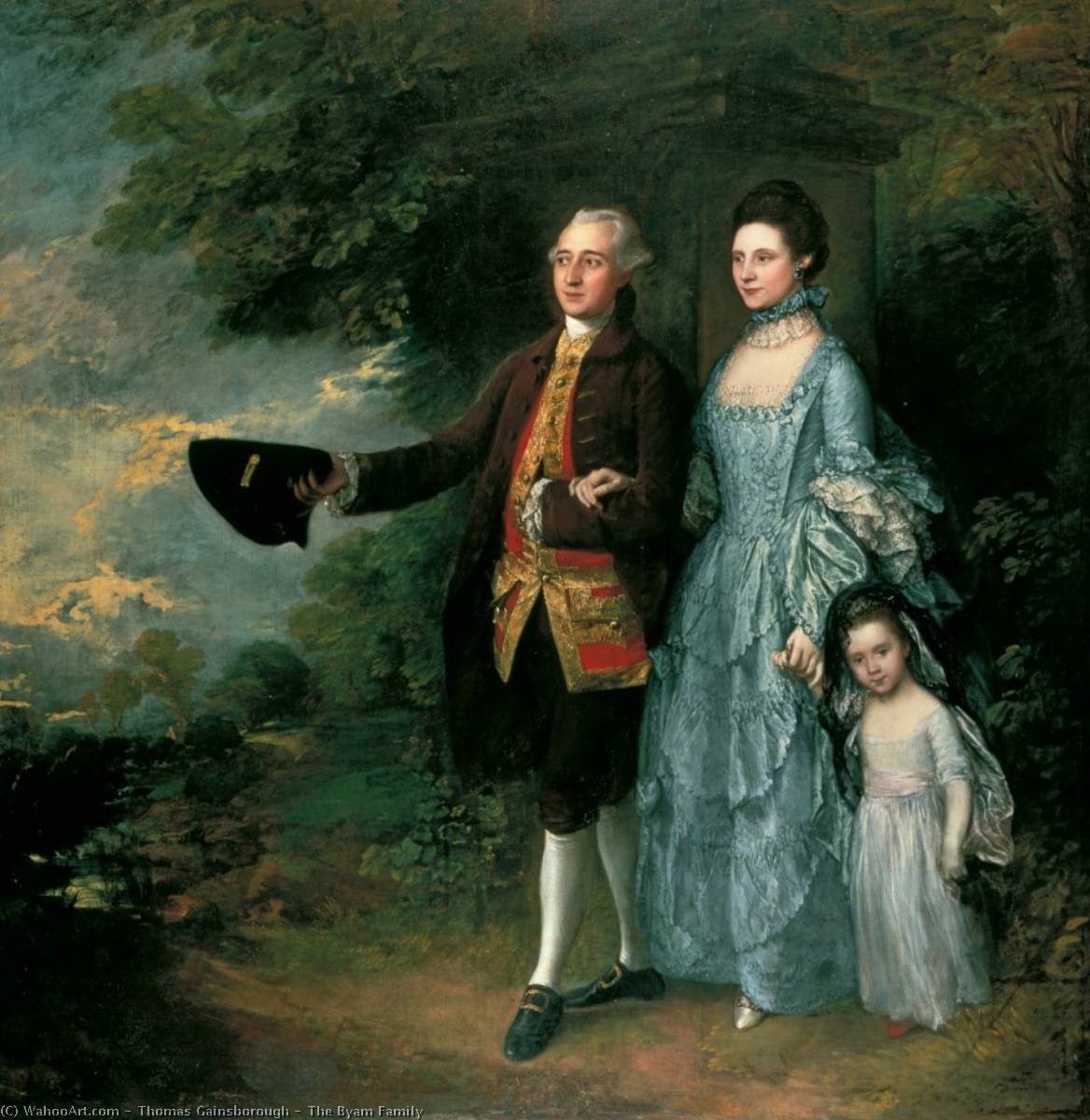
In the grand tradition of British portraiture, few works capture the delicate equilibrium between aristocratic prestige and intimate familial affection as masterfully as Thomas Gainsborough’s “The Byam Family.” Painted between 1762 and 1766, this monumental canvas serves as a breathtaking window into the heart of the Georgian era. At first glance, the viewer is struck by the sheer scale and presence of the composition, which presents George Byam III, his wife Louisa, and their daughter Selina not merely as subjects, but as icons of a stable and prosperous lineage. Gainsborough, a virtuoso of the brush, orchestrates a scene where the rugged textures of the English landscape meet the refined elegance of high society, creating an atmosphere that is simultaneously commanding and deeply moving.
The composition is anchored by a sense of profound stability. The figures are arranged with a central focus that draws the eye inward, toward the tender connection shared between parent and child. George Byam III stands as a pillar of authority on the left, his scarlet waistcoat and crimson sash acting as vibrant focal points that signal his social standing and vigor. In soft, poetic contrast, Louisa Byam occupies the right side of the frame, her pale blue silk gown radiating a serene grace that balances the bolder tones of her husband. Between them, young Selina embodies the very essence of innocence, her presence softening the formal grandeur of the portrait with a touch of youthful vulnerability.
Mastery of Light and Texture
To behold this work is to witness Gainsborough at the height of his technical prowess. The artist employs chiaroscuro with remarkable sophistication, utilizing dramatic shifts between light and shadow to sculpt the figures from their surroundings. This technique does more than provide depth; it breathes life into the very fabric of the painting. One can almost feel the weight of the heavy silks and the crispness of the linen through his meticulous brushwork. Gainsborough’s ability to render tonal gradations—the subtle transition of light across a cheekbone or the shimmering luster of a satin sleeve—demonstrates an unparalleled command over his medium.
Beyond the figures, the background serves as a textured, atmospheric stage. Reminiscent of the rolling Cotswolds hills, the landscape is rendered with a painterly freedom that hints at Gainsborough’s legendary skill in landscape painting. The interplay between the detailed, realistic rendering of the family and the more fluid, evocative treatment of the natural world creates a dynamic tension. For the discerning collector or interior designer, this duality makes the piece incredibly versatile; it possesses the formal dignity required for a stately study, yet its organic, earthy undertones allow it to integrate seamlessly into more contemporary, textured environments.
An Enduring Legacy for the Modern Collector
Historically, “The Byam Family” is much more than a family record; it is a visual manifesto of the Enlightenment. It reflects an era where portraiture was used to communicate social ideals, lineage, and the burgeoning ascendancy of the British landed gentry. The painting captures a moment in time when wealth was inextricably linked to land and legacy, yet it avoids the coldness often found in purely ceremonial works by infusing the scene with genuine warmth. There is an emotional resonance here—a sense of continuity and the enduring strength of the family unit—that transcends the eighteenth century.
For those seeking to adorn a space with art that inspires conversation and evokes a sense of history, a high-quality reproduction of this masterpiece offers an unparalleled opportunity. Whether placed in a grand hallway to command attention or in a quiet reading nook to provide a sense of classical calm, the painting brings with it the prestige of Gainsborough’s legacy. It is an investment in beauty, a tribute to the art of storytelling through paint, and a timeless addition to any curated collection of fine art.