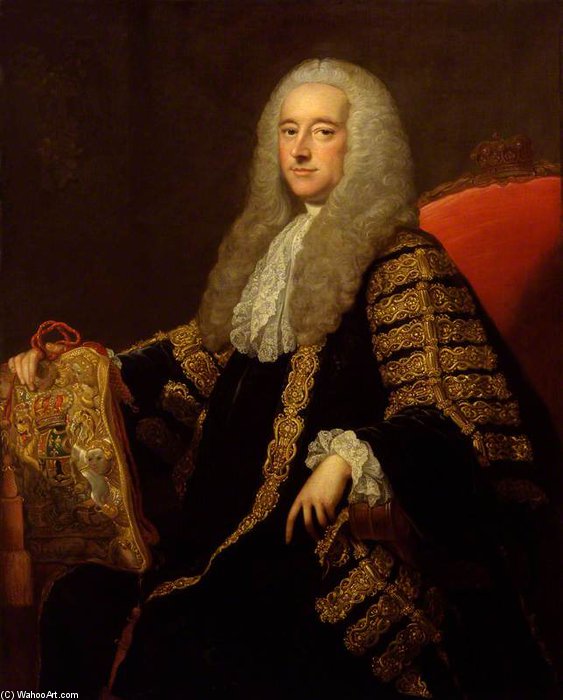
Admire Thomas Hudson’s exquisite portrait of Robert Henley, 1st Earl of Northington. A masterful example of 18th-century English art – explore this iconic piece today!
Discover Thomas Hudson (1701-1779), a leading English portraitist! Explore elegant 18th-century paintings & his influence on artists like Reynolds. Shop reproductions!
Robert Henley, 1st Earl of Northington: A Portrait of Power and Enlightenment
This striking portrait by Thomas Hudson captures the imposing presence of Robert Henley, 1st Earl of Northington (c. 1708 – 1772), a pivotal figure in 18th-century British politics and law. As Lord High Chancellor of Great Britain, Henley navigated a period of significant societal change, and Hudson’s painting serves as both a likeness and a statement about his status.
A Masterful Display of Rococo Portraiture
Hudson, a leading portraitist of the era – and teacher to artists like Joshua Reynolds – expertly employs the conventions of *Rococo* style. The composition is formal yet elegant, emphasizing Henley’s authority through posture and attire. Note the rich textures of his suit and wig, rendered with meticulous detail. Hudson's technique relies on a smooth application of paint, creating a polished surface that reflects the affluence and refinement of his subject. He was known to employ assistants specializing in drapery – likely contributing to the luxurious depiction of Henley’s clothing.
Decoding the Symbolism
Beyond mere representation, the portrait is laden with symbolic meaning. The elaborate wig, a hallmark of the period, signifies Henley's social standing and legal profession. His formal attire reinforces his position as a man of power and responsibility. The red cushion behind him isn’t merely decorative; red was often associated with authority and nobility. Interestingly, the inclusion of two birds – one on the left and another towards the top-left corner – while seemingly whimsical, may allude to themes of freedom or perhaps a subtle nod to Henley's intellectual pursuits.
Historical Context: The Age of Enlightenment
Robert Henley’s career flourished during the *Age of Enlightenment*, a period marked by reason, individualism, and legal reform. He was known for his wit, intelligence, and progressive views within the Whig party. His most famous case, *Somerset v Stewart* (though not directly depicted here), played a crucial role in challenging slavery in England – a testament to the era’s evolving moral landscape. This portrait, therefore, isn't just of a man; it’s a representation of an intellectual and political climate.
Emotional Impact & Interior Design Considerations
The painting evokes a sense of gravitas and composure. Henley’s gaze is direct and confident, conveying intelligence and authority. The overall effect is one of dignified restraint. For interior design, this portrait would lend an air of sophistication to a study, library, or formal living room. Its muted color palette complements both traditional and contemporary settings, adding a touch of historical depth and intellectual weight. The scale (though currently unknown) suggests it was intended for display in a prominent location – a testament to Henley’s importance and the artist's skill.
A Legacy Preserved
This portrait by Thomas Hudson offers a fascinating glimpse into the life of Robert Henley, 1st Earl of Northington, and the world he inhabited. It is not only a beautiful work of art but also a valuable historical document, offering insights into 18th-century British society, law, and politics.