Italian Picture Dealers: A Satirical Portrait of Aristocratic Excess
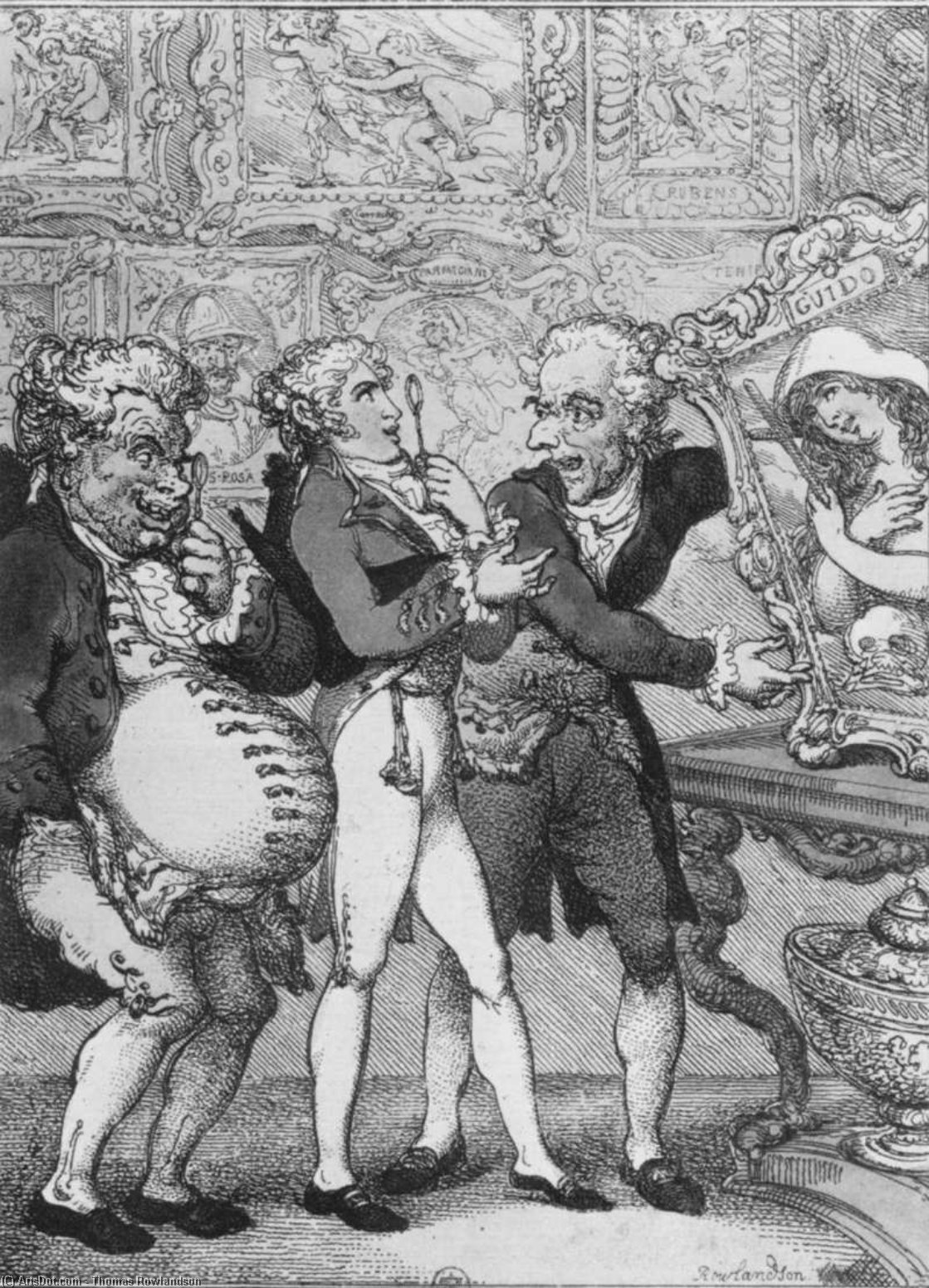
Thomas Rowlandson’s “Italian Picture Dealers” (1812) stands as a masterful exemplar of Georgian satire, capturing the decadent atmosphere of European travel and exposing the moral failings lurking beneath the veneer of wealth and refinement. Published during a period marked by political tensions between Britain and France—specifically following Napoleon's invasion of Spain—the engraving reflects anxieties about social propriety and critiques the pursuit of pleasure at any cost. It’s more than just an image; it’s a meticulously crafted commentary on societal values and artistic pretensions.
- Subject Matter: The scene depicts three men – one obese, one with grotesque facial features, and another seemingly engaged in a clandestine transaction involving what appears to be a small, wrapped package—a deliberate exaggeration of human form intended to provoke ridicule.
- Composition & Perspective: Rowlandson employs a tightly framed composition that draws the viewer into the drama unfolding at the table. Flattened perspective contributes to immediacy and emphasizes the characters’ presence within the opulent room.
- Setting: The backdrop reveals an elaborately decorated chamber with wallpaper and furniture, symbolizing the aristocratic status of those involved and reinforcing the satirical critique of excessive indulgence.
Technique & Style: Engraving Precision
Rowlandson’s skill as an engraver is undeniable. He utilizes fine lines to build up texture and form, creating a remarkably detailed depiction despite the limitations imposed by printmaking techniques. The predominant hatching pattern—thick lines intersecting to simulate shading—is particularly effective in conveying depth and highlighting the characters' expressions. This meticulous approach elevates the engraving beyond mere illustration; it transforms it into an art form itself.
- Linework: Thick, cross-hatched linework dominates the image, meticulously replicating fabric textures, skin contours, and architectural details.
- Contrast & Lighting: Dramatic lighting—characterized by strong highlights and deep shadows—amplifies the emotional impact of the scene, emphasizing the characters’ postures and conveying a sense of unease and moral judgment.
- Symbolism: The exaggerated facial features serve as potent symbols of vice and corruption, mirroring Rowlandson's broader critique of societal hypocrisy.
Historical Context & Significance
“Italian Picture Dealers” emerged from a climate of intellectual debate surrounding the Enlightenment’s influence on morality and social conduct. Rowlandson’s work aligns with the tradition of satirical prints that flourished during the Georgian era, challenging established norms and questioning authority figures. The inclusion of Mary Magdalene—a deliberate allusion to biblical iconography—further underscores the moral failings portrayed within the artwork. Its enduring appeal lies in its ability to capture a moment of cultural anxiety while simultaneously delivering a sharp rebuke to societal excess.
Emotional Impact & Artistic Legacy
The engraving’s unsettling portrayal of human form and its unflinching gaze at aristocratic indulgence resonate powerfully with viewers today. Rowlandson's masterful use of technique—particularly his meticulous hatching—demonstrates the transformative potential of printmaking as an art medium. “Italian Picture Dealers” remains a testament to the artist’s genius, securing its place as one of the most iconic images of Georgian satire and continuing to inspire admiration for its artistic merit and intellectual provocation.