Thomas Stuart Smith (1815-1869) was a Scottish painter known for genre scenes, portraits & philanthropy. Founder of the Stirling Smith Museum, his work often depicted everyday life and social commentary with a Romantic sensibility.
Discover Scottish heritage & local history at The Stirling Smith! Explore 40,000+ artworks, the 'oldest football', & family-friendly exhibits in this Victorian gem. Plan your visit today!
A Vision of Classical Grandeur
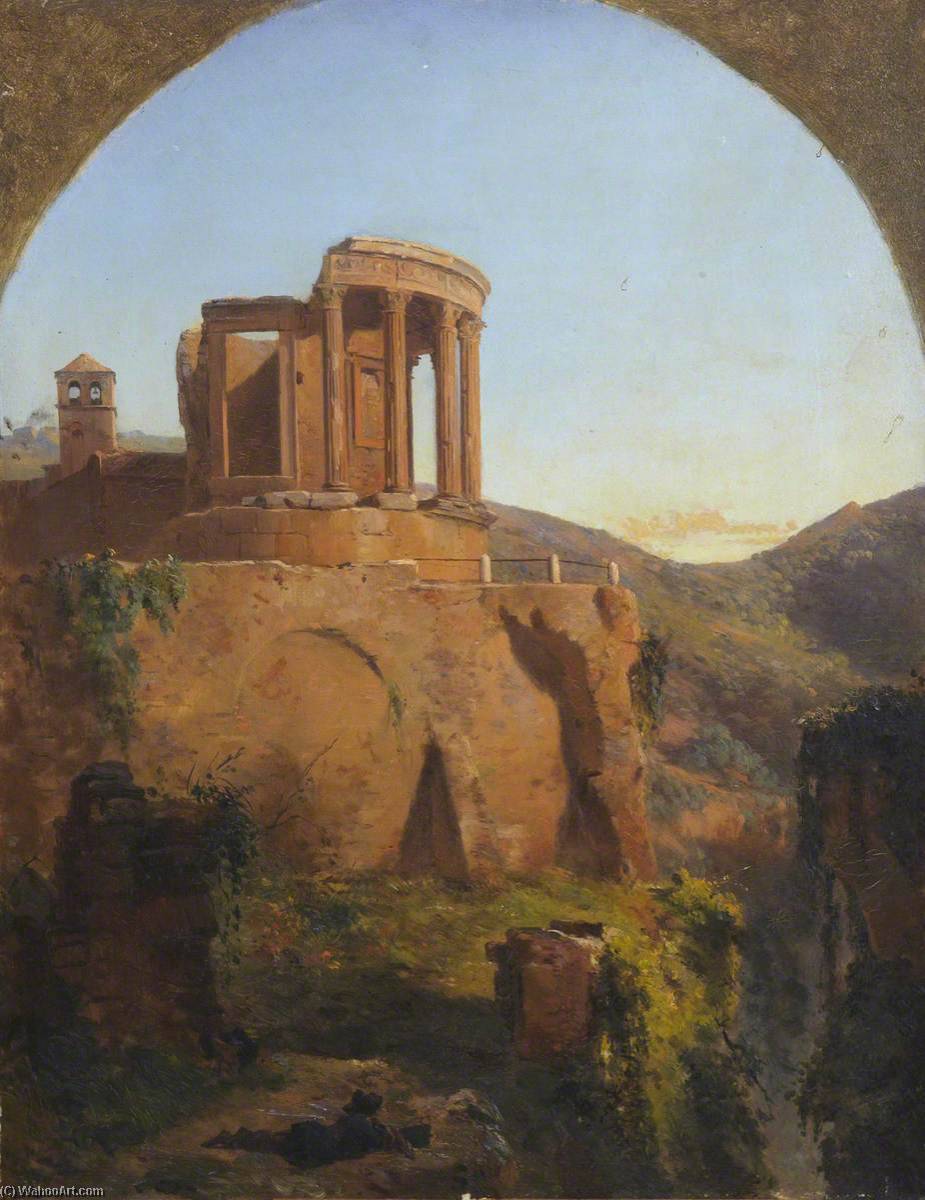
In the delicate brushstrokes of Thomas Stuart Smith’s Temple of the Sibilla, we are transported to an era where the echoes of antiquity still resonated through the Romantic imagination. Painted in 1849, this exquisite work captures more than just a structural marvel; it captures a moment of profound architectural reverence. The composition is anchored by a magnificent central dome, a feat of classical symmetry that commands the viewer's gaze. Flanked by stately columns and accompanied by smaller, subordinate domes, the temple stands as a testament to the enduring beauty of Greco-Roman influence. Smith masterfully balances the weight of the stone architecture with a sense of airy lightness, allowing the structure to breathe within its environment.
The scene is far from a desolate ruin; instead, it is imbued with a gentle vitality through the presence of figures scattered across the landscape. These individuals, rendered with a delicate touch, serve as more than mere scale indicators. They are the heartbeat of the painting, bridging the gap between the monumental permanence of the temple and the fleeting nature of human existence. Some wander in the foreground, their proximity inviting us into the scene, while others recede into the distance, creating a profound sense of depth and atmospheric perspective that draws the eye toward the horizon.
The Mastery of Romantic Detail
As an artist, Thomas Stuart Smith possessed a rare ability to navigate the intersection of Romantic Idealism and meticulous observation. In this piece, his technique shines through the soft, diffused light that bathes the temple, suggesting a late afternoon glow that softens the edges of the stone and casts gentle shadows. The palette is sophisticated yet restrained, utilizing subtle tonal shifts to define the textures of the masonry and the surrounding atmosphere. This careful application of paint creates a painterly texture that feels both substantial and ethereal, making it an ideal centerpiece for those looking to introduce a sense of historical depth into a contemporary interior.
For the discerning collector or interior designer, Temple of the Sibilla offers a unique opportunity to incorporate a piece of mid-19th-century heritage into a curated space. The painting’s inherent symmetry provides a stabilizing element in room design, while its classical subject matter evokes themes of stability, wisdom, and timelessness. Whether placed in a sunlit study or a formal gallery setting, this reproduction serves as a window into a bygone era of intellectual and artistic pursuit, offering an emotional resonance that transcends the mere decoration of a wall.