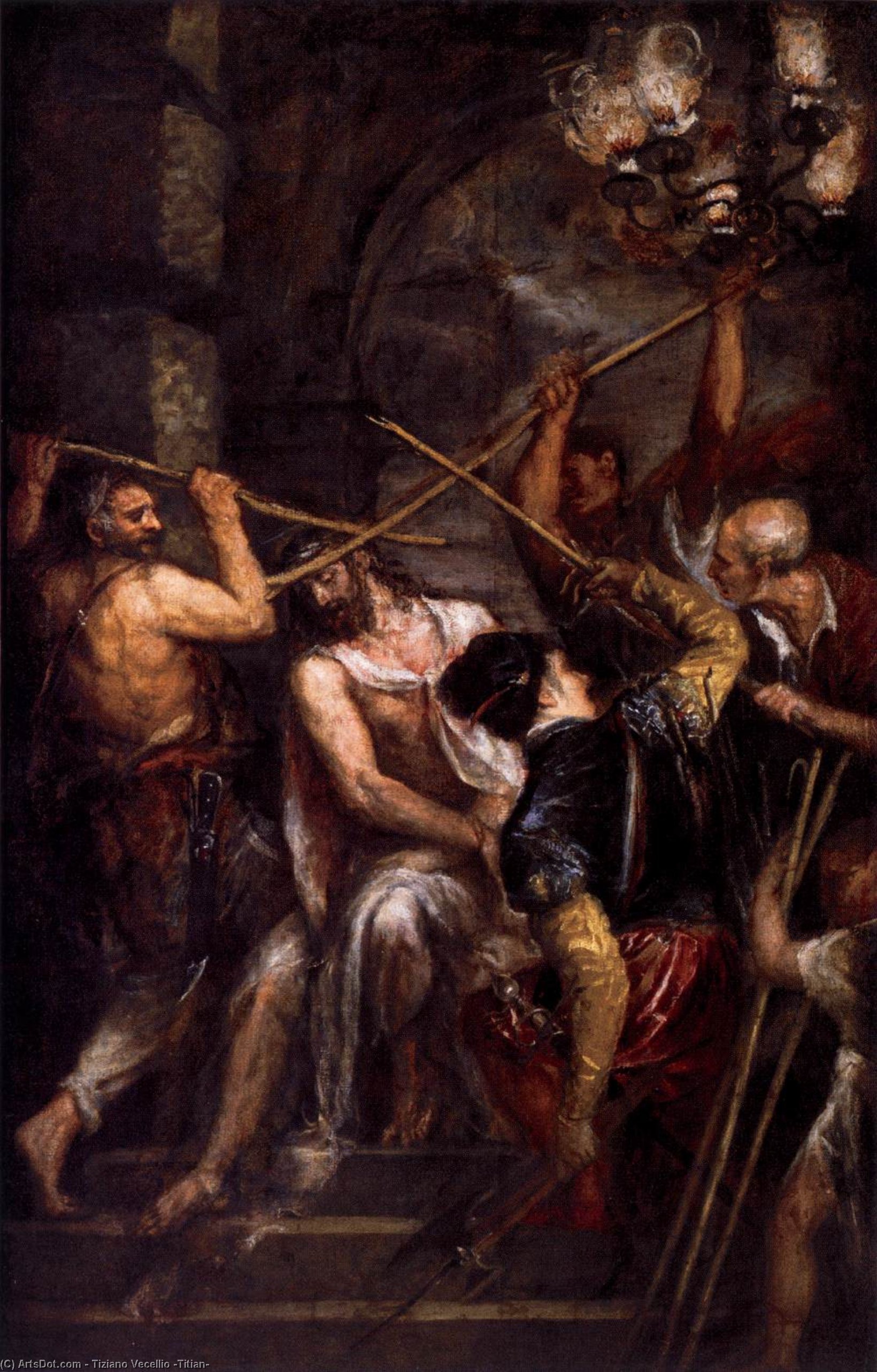
Titian’s haunting ‘Crowning with Thorns,’ painted in 1572, showcases Venetian Baroque’s dramatic chiaroscuro and profound spiritual contemplation. This monumental portrait captures Christ's suffering, rendered with luminous color and sfumato technique by the Renaissance titan, inviting viewers to explore its timeless beauty.
Titian
(1490 - 1576)
Titian (1488-1576): Venetian master of color & light, renowned for his portraits, mythological scenes, and innovative painting techniques. Explore a life of artistic brilliance.
Discover European art history at the Alte Pinakothek in Munich! Explore Renaissance & Baroque masterpieces by Dürer, Rembrandt & Rubens within a stunning neoclassical setting.
A Portrait Steeped in Sorrow and Divine Majesty: Exploring Titian’s “Crowning with Thorns”
Titian Vecellio's "Crowning with Thorns," painted in 1572, transcends mere visual representation; it embodies the very essence of Venetian Baroque artistry and delves into profound theological contemplation. This monumental canvas—measuring 280 x 181 cm—captures a scene brimming with solemn grandeur, meticulously crafted by Titian’s workshop to echo the stylistic conventions favored by his contemporaries, particularly Michelangelo and Sansovino. The artwork immediately draws the eye with its masterful use of chiaroscuro, employing dramatic contrasts between light and shadow to heighten emotional intensity and sculpt the figures within a darkened interior space—likely envisioned as a symbolic representation of purgatory or penitence.
- Subject Matter: The composition centers around a woman depicted in repose, positioned prominently amidst a landscape backdrop reminiscent of Venetian topographical views. Her serene countenance is juxtaposed with the weighty presence of thorns encircling her head—a direct allusion to the biblical Passion narrative and specifically Christ’s crowning with thorns prior to his crucifixion.
- Style & Technique: Titian's signature style—characterized by luminous color palettes and an unparalleled ability to render texture—is vividly apparent. The artist skillfully employs oil paint on canvas, layering pigments with painstaking precision to achieve breathtaking realism while simultaneously conveying a palpable sense of spiritual solemnity. Note the subtle gradations of tone within the drapery folds, demonstrating Titian’s mastery of sfumato – a technique perfected by Leonardo da Vinci—that softens edges and creates an ethereal atmosphere.
The painting's historical context is inextricably linked to the burgeoning religious fervor of the Elizabethan era. Commissioned during a period marked by intense spiritual debate and artistic ambition, “Crowning with Thorns” reflects the humanist preoccupation with mortality and divine grace prevalent in Venetian art circles. Symbolically, the thorns represent suffering endured for redemption—a poignant reminder of Christ’s sacrifice and humanity's yearning for salvation. The woman’s posture exudes tranquility despite the surrounding darkness, suggesting inner fortitude and acceptance of fate – a theme frequently explored by Renaissance artists to convey moral virtue and spiritual contemplation.
- Symbolism: Beyond its biblical references, “Crowning with Thorns” speaks to broader concepts of humility and piety. The woman’s gaze directs upwards, symbolizing aspiration towards God—a gesture that underscores the painting's overarching message of faith and divine compassion.
Ultimately, Titian’s "Crowning with Thorns" resonates deeply with viewers due to its ability to evoke profound emotion. The artist achieves this through masterful manipulation of color and form, creating an image that is both aesthetically captivating and intellectually stimulating. It serves as a testament to Titian's enduring legacy—a beacon of Venetian artistic excellence that continues to inspire admiration and contemplation centuries after its creation. Its reproduction offers collectors and interior designers alike the opportunity to experience the sublime beauty and spiritual depth of this iconic masterpiece.