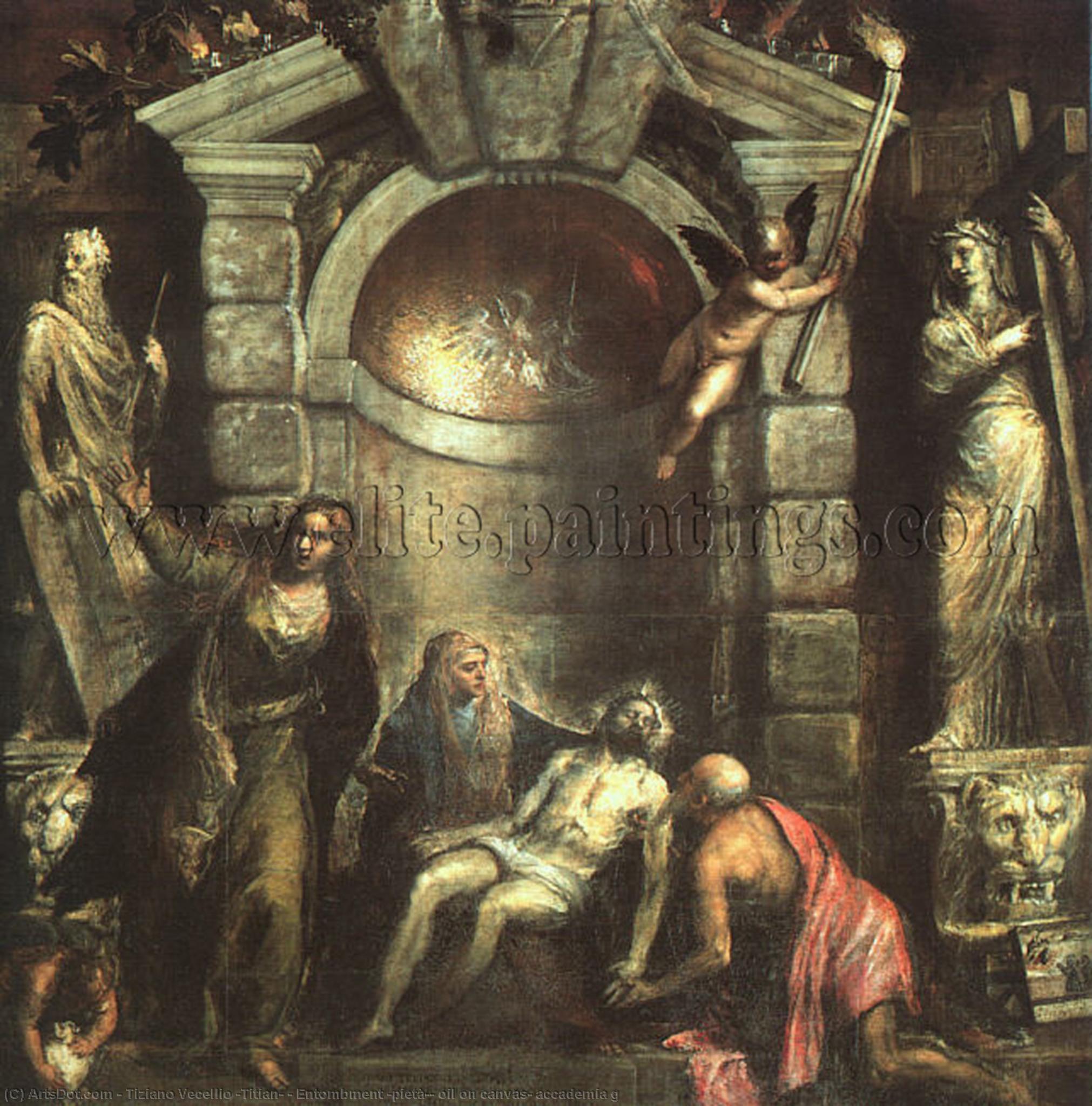
Titian’s poignant Entombment (Pieta), painted in 1576, captures a moment of profound grief with masterful color and composition, showcasing the Venetian master's signature style during the Renaissance period. Discover this iconic artwork and bring its timeless beauty into your space.
A Profound Meditation on Grief: Titian’s Entombment (Pieta)
Titian's "Entombment" – more accurately known as the Pieta – painted in 1576, stands as a monumental achievement within the Venetian master’s oeuvre and a cornerstone of Renaissance religious art. This oil on canvas work, originating from the Accademia Gallery, transcends mere representation; it is an intensely felt meditation on grief, loss, and the profound sorrow inherent in the human condition. The scene depicts the Virgin Mary cradling the lifeless body of Christ after his crucifixion, a subject that has captivated artists and viewers for centuries. Titian’s masterful handling of color and form elevates this devotional image to a realm of emotional power, inviting contemplation and offering a glimpse into the heart of Christian faith.
- Subject Matter: The Pieta is one of the most enduring and recognizable depictions of this poignant biblical narrative. It captures the immediate aftermath of Christ’s death, focusing on Mary's overwhelming sorrow and her role as the ultimate mourner.
- Style & Technique: Titian’s signature style – characterized by rich, vibrant colors, loose brushwork, and a dramatic use of light – is fully realized here. He employs a pyramidal composition, drawing the viewer’s eye directly to Mary's figure, while subtly blurring the background figures to emphasize the intimacy of the scene. The application of paint is thick in areas, creating a palpable sense of texture and volume, particularly evident in Christ’s draped garments.
Historical Context & Venetian Innovation
Painted in 1576, during the twilight years of Titian's career, "Entombment" reflects the evolving artistic landscape of Venice. The city had become a global center for trade and culture, fostering an environment where artistic innovation flourished. Titian, deeply embedded within this vibrant scene, was at the forefront of Venetian painting, pushing the boundaries of color theory and composition. Unlike earlier depictions of the Pieta which often emphasized idealized beauty and serene composure, Titian’s version is imbued with a raw emotional intensity—a hallmark of his mature style. The work aligns with the broader trend in Renaissance art towards greater realism and psychological depth.
Key Influences:
- Early Renaissance Pieta Forms: While influenced by earlier depictions, Titian departs from the more rigid, formal compositions of his predecessors.
- Venetian Colorism: Titian’s masterful use of color—deep reds, blues, and browns—is central to the work's impact, reflecting the Venetian tradition of valuing rich pigments.
Symbolism & Emotional Resonance
The Pieta is laden with symbolic meaning. Mary’s posture – slumped, exhausted, yet resolute – embodies maternal grief and unwavering faith. The lifeless body of Christ represents sacrifice and redemption. The angels in the background, rendered with a subtle grace, symbolize divine intervention and hope amidst despair. Titian skillfully uses these elements to evoke a powerful emotional response in the viewer, prompting reflection on themes of mortality, suffering, and spiritual solace. The palpable sense of sorrow emanating from Mary’s figure is particularly striking, demonstrating Titian's ability to translate complex theological concepts into deeply human terms.
Interpretation:
- Mary as a Figure of Strength: Despite her grief, Mary’s posture conveys resilience and unwavering devotion.
- Christ’s Vulnerability: The depiction of Christ's body emphasizes his humanity and the sacrifice he made for humankind.
A Timeless Masterpiece – Recreated with Precision
ArtsDot offers meticulously crafted hand-painted reproductions of Titian’s “Entombment” (Pieta), allowing you to experience the full impact of this iconic artwork in your own space. Our skilled artisans employ traditional techniques and archival quality materials to faithfully recreate every detail, from the rich textures of the fabrics to the luminous glow of the pigments. Whether for a grand salon or a smaller study, a reproduction of this masterpiece will undoubtedly become a focal point, enriching any interior design with its timeless beauty and profound emotional resonance.