The painting portrays Mary, dressed in shimmering blue silk, ascending temple steps with grace and dignity, symbolizing her future role as Queen of Heaven. Contrasting sharply with the farmer’s wife, Mary radiates preciousness thanks to opulent surroundings and a masterful depiction by Titian.
Titian
(1490 - 1576)
Titian (1488-1576): Venetian master of color & light, renowned for his portraits, mythological scenes, and innovative painting techniques. Explore a life of artistic brilliance.
Explore European art from the 13th-19th centuries at London's National Gallery! Discover masterpieces by Van Gogh, Rembrandt & more – free entry!
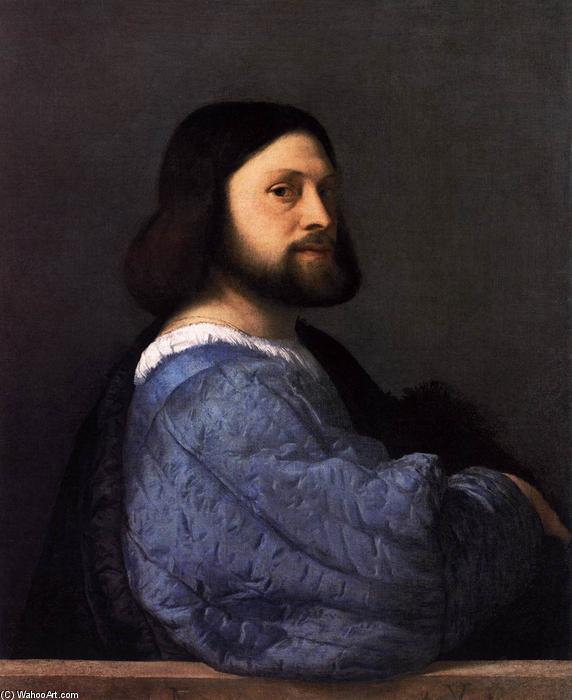
A Symphony in Azure: Exploring Titian’s “Man with a Blue Sleeve”
The Venetian painter Titian (1490 – 1576), born in Pieve di Cadore, remains an undisputed titan of the Renaissance—a master whose revolutionary approach to color irrevocably altered the landscape of oil painting and cemented his place as one of history’s most influential artists. His oeuvre is characterized by a breathtaking mastery of pigment, transforming canvases into luminous explorations of light and emotion, and “Man with a Blue Sleeve,” completed around 1510, exemplifies this unparalleled virtuosity. This portrait transcends mere representation; it embodies the spirit of Venetian humanist thought and delves into profound psychological complexities—a testament to Titian’s genius as both an artist and a humanist scholar.
The Canvas Speaks: Style and Technique
Titian's distinctive style is instantly recognizable—characterized by a sumptuous palette dominated by rich, velvety hues, particularly azure blue. Unlike the paler tones favored by many of his contemporaries, Titian embraced bold color combinations that captured the vibrancy of Venetian life and infused his paintings with an unparalleled sense of drama. The technique employed was equally innovative: Titian utilized alla prima—a method where paint is applied directly to the canvas without any underpainting—allowing for immediate tonal adjustments and capturing fleeting moments of expression. Layers upon layers of translucent glaze were meticulously built up, creating a luminous surface that shimmered with reflected light and achieved an astonishing level of depth and realism. This meticulous layering process ensured that every brushstroke contributed to the overall effect, resulting in a breathtaking tapestry of color and texture.
A Window into Renaissance Venice
“Man with a Blue Sleeve” resides firmly within the context of Renaissance Venice—a city undergoing rapid transformation as mercantile wealth fueled artistic patronage and intellectual curiosity. The portrait reflects the humanist ideals prevalent at the time—emphasizing human dignity, intellect, and emotion—and aligns seamlessly with the broader artistic trends emerging from Florence and Rome. Titian’s subject matter frequently explored themes of nobility, virtue, and psychological introspection, mirroring the philosophical preoccupations of his era. Furthermore, the painting's setting—a dimly lit interior—suggests a contemplative mood, inviting viewers to engage in a dialogue about human experience and perception. The artist skillfully captured not only physical likeness but also an inner state of mind—revealing a man absorbed in thought, radiating quiet confidence and serenity.
Symbolism Beneath the Surface
Beyond its aesthetic brilliance, “Man with a Blue Sleeve” is laden with symbolic significance. The prominent blue sleeve serves as a focal point—a deliberate choice that draws attention to the color itself, which was associated with nobility, piety, and divine grace in Renaissance iconography. The muted lighting contributes to an atmosphere of solemn contemplation—underscoring the subject’s inner life and conveying a sense of profound stillness. Scholars have interpreted the pose of the figure as representing intellectual engagement—a gesture of deliberate thoughtfulness that reflects the humanist preoccupation with reason and observation. These subtle symbolic gestures elevate the portrait beyond mere visual pleasure, transforming it into a complex meditation on human nature and spiritual aspiration.
Emotional Resonance: Capturing the Human Psyche
Ultimately, “Man with a Blue Sleeve” succeeds in capturing the essence of human emotion—a feat achieved through Titian’s masterful manipulation of color, light, and gesture. The painting evokes feelings of tranquility, dignity, and intellectual curiosity—inspiring viewers to contemplate the beauty and complexity of the human psyche. It stands as an enduring testament to Titian's ability to translate psychological insight into visual splendor—demonstrating that art can illuminate not only what we see but also what we feel. Its luminous surface continues to captivate audiences centuries after its creation, securing its place as one of the most poignant and unforgettable portraits of the Renaissance.