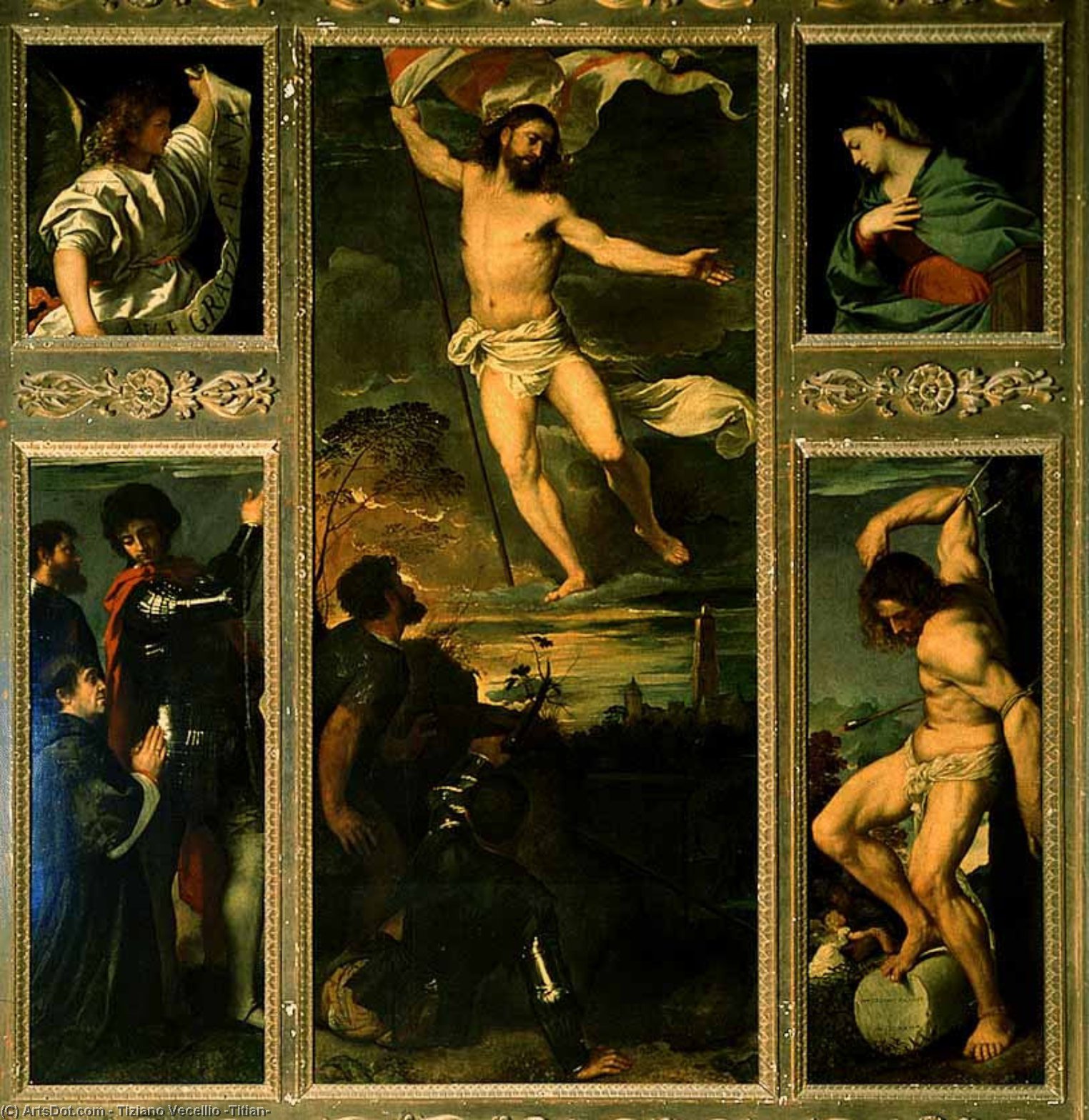
Titian’s breathtaking Polyptych of the Resurrection captures the dramatic fervor of the Renaissance, showcasing masterful color and intricate composition—a monumental testament to faith and artistic brilliance. Explore a stunning reproduction at ArtsDot and bring this iconic masterpiece into your home.
Titian
(1490 - 1576)
Titian (1488-1576): Venetian master of color & light, renowned for his portraits, mythological scenes, and innovative painting techniques. Explore a life of artistic brilliance.
A Symphony of Light and Resurrection
The Polyptych of the Resurrection by Titian Vecellio, completed in 1520, transcends mere depiction; it embodies a profound spiritual aspiration captured with unparalleled artistic brilliance. More than just an image on canvas, this monumental work represents a cornerstone of Venetian Renaissance art and stands as a testament to Titian’s mastery—a legacy that continues to inspire awe centuries later. Located within the Museo San Salvador in Venice, Italy, its presence commands attention not only for its sheer size but also for the depth of emotion and theological contemplation it conveys.
The Artist's Vision: Venetian Renaissance at Its Zenith
Titian’s artistic journey began amidst the burgeoning cultural landscape of Venice during a period defined by humanist ideals and papal patronage. Influenced by Leonardo da Vinci and Michelangelo, Titian pushed the boundaries of painting technique, prioritizing color—specifically luminous hues—as his primary expressive tool. He wasn't simply aiming for realism; he sought to evoke feeling, to transport the viewer into the heart of the biblical narrative. This ambition is palpable in every brushstroke, reflecting a desire to communicate not just what was seen but what was believed. The Museo del Prado and Kunsthistorisches Museum proudly showcase reproductions of his other masterpieces – Bacchanal of the Andrians and Diana and Callisto – solidifying his position as one of the era’s dominant voices.
Technical Innovation: Mastering Color and Texture
Titian's technique—a revolutionary departure from earlier methods—involved layering thin glazes of oil paint upon a prepared ground, creating an astonishingly rich surface texture and achieving unparalleled color vibrancy. This meticulous process allowed him to capture subtle nuances of light and shadow, imbuing the figures with palpable vitality. The Averoldi Polyptych exemplifies this approach perfectly; observe how Titian skillfully blends shades of crimson, gold, and azure to depict the radiant glory surrounding Jesus’s resurrected form—a deliberate choice designed to convey divine majesty. The careful manipulation of pigment ensured that each panel radiated warmth and luminosity, mirroring the spiritual fervor of its subject matter.
Symbolism Within Sacred Narrative
The Polyptych delves into complex theological symbolism. The central panel depicts Jesus Christ ascending heavenward, flanked by angels bearing a banner emblazoned with the Evangelist Mark’s symbol—the winged bull—representing divine providence and triumphant faith. Surrounding him are disciples gazing upwards in awe and reverence, symbolizing humanity's yearning for spiritual enlightenment. The inclusion of radiant light – a recurring motif throughout the polyptych – underscores the transformative power of resurrection and signifies God’s eternal grace. These visual cues invite contemplation on themes of redemption and divine glory—elements central to Christian belief during Titian’s time.
Emotional Resonance: A Window into Renaissance Spirituality
Ultimately, The Polyptych of the Resurrection succeeds in capturing the profound emotional impact of its subject matter. It's not merely a depiction of an event; it’s an invitation to experience the sublime beauty and spiritual significance of Jesus’s resurrection. Titian’s masterful use of color and composition generates a sense of drama and wonder, transporting viewers into the sacred space of contemplation. Like all great art, this piece speaks across time, resonating with audiences today who appreciate its enduring power to inspire awe and reverence—a testament to Titian's genius and his unwavering commitment to conveying the deepest truths of faith through visual artistry.