A Vision of Venetian Grandeur
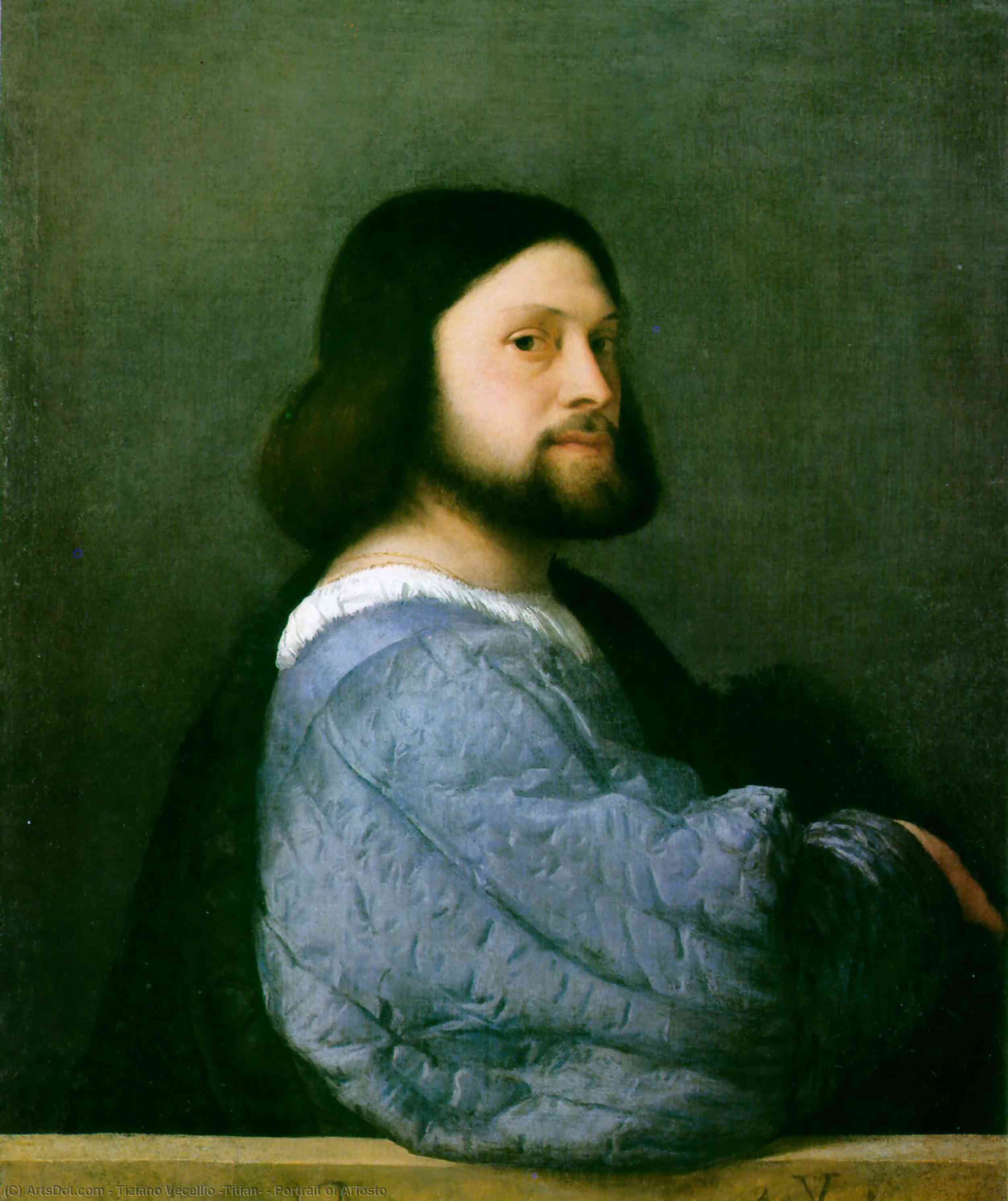
In the quiet corridors of the National Gallery in London, there exists a window into the soul of the High Renaissance: Titian’s Portrait of Ariosto. Painted around 1508, this masterpiece is far more than a mere likeness of Ludovico Ariosto, the legendary poet behind the epic Orlando Furioso; it is a profound meditation on status, intellect, and the transformative power of light. As one gazes upon the canvas, the viewer is immediately struck by the commanding presence of the sitter, whose steady, unwavering gaze bridges the centuries to meet our own with an air of quiet authority. The portrait captures not just a man, but the very essence of Venetian nobility, rendered with a sophistication that remains breathtaking even five hundred years later.
The composition is a masterclass in deliberate balance and psychological depth. Titian places Ariosto centrally against a somber, shadowy backdrop, a technique that serves to push the subject forward, making his features appear almost sculptural. This strategic use of chiaroscuro—the dramatic interplay between light and dark—does more than create three-dimensional form; it imbues the portrait with a sense of mystery and gravitas. The darkness surrounding the figure acts as a void that emphasizes the brilliance of the subject, symbolizing the weight of his intellectual legacy and the enduring strength of his character.
The Alchemy of Color and Technique
To understand this work is to understand Titian’s revolutionary approach to the medium of oil on canvas. Unlike many of his contemporaries who focused on rigid, linear precision, Titian pioneered a method where color itself tells the story. In Portrait of Ariosto, we see the artist's unparalleled command over a palette of deep blues, rich browns, and subtle, warm tones. He utilized a meticulous layering of glazes—thin, translucent applications of pigment—to build a luminosity that seems to glow from within the fabric of the painting itself. This technique allows the blue of Ariosto’s robe to possess a velvety texture, inviting the eye to linger on the subtle shifts in hue and light.
This mastery of color serves a narrative purpose, conveying the opulence of Venetian society while maintaining an emotional intimacy. The way the light catches the edge of a collar or the texture of a beard is not merely a display of technical skill, but an attempt to capture the tactile reality of life in the 16th century. For the collector or the interior designer, this painting offers a profound sense of luxury and historical weight. It is a piece that does not simply occupy space on a wall; it commands the atmosphere of a room, bringing with it the warmth of the Italian Renaissance and a sophisticated, timeless elegance.
An Enduring Legacy for the Modern Collector
For those seeking to infuse their living spaces with art that inspires contemplation and prestige, Titian’s work offers an unmatched opportunity. The Portrait of Ariosto is a testament to the era when art was used to immortalize the human spirit. Its emotional impact lies in its ability to evoke respect and curiosity; it is a conversation piece that speaks of literature, history, and the heights of human achievement. Whether displayed in a formal study or as a focal point in a contemporary gallery-style room, a high-quality reproduction of this work brings the prestige of the National Gallery into the private home.
Owning such a piece is an investment in beauty and cultural heritage. It allows the modern observer to reconnect with the values of the High Renaissance—the pursuit of excellence, the appreciation for subtle nuance, and the celebration of the individual. In every brushstroke of this reproduction, one can feel the pulse of Venice, making it an essential acquisition for anyone dedicated to the art of fine decoration and the timeless allure of the Old Masters.