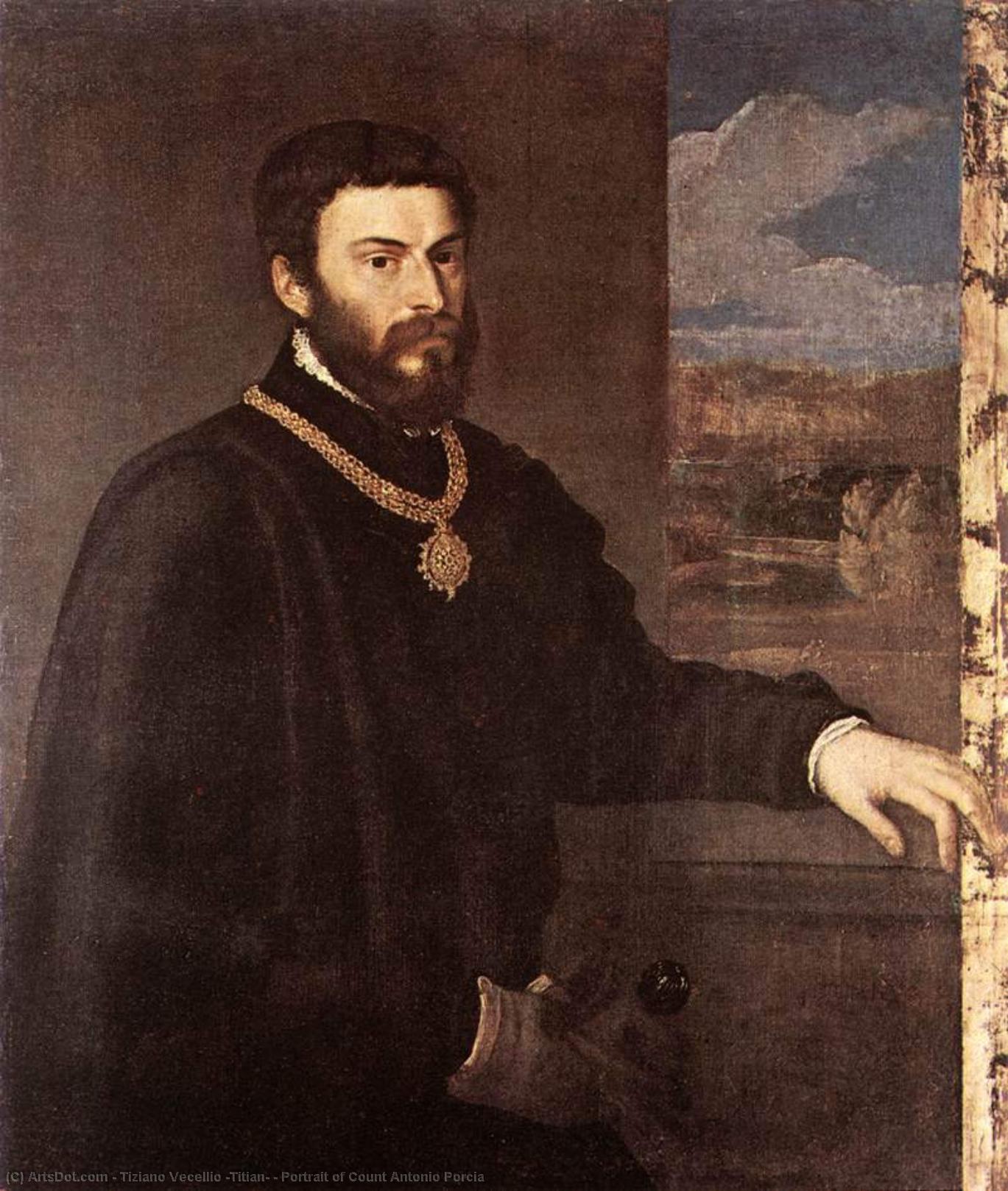
Titian’s masterful Mannerist portrait captures Count Antonio Porcia's contemplative gaze against a breathtaking Venetian landscape—a testament to Renaissance humanist ideals and Titian’s unparalleled skill in layering glazes for dramatic depth. Explore this iconic masterpiece and bring Venetian nobility into your home.
Titian
(1490 - 1576)
Titian (1488-1576): Venetian master of color & light, renowned for his portraits, mythological scenes, and innovative painting techniques. Explore a life of artistic brilliance.
Explore Italian art's evolution at the Pinacoteca di Brera in Milan! Discover masterpieces by Raphael & Mantegna within a stunning Baroque palace. A cultural journey awaits!
A Window Into Venetian Nobility: Exploring Titian’s Portrait of Count Antonio Porcia
The Venetian Renaissance flourished under the patronage of wealthy families like the Porcians, and Tiziano Vecellio—commonly known as Titian—captured this opulent era with breathtaking precision in his “Portrait of Count Antonio Porcia,” completed around 1548. This monumental oil painting resides within the Pinacoteca di Brera in Milan, Italy, offering visitors a rare glimpse into the artistic sensibilities of its time and cementing Titian’s reputation as one of the foremost painters of his generation.
Subject Matter and Composition
The portrait depicts Count Antonio Porcia, a prominent figure from Verona’s noble lineage, seated against a subtly textured landscape backdrop—a deliberate choice that elevates the subject beyond mere likeness. The artist skillfully employs pyramidal composition, placing Porcia centrally within the frame while utilizing the mountainous vista to create depth and perspective. This technique wasn't merely aesthetically pleasing; it mirrored the humanist ideals prevalent during the Renaissance, emphasizing rationality and order alongside observation of the natural world. Notice how Porcia’s gaze directs towards the horizon—a gesture that conveys contemplation and suggests a profound awareness of his place within the grand scheme of existence.
Style and Technique: Mannerism's Delicate Grip
Titian’s “Portrait” exemplifies Mannerist style, marking a departure from the idealized beauty championed by earlier Renaissance artists like Leonardo da Vinci and Raphael. While retaining classical proportions—a hallmark of Venetian art—the painting eschews smooth blending and strives for dramatic contrasts of light and shadow. Titian achieves this effect through meticulous layering of glazes—thin coats of translucent paint—allowing colors to subtly interact and creating an illusionistic depth that surpasses mere representation. The artist’s masterful handling of pigment is evident in the rich hues of Porcia's robe, particularly the deep crimson, which symbolizes nobility and power. Furthermore, the delicate rendering of Porcia’s facial features – the subtle wrinkles around his eyes—demonstrates Titian’s ability to convey psychological nuance.
Historical Context: Verona’s Aristocracy Under Observation
The portrait reflects the social dynamics of Verona during the mid-16th century, where families like the Porcians held considerable influence. Venetian artists were tasked with documenting the status and character of their patrons—a practice that served both artistic and political purposes. The inclusion of a landscape background wasn’t simply decorative; it underscored the importance of humanist thought – reflecting the belief in observing and understanding the natural world as a path to knowledge and virtue. Titian's work speaks to this era's fascination with capturing human emotion and intellect within a carefully constructed visual framework.
Symbolism: Color, Texture, and Gesture
Beyond its formal elements, “Portrait of Count Antonio Porcia” is laden with symbolic significance. The crimson robe—a color associated with royalty and spiritual fervor—communicates Porcia’s noble status and reinforces his position as a man of faith. Similarly, the textured landscape background symbolizes stability and permanence, contrasting with the fleeting nature of human life. Finally, Porcia's gaze directs towards the horizon – representing ambition, aspiration, and an awareness of the broader universe. These elements contribute to the painting’s enduring emotional impact, inviting viewers to contemplate themes of dignity, contemplation, and the pursuit of wisdom.
Availability: Bringing Venetian Art Home
For those captivated by Titian's artistic vision, a high-quality reproduction of “Portrait of Count Antonio Porcia” is available at ArtsDot.com. Experience the brilliance of Mannerist technique and immerse yourself in the grandeur of Venetian aristocratic life—a timeless masterpiece brought to your walls.