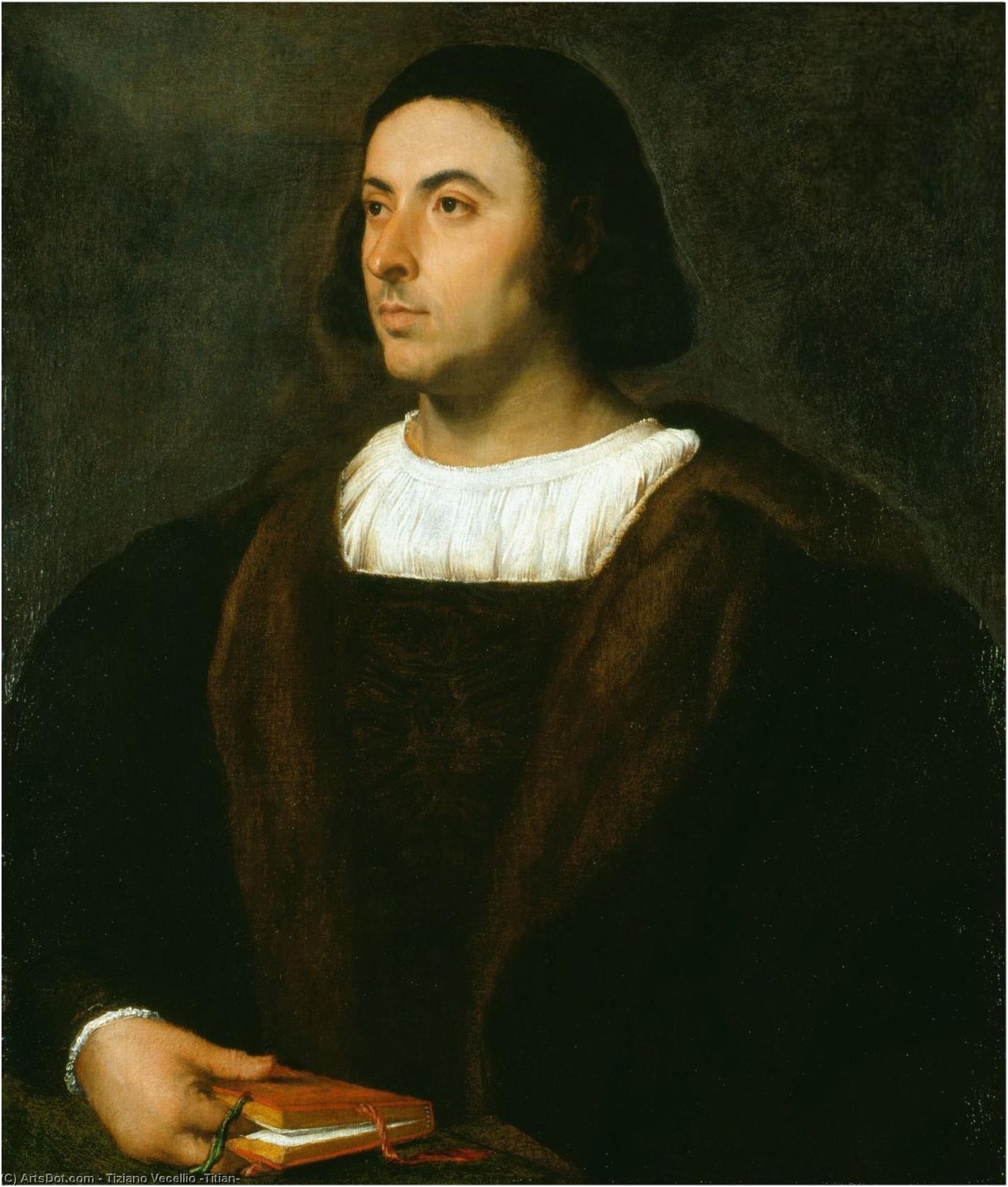
Titian’s masterful High Renaissance portrait captures Jacopo Sannazaro's contemplative gaze amidst dark tones and dramatic chiaroscuro—a stunning testament to Venetian artistry and humanist ideals. Explore a breathtaking handmade oil painting reproduction at ArtsDot.com.
Titian
(1490 - 1576)
Titian (1488-1576): Venetian master of color & light, renowned for his portraits, mythological scenes, and innovative painting techniques. Explore a life of artistic brilliance.
A Window Into Renaissance Thought: Exploring Titian’s Portrait of Jacopo Sannazaro
The Venetian painter Titian Vecellio's "Portrait of Jacopo Sannazaro," completed in 1518, transcends mere representation; it embodies the very spirit of High Renaissance humanism and offers a captivating glimpse into the intellectual landscape of its time. More than just capturing a likeness, Titian meticulously crafted an image that speaks volumes about erudition, contemplation, and the humanist ideals championed by artists like Leonardo da Vinci and Michelangelo.
Subject Matter and Context
The portrait depicts Jacopo Sannazaro (1465-1527), a Neapolitan poet and humanist scholar—a figure whose intellectual pursuits mirrored those of the era’s leading thinkers. Sannazaro's pose is deliberately understated, conveying an air of profound thoughtfulness as he gazes forward with unwavering concentration. He wears a dark robe adorned with a white collar, signifying both formality and scholarly distinction – attire typical for men engaged in serious intellectual endeavors. The inclusion of a book held delicately in his left hand serves as a potent symbol of Sannazaro’s dedication to learning and the humanist belief that reason and observation were paramount to understanding the human condition. Painted during a period marked by burgeoning Renaissance scholarship, this portrait reflects the broader cultural preoccupation with classical ideals and philosophical inquiry.
Artistic Style and Technique: Mastering Light and Shadow
Titian's masterful technique exemplifies the hallmarks of High Renaissance art. He skillfully employs chiaroscuro—the dramatic interplay between light and dark—to sculpt Sannazaro’s face and hands, creating a palpable sense of depth and dimensionality. Visible brushstrokes contribute to the texture of the robe and background, imbuing the painting with an immediacy that transcends time. Unlike earlier artistic conventions prioritizing idealized beauty, Titian prioritized realism, striving to portray Sannazaro as he truly appeared—a man wrestling with complex ideas and emotions. The artist’s palette leans heavily toward muted tones, dominated by browns and blacks, which heighten the impact of subtle highlights illuminating Sannazaro's face and collar.
Symbolism Beyond Appearance
The portrait is laden with symbolic significance. The book represents not merely knowledge but also virtue—a cornerstone of humanist philosophy. Sannazaro’s gaze directs outward, suggesting a preoccupation with broader intellectual concerns and perhaps even spiritual contemplation. Furthermore, the dark robe symbolizes humility and seriousness, reinforcing Sannazaro's status as a man devoted to scholarly pursuits. The overall composition is carefully balanced, emphasizing Sannazaro’s central presence while subtly conveying his inner life—a testament to Titian’s ability to communicate profound ideas through visual imagery.
Emotional Resonance and Legacy
“Portrait of Jacopo Sannazaro” continues to resonate with viewers today because it captures the essence of human intellect and contemplative reflection. It invites us to consider the importance of introspection and the pursuit of knowledge—values that remain central to Western culture. As a meticulously crafted oil painting reproduction, this artwork allows collectors and interior designers alike to experience the beauty and power of Titian’s vision firsthand, preserving its original integrity while introducing it to new audiences eager for inspiration. Explore more reproductions at /en/art/show/art-8xz399-en/