A Masterpiece of Venetian Grandeur
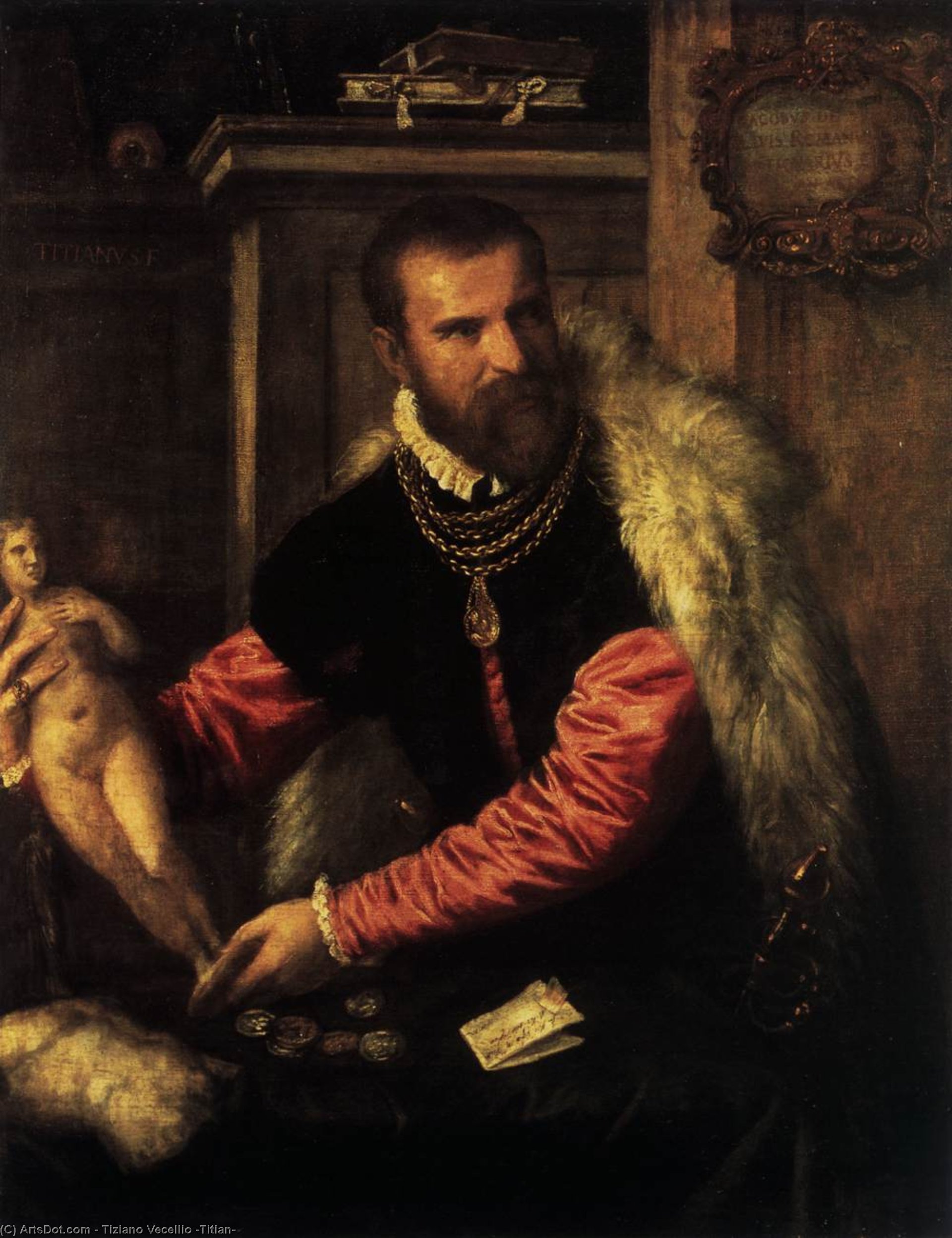
In the twilight of the Renaissance, when the golden light of Venice still bathed the canvases of its greatest masters, Titian Vecellio produced a work of profound psychological depth and material splendor: Portrait of Jacopo Strada. Completed around 1567, this painting is far more than a mere likeness of a man; it is a window into the intellectual fervor of the sixteenth century. The subject, Jacopo Strada, was not just any courtier but a formidable figure—an antiquarian, scholar, and art dealer who served the Holy Roman Emperors with distinction. Through Titian’s brush, we encounter a man whose very presence commands respect, captured in a moment that balances the weight of worldly success with the quiet dignity of scholarly pursuit.
The composition is a masterclass in the use of chiaroscuro, where dramatic shifts between light and shadow sculpt the sitter from the darkness. Titian employs his signature late-period technique, characterized by a more expressive, almost restless application of paint that lends a palpable texture to the canvas. The vibrant crimson of Strada’s robes serves as the painting's emotional heartbeat, a rich, saturated hue that draws the eye immediately to the center of the frame. This warmth is beautifully contrasted by the muted, atmospheric background, creating a sense of three-dimensional space that feels both intimate and expansive.
Symbolism and the Renaissance Spirit
Every element within this portrait has been meticulously placed to narrate the story of Strada’s identity and status. As an Antiquarius Caesareus, his devotion to the classical past is woven into the very fabric of the scene. Scattered throughout the composition are symbols of erudition: heavy, leather-bound books that suggest a life dedicated to the preservation of knowledge, and ancient artifacts that hint at his expertise in the treasures of antiquity. Even the fine gold chain draped around his neck serves as a silent testament to the honors bestowed upon him by Emperor Maximilian II.
Yet, amidst this display of intellectual and material wealth, there is a surprising touch of tenderness. The presence of a small figure—often identified as a child or a symbolic representation of familial piety—introduces a layer of human vulnerability to the portrait. This juxtaposition of the scholarly professional with the paternal protector creates a complex emotional resonance, making the piece deeply relatable even centuries later. For the collector or the designer, this painting offers a rare duality: it possesses the formal gravity required for a stately study or library, yet retains a soulful, human warmth that can breathe life into any sophisticated interior.
An Eternal Legacy for the Discerning Collector
To possess a reproduction of Titian’s work is to invite the spirit of the High Renaissance into one's personal sanctuary. The Portrait of Jacopo Strada is an ideal centerpiece for those who appreciate art that tells a story of power, intellect, and beauty. Its rich palette of deep reds, golds, and earthy shadows provides a sophisticated foundation for interior decor, pairing exquisitely with classical furniture or modern, minimalist settings alike.
For the art lover, this work remains an enduring study in how light can define character. For the interior designer, it offers a timeless texture that elevates a room from a mere space to a curated gallery. Whether viewed as a historical document of the Venetian school or as a breathtaking display of oil painting mastery, Titian’s portrait continues to captivate, offering a sense of prestige and profound cultural connection to all who behold it.