A Venetian Echo in American Vision
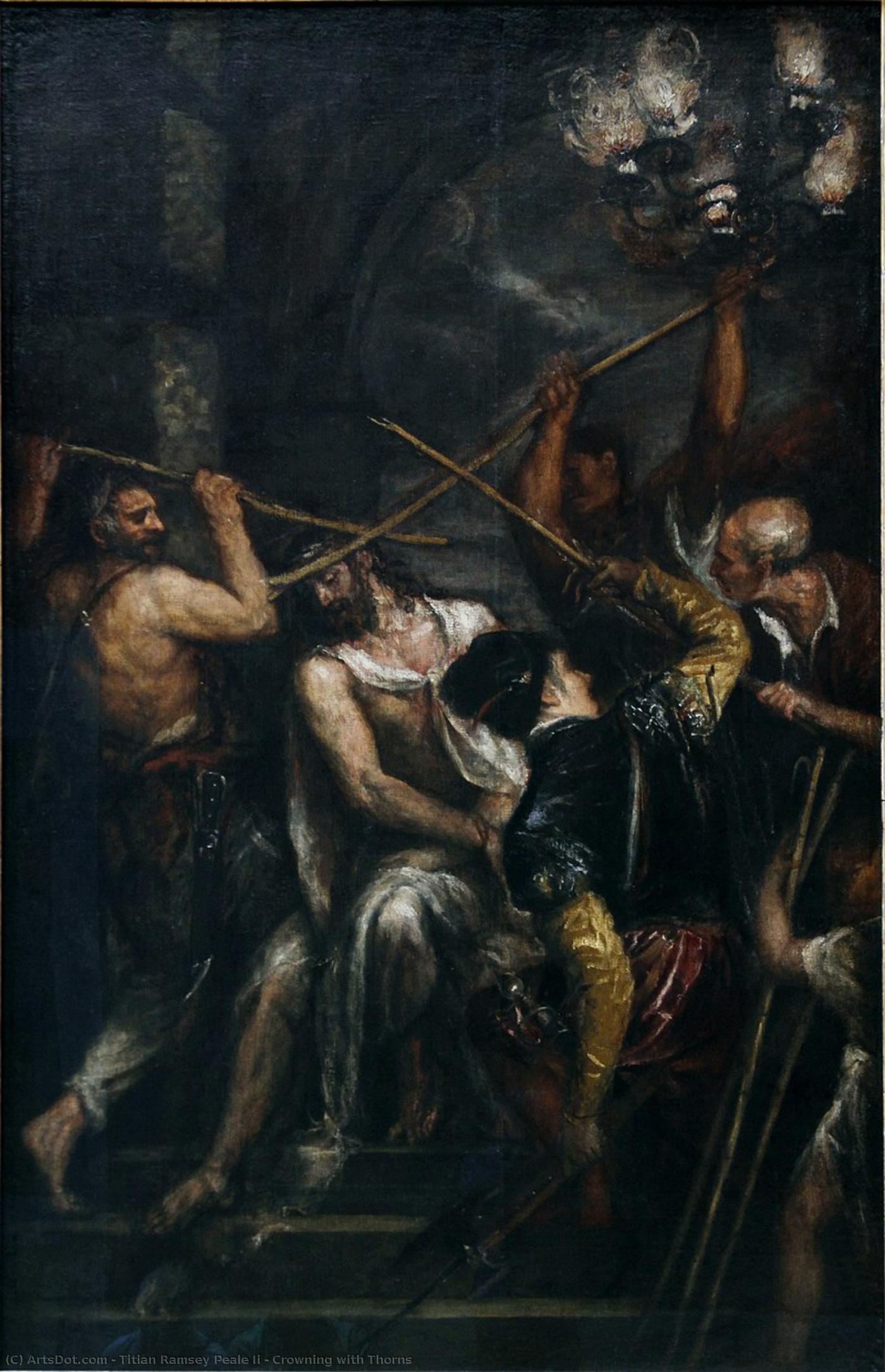
The painting “Crowning with Thorns,” executed by Titian Ramsay Peale II in 1875, stands as a testament to the enduring influence of Renaissance artistic principles within the burgeoning landscape of nineteenth-century America. Born into a family deeply connected to the artistic heritage of Philadelphia—his father, Charles Willson Peale, being a celebrated portraitist and founder of the American Museum—Titian Ramsay Peale II inherited not just lineage but also an unwavering devotion to classical ideals. This dedication is palpable in his masterful depiction of a solemn ceremony: a man receiving a thorny crown, attended by figures symbolizing faith and reverence.
- Subject Matter & Composition: The artwork portrays a pivotal biblical scene—the crowning of Jesus Christ with thorns—a motif frequently explored during the Renaissance to convey themes of humility, sacrifice, and divine grace. Peale’s careful arrangement emphasizes the central figure, bathed in diffused light, surrounded by attendants who underscore the significance of the event. The inclusion of a chair subtly directs the viewer's gaze towards a contemplative space.
- Style & Technique: Peale II’s approach aligns squarely with Venetian artistic traditions prevalent during his time. He employs meticulous realism—a hallmark of the High Renaissance—characterized by precise anatomical detail and subtle tonal gradations achieved through layering oil paints. The artist skillfully captures the textures of fabric, skin, and foliage, demonstrating a profound understanding of chiaroscuro – the dramatic interplay between light and shadow – which enhances the emotional depth of the composition.
Historical Context & Artistic Influences
The painting’s creation coincided with a period of significant cultural transformation in America. The American Museum, established by Peale Sr., served as a crucible for disseminating European artistic ideas and fostering intellectual curiosity. Titian Ramsay Peale II actively engaged with this environment, absorbing the stylistic innovations championed by artists like Michelangelo Buonarroti and Raphael Sanzio. These masters instilled in him a conviction that art should strive for accuracy and beauty simultaneously—a belief that profoundly shaped his oeuvre.
- Symbolism: The thorny crown itself embodies suffering and humility, mirroring Jesus’s ordeal during his Passion. The attendants represent various facets of Christian piety – perhaps symbolizing royalty, faith, and divine providence. Peale II's deliberate use of symbolism elevates the artwork beyond mere visual representation, inviting contemplation on spiritual truths.
- Emotional Impact: “Crowning with Thorns” evokes a feeling of solemn reverence and quiet dignity. The subdued palette—primarily muted browns and golds—contributes to an atmosphere of contemplative seriousness. Peale II’s masterful rendering captures not only the physical likenesses of his subjects but also their inner emotional state, conveying a profound sense of spiritual contemplation.
A Legacy of Classical Beauty
Titian Ramsay Peale II's “Crowning with Thorns” exemplifies the enduring power of Renaissance artistic ideals to inspire creativity across continents and generations. Its meticulous technique, coupled with its evocative symbolism and profound emotional resonance, secures its place as a significant contribution to American art history. Reproductions offered by ArtsDot.com allow collectors and interior designers alike to experience this masterpiece firsthand—a tangible connection to the artistic spirit of Venice and a celebration of timeless beauty.