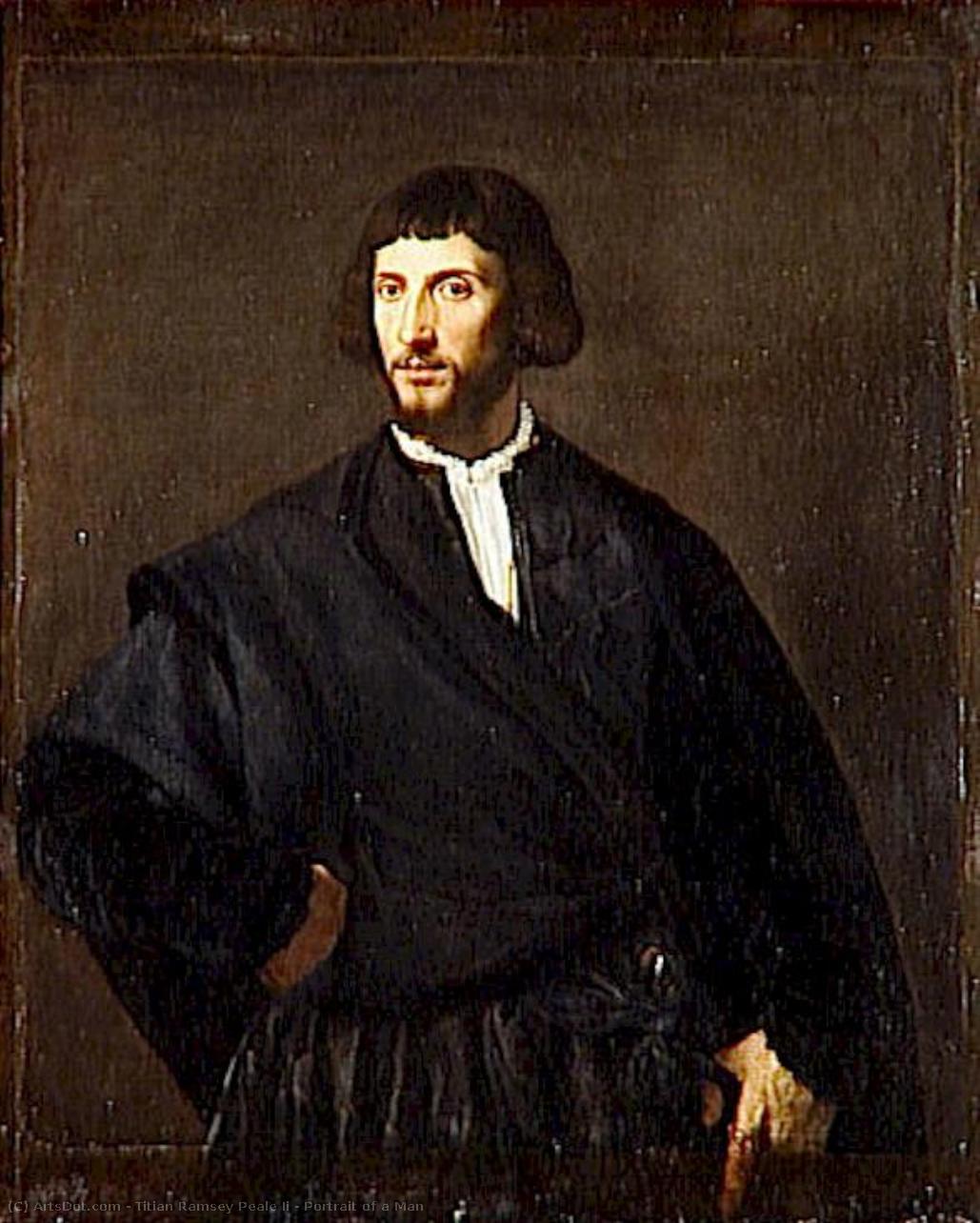
A Renaissance Echo in the New World: Exploring Titian Ramsay Peale II’s Portrait of Francesco Maria della Rovere
Titian Ramsay Peale II stands as a singular figure within American art history—a descendant of Charles Willson Peale, arguably the father of American portraiture and founder of Philadelphia's Museum Kunst und Industrie (later Smithsonian Institution), yet profoundly shaped by the artistic currents of Venice during his formative years. Unlike many artists of his era preoccupied with purely decorative trends, Peale II possessed an unwavering devotion to the High Renaissance ideals championed by masters like Raphael and Michelangelo, translating this passion into canvases imbued with meticulous detail and a palette rich in luminous hues. This dedication isn’t merely stylistic; it represents a deliberate effort to synthesize observation—a cornerstone of Peale's scientific pursuits alongside his artistic endeavors—with the grandeur and intellectual rigor characteristic of classical art.
- Subject Matter & Composition: The portrait depicts Francesco Maria della Rovere, an influential Florentine noble, rendered with striking realism against a dark background that serves to accentuate the sitter’s presence. Peale II skillfully captures Della Rovere's gaze—direct and contemplative—establishing an immediate connection between the viewer and the subject.
- Style & Technique: Peale II’s approach aligns seamlessly with Venetian portraiture traditions, prioritizing tonal gradation and subtle modeling to achieve a palpable sense of volume and texture. The artist employs glazing techniques – applying thin layers of translucent paint over underlying colors – creating depth and luminosity that elevates the artwork beyond mere representation.
The painting's stylistic choices resonate deeply with the artistic sensibilities of its time, reflecting Peale II’s fascination with humanist ideals and his desire to elevate portraiture as a form of scholarly inquiry. It exemplifies the burgeoning interest in reviving classical forms within the context of the Enlightenment, demonstrating how scientific observation could inform aesthetic expression.
- Historical Context: Created in 1523, this piece emerged during a period of significant cultural exchange between Italy and England—a moment where Venetian artistic principles traveled across the Atlantic Ocean. Peale II’s work speaks to the broader ambition of documenting human experience with precision and beauty.
- Symbolism & Emotional Impact: The dark background serves as a foil to Della Rovere's figure, symbolizing authority and contemplation—themes central to Renaissance portraiture. Beyond mere likeness, Peale II strives to convey an aura of dignity and intellect, inviting viewers to contemplate the sitter’s inner life.
Ultimately, Titian Ramsay Peale II’s Portrait of Francesco Maria della Rovere transcends its formal qualities, offering a glimpse into the intellectual and artistic spirit of a pivotal moment in American history. It stands as testament to an artist who honored tradition while forging his own distinctive voice—a legacy that continues to inspire admiration and appreciation for its enduring beauty and profound insight.