The Weight of Eternity: Titian Ramsay Peale II’s “Sisyphus”
- A Myth Rendered in Flesh and Stone
- Renaissance Echoes in the American Landscape
- Decoding the Symbolism – More Than Just a Struggle
- The Artist's Hand: Technique and Materiality
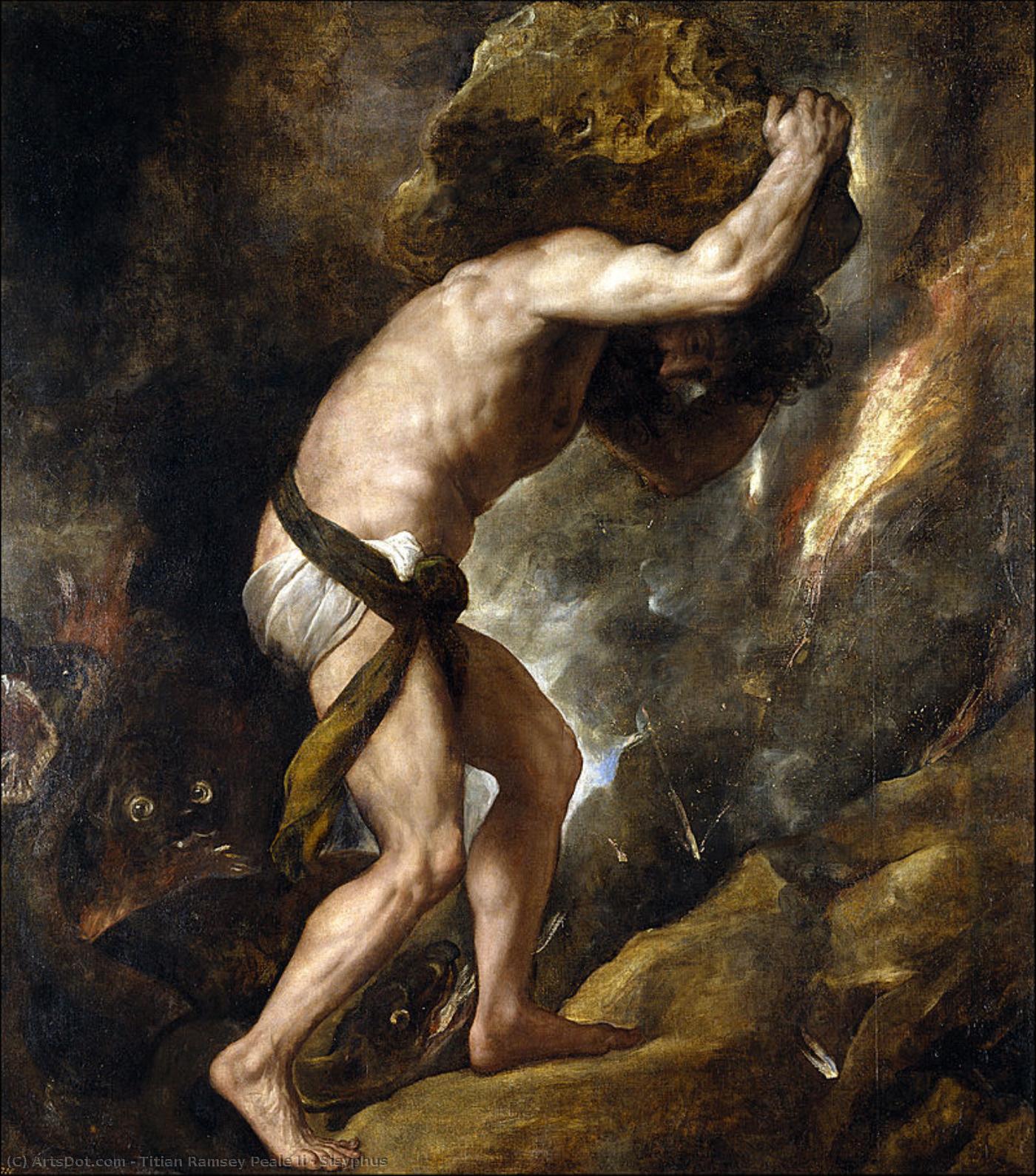
Titian Ramsay Peale II’s “Sisyphus,” completed in 1549, is not merely a depiction of a classical myth; it’s an embodiment of human endurance, a poignant meditation on futility rendered with the meticulous detail characteristic of the High Renaissance. The painting immediately confronts the viewer with the raw physicality of Sisyphus himself – a man consumed by his task, muscles straining beneath a loincloth, sweat glistening on his brow. This isn't a distant, idealized figure from ancient Greece; it’s a profoundly human one, vulnerable and undeniably burdened.
Peale’s work is deeply rooted in the artistic lineage of his father, Charles Willson Peale, a prominent portraitist who played a crucial role in establishing America’s early museum. However, Titian distinguishes himself by channeling not just the stylistic conventions of Venice – renowned for its vibrant color palettes and anatomical precision – but also a deeper philosophical engagement with classical themes. The influence of figures like Michelangelo and Raphael is palpable, yet tempered by a distinctly American sensibility. This fusion creates a work that feels both timelessly resonant and uniquely tied to its moment in history, reflecting the burgeoning intellectual currents of the early 19th century.
The myth of Sisyphus has always held potent symbolic weight. He represents not just physical labor but also the inherent absurdity of existence – the endless repetition of tasks devoid of ultimate purpose. The boulder itself is a powerful symbol, representing the obstacles we face in life, those seemingly insurmountable challenges that demand relentless effort without guaranteeing success. Peale masterfully captures this duality; Sisyphus’s determination is evident in his posture and expression, yet the viewer simultaneously recognizes the tragic irony of his situation – forever trapped in an eternal loop of futile exertion. The painting invites contemplation on themes of perseverance, despair, and the human condition itself.
Technically, “Sisyphus” showcases Peale’s exceptional skill as a painter. He employs oil paints with remarkable control, layering colors to achieve a rich, almost sculptural effect. The texture of the stone is meticulously rendered, conveying its immense weight and the arduousness of Sisyphus's task. The artist’s attention to anatomical detail – particularly in the depiction of the musculature – demonstrates a deep understanding of human form, reflecting the Renaissance emphasis on realism. The scale of the painting (237 x 216 cm) further amplifies the impact, drawing the viewer into Sisyphus's world and intensifying the emotional resonance of the scene.