Explore Titian Ramsay Peale II (1799-1885), an American artist & naturalist blending High Renaissance artistry with scientific observation. Discover his stunning wildlife paintings and legacy.
Explore the Hermitage Museum in St. Petersburg! Discover masterpieces from Renaissance to modern times within stunning historic palaces – a cultural journey awaits.
A Venetian Echo in American Canvas: Exploring Titian Ramsay Peale II’s St Sebastian
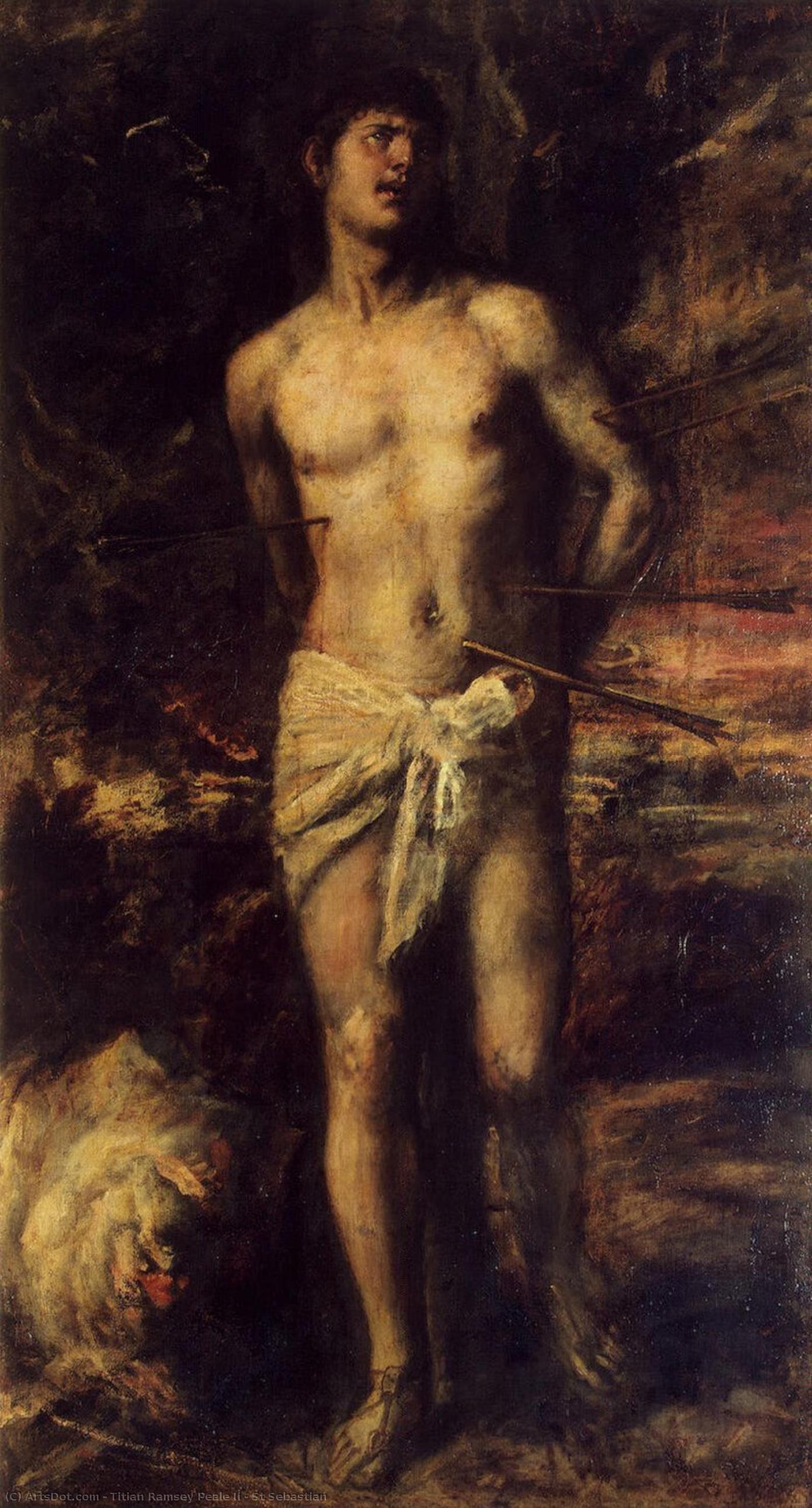
Titian Ramsay Peale II stands as a singular figure within the burgeoning artistic landscape of 18th-century America—a descendant of Charles Willson Peale, arguably the nation's first portraitist and founder of Philadelphia’s Museum of Art—who nevertheless resolutely championed the aesthetic principles of the High Renaissance. Unlike many artists of his era preoccupied with documenting the New World’s burgeoning dynamism, Peale II possessed an unwavering devotion to classical ideals, specifically those originating in Venice, where he honed his craft and absorbed the stylistic nuances of masters like Titian himself. This dual influence—a grounding in familial legacy coupled with a passionate embrace of Venetian artistic tradition—is powerfully evident in his monumental painting, “St Sebastian,” completed in 1575.
Subject Matter and Composition: Drama Embodied
The artwork depicts St Sebastian, a martyr venerated by the Christian Church for his unwavering faith during Roman persecution. Presented in stark repose against a backdrop of stylized trees—a deliberate nod to Venetian landscape painting—the figure is nude, bound at the wrists and ankles, and positioned before a dog. This juxtaposition immediately establishes a palpable tension: vulnerability juxtaposed with resilience, suffering confronted by steadfast loyalty. The artist’s meticulous attention to detail captures the solemn dignity of Sebastian's posture and the expressive gaze of his eyes, conveying both physical pain and spiritual fortitude. The inclusion of the dog serves as a potent symbol—often interpreted as representing Christ’s faithful companion—further amplifying the painting’s devotional significance.
Style and Technique: Mastering Venetian Mannerism
Peale II's approach to “St Sebastian” exemplifies the stylistic hallmarks of Venetian Mannerism, a movement that prioritized intellectual contemplation over mere imitation of natural beauty. Unlike the idealized forms favored by earlier Renaissance artists, Peale II employs elongated proportions and subtly distorted perspectives—techniques characteristic of Titian’s oeuvre—to heighten emotional impact. The artist skillfully utilizes chiaroscuro—the dramatic interplay of light and shadow—creating a palpable sense of depth and emphasizing Sebastian's muscular physique. Furthermore, the rich pigment palette—dominated by earthy reds and browns—reflects the Venetian tradition of employing color to convey psychological states rather than simply representing visual reality.
Historical Context: Reflections of Renaissance Ideals
“St Sebastian” emerged during a period marked by significant artistic innovation in Venice, where artists wrestled with questions of faith, morality, and human psychology. Peale II’s work stands as a testament to the enduring influence of Renaissance humanist thought—particularly Pico della Mirandola's assertion that humankind possesses inherent dignity and potential for spiritual transcendence. By consciously referencing Venetian Mannerist conventions, Peale II subtly imbued his painting with an aura of intellectual sophistication, aligning it with the broader cultural currents shaping Europe at the time.
Emotional Resonance: A Portrait of Suffering and Faith
Ultimately, “St Sebastian” transcends mere visual representation; it communicates profound emotional resonance. The painting compels viewers to contemplate themes of sacrifice, devotion, and resilience—qualities deemed paramount by Renaissance thinkers. Peale II’s masterful execution captures the essence of human suffering while simultaneously affirming the unwavering power of faith—a message that continues to resonate powerfully across centuries. It serves as a poignant reminder of the enduring legacy of Venetian artistic tradition within the context of American art history, demonstrating how classical ideals could inspire creative expression in new cultural environments.