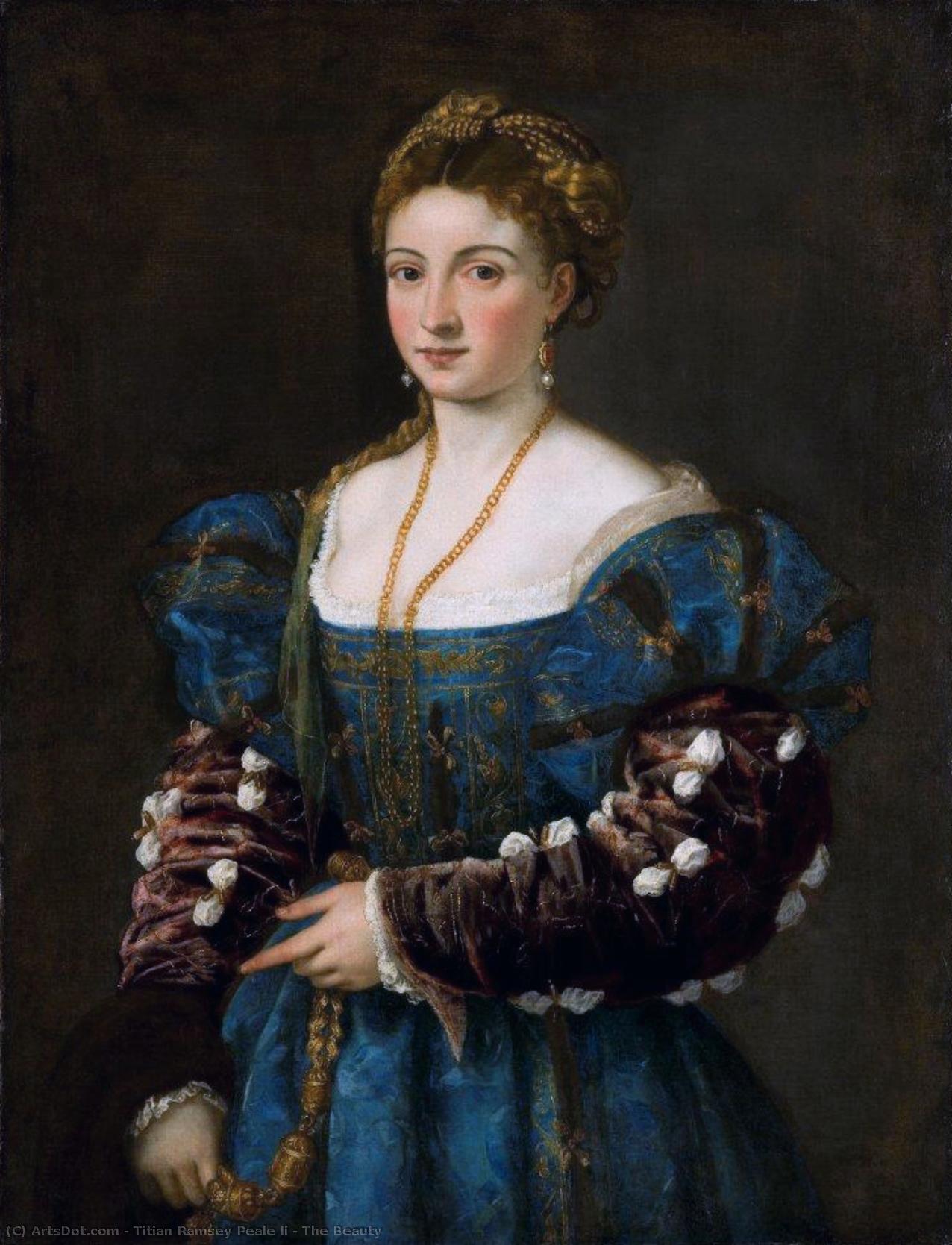
A Renaissance Reverie in American Light: Exploring “The Beauty” by Titian Ramsay Peale II
“The Beauty,” painted in 1536 by the remarkably prescient Titian Ramsay Peale II, is more than a portrait; it’s a carefully constructed echo of Venetian High Renaissance ideals transplanted to the burgeoning artistic landscape of early America. Peale, born into a family deeply intertwined with the history of American art – his father, Charles Willson Peale, was a foundational figure in establishing the nation's first museum – inherited not just an artistic legacy but also a profound respect for classical forms and techniques. This painting stands as a testament to that inheritance, demonstrating a deliberate and sophisticated engagement with the visual language of masters like Raphael and Leonardo da Vinci.
The subject herself is presented with an almost ethereal grace. Dressed in a flowing blue gown – a color historically associated with royalty and piety – she embodies a serene beauty. The rich hue is masterfully rendered, utilizing layering techniques characteristic of Peale’s style to create depth and luminosity. A delicate gold necklace encircles her neck, instantly elevating the portrait and hinting at wealth and status, while also drawing the eye to the subtle play of light across its surface. Her long hair, intricately braided, frames a face that is both youthful and contemplative; she possesses an inherent dignity that speaks volumes despite the lack of overt expression.
The Language of Detail: Technique and Artistic Intent
Peale’s meticulous approach to detail is immediately apparent upon close inspection. The artist demonstrates a remarkable command of sfumato, a technique perfected by Leonardo da Vinci, subtly blurring edges and creating an atmospheric haze that softens the forms and imbues the portrait with a sense of mystery. The rendering of fabric—the folds of the gown, the sheen of the necklace—is exceptionally realistic, achieved through careful observation and a deep understanding of anatomy and drapery. The use of oil paint allows for rich color saturation and subtle gradations, contributing to the painting’s overall luminosity. Notice particularly how Peale builds up layers of glaze – thin washes of translucent paint applied over dried underlayers – to achieve this effect.
Furthermore, the composition itself is carefully balanced, adhering to principles of Renaissance perspective. The woman is positioned slightly off-center, creating a dynamic and engaging visual arrangement. The background, though relatively simple, serves to enhance the subject’s presence without distracting from her beauty. Peale's deliberate choices in color and form are not merely decorative; they contribute significantly to the painting’s overall narrative and emotional impact.
Historical Context: Bridging Worlds
“The Beauty” was created during a pivotal moment in American history – a period of rapid growth, exploration, and self-definition. While deeply influenced by European artistic traditions, Peale's work also reflects the unique cultural context of his time. He was part of a generation striving to establish a distinct American identity within the broader framework of Western art. His father’s museum, a hub for scientific inquiry and artistic display, played a crucial role in fostering this dialogue between Old World reverence and New World expression.
The painting can be viewed as an attempt to synthesize these influences – a conscious effort to bring the idealized beauty of the Renaissance to the American scene. It’s a fascinating example of how artists navigated the complexities of cultural exchange during a period of profound transformation. Considering the date, 1536, is particularly striking; Peale was consciously referencing and adapting techniques developed centuries earlier, demonstrating an extraordinary level of artistic awareness.
Symbolism and Emotional Resonance
Beyond its technical brilliance, “The Beauty” carries a subtle yet powerful symbolic weight. The blue dress, as mentioned previously, represents virtue and piety – qualities highly valued in Renaissance portraiture. The gold necklace symbolizes wealth, status, and perhaps even divine favor. However, the woman’s expression is remarkably neutral; she doesn't smile or gaze directly at the viewer, inviting us to contemplate her beauty on our own terms. This deliberate ambiguity adds a layer of complexity to the portrait, suggesting that its true value lies not just in its aesthetic appeal but also in its ability to evoke contemplation and introspection.
Ultimately, “The Beauty” by Titian Ramsay Peale II is a captivating work of art – a testament to the enduring power of classical ideals and a poignant reflection of American artistic ambition. ArtsDot offers meticulously crafted hand-painted reproductions that faithfully capture the artistry and nuance of this remarkable piece, allowing you to bring its timeless beauty into your home or studio.