A Venetian Echo in American Canvas: Exploring Titian Ramsay Peale II’s Vincenzo Cappello
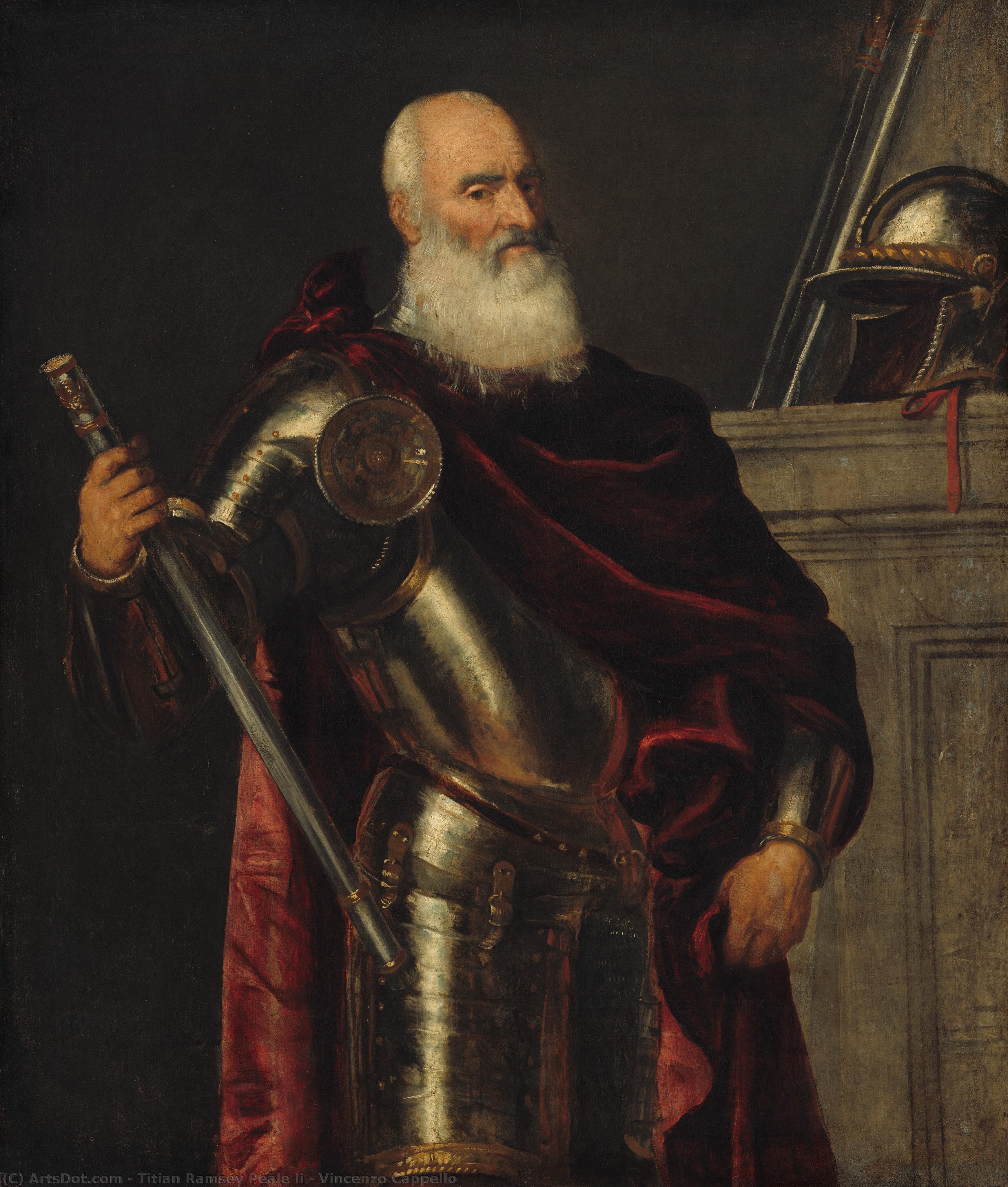
The painting “Vincenzo Cappello,” executed by Titian Ramsay Peale II in 1560, stands as a testament to the enduring influence of Renaissance artistic principles within the burgeoning landscape of early American art. Born into a lineage steeped in portraiture – his father, Charles Willson Peale, was arguably the most celebrated artist of his time and founder of Philadelphia’s Museum—Titian Ramsay Peale II wasn't simply inheriting tradition; he actively wrestled with it, transforming Venetian ideals into a distinctly American visual language. This captivating artwork captures a man adorned in armor, a figure embodying strength and authority, against a backdrop that speaks volumes about the era’s artistic sensibilities.
- Subject Matter: The portrait depicts Vincenzo Cappello, a nobleman of considerable stature, rendered with meticulous realism. His attire—a suit of armor—immediately evokes images of chivalry and military prowess, symbolizing courage and protection – themes prevalent throughout Renaissance art.
- Style & Technique: Peale II’s approach aligns closely with the Venetian Mannerist style championed by artists like Titian himself. The artist employs sfumato—a technique characterized by subtle gradations of tone—to soften contours and create an ethereal luminescence, particularly noticeable in Cappello's cloak and facial features. This masterful blending of light and shadow contributes to a profound sense of depth and atmosphere.
The historical context surrounding “Vincenzo Cappello” is crucial to appreciating its significance. Painted during the High Renaissance, it reflects the humanist spirit that permeated European intellectual life—a fascination with classical ideals and an emphasis on human dignity. The inclusion of two additional figures flanking Cappello adds layers of narrative complexity. These individuals represent a broader social milieu, hinting at the aristocratic circles prevalent in 16th-century Philadelphia and subtly reinforcing Cappello’s position as a leader within his community.
Symbolism: Beyond its formal elements, “Vincenzo Cappello” is laden with symbolic resonance. The armor itself symbolizes nobility, honor, and defense—values deeply ingrained in Renaissance culture. Furthermore, the sword held by Cappello represents power and justice, while the shield signifies protection from harm. These emblems collectively convey a message of resilience and unwavering conviction.
Emotional Impact: Viewing “Vincenzo Cappello” evokes a feeling of contemplative grandeur. The artist’s skillful manipulation of light and color creates an image that is both visually arresting and emotionally resonant. It invites the viewer to consider themes of leadership, courage, and the enduring legacy of classical art—concepts that continue to inspire artists and collectors alike. Reproductions of this masterpiece offer a remarkable opportunity to experience the beauty and intellectual depth of Venetian Renaissance artistry within the context of American artistic heritage.