A Window into the Renaissance Mind
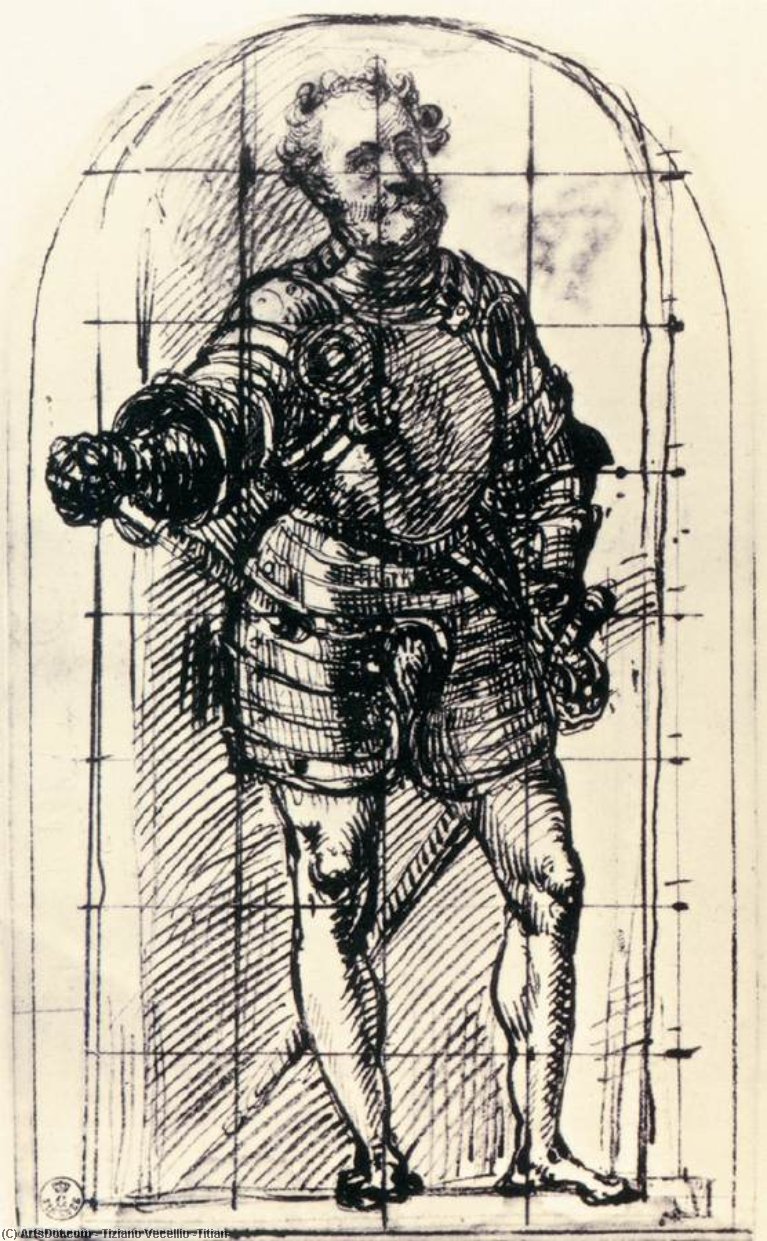
In the quiet corridors of the Uffizi Gallery, there exists a work that whispers rather than shouts, yet its voice carries the profound weight of history. Tiziano Vecellio’s “Study for the Duke of Urbino,” created around 1536, is far more than a mere preliminary sketch; it is an intimate encounter with the creative pulse of the High Renaissance. While Titian is globally renowned for his explosive use of color and the luminous, fleshy textures of his finished oil paintings, this monochrome study offers a rare, stripped-back glimpse into his preparatory process. Here, the master moves away from the vibrant pigments of Venice to explore the fundamental architecture of form through the disciplined application of line.
The artwork presents a commanding male figure, likely a nobleman or military leader, encased in the intricate, gleaming plates of ceremonial armor. Through a masterful use of hatching and cross-hatching, Titian breathes life into the cold metal, creating a tactile sensation where light dances across polished surfaces and deep shadows pool within the recesses of the steel. The composition is anchored by a centralized figure set within an arched framework, a device that evokes both a window onto another era and a stage for the display of power. This structural choice lends the piece a sense of monumental stability, inviting the viewer to contemplate the subject not just as a man, but as an icon of authority.
The Intersection of Power and Artistry
To understand this study, one must look toward the political landscape of mid-16th century Italy. The work is deeply rooted in an era of immense patronage, specifically linked to the ambitions surrounding the House of Urbino and the broader influence of the Holy Roman Emperor, Charles V. The subject—a figure draped in the symbols of military prowess—serves as a meditation on authority, duty, and the indomitable spirit of the condottiere. Every stroke of the pen contributes to a narrative of strength; the weight of the armor and the resolute posture of the sitter reflect the gravity of his social station.
For the discerning collector or interior designer, this piece offers a sophisticated aesthetic that transcends mere decoration. The monochromatic palette provides a timeless elegance, making it an ideal focal point for spaces that demand intellectual depth and classical refinement. It possesses a unique ability to anchor a room, providing a sense of historical continuity and scholarly prestige. Whether placed in a sunlit library or a contemporary gallery-style living space, the "Study for the Duke of Urbino" acts as a conversation piece, sparking reflections on the meticulous craftsmanship of the Renaissance and the enduring allure of the human silhouette captured in moments of preparation.
Beyond its historical significance, the emotional impact of the work lies in its vulnerability. There is a profound sense of intellectual curiosity embedded in these lines—a feeling that we are witnessing the artist’s own struggle to capture perfection. This tension between the finished, polished ideal and the raw, exploratory sketch creates an evocative atmosphere that resonates with anyone who appreciates the beauty of the creative journey. Owning a high-quality reproduction of this masterpiece is not simply about possessing an image; it is about bringing the disciplined, searching spirit of Titian into the modern home.